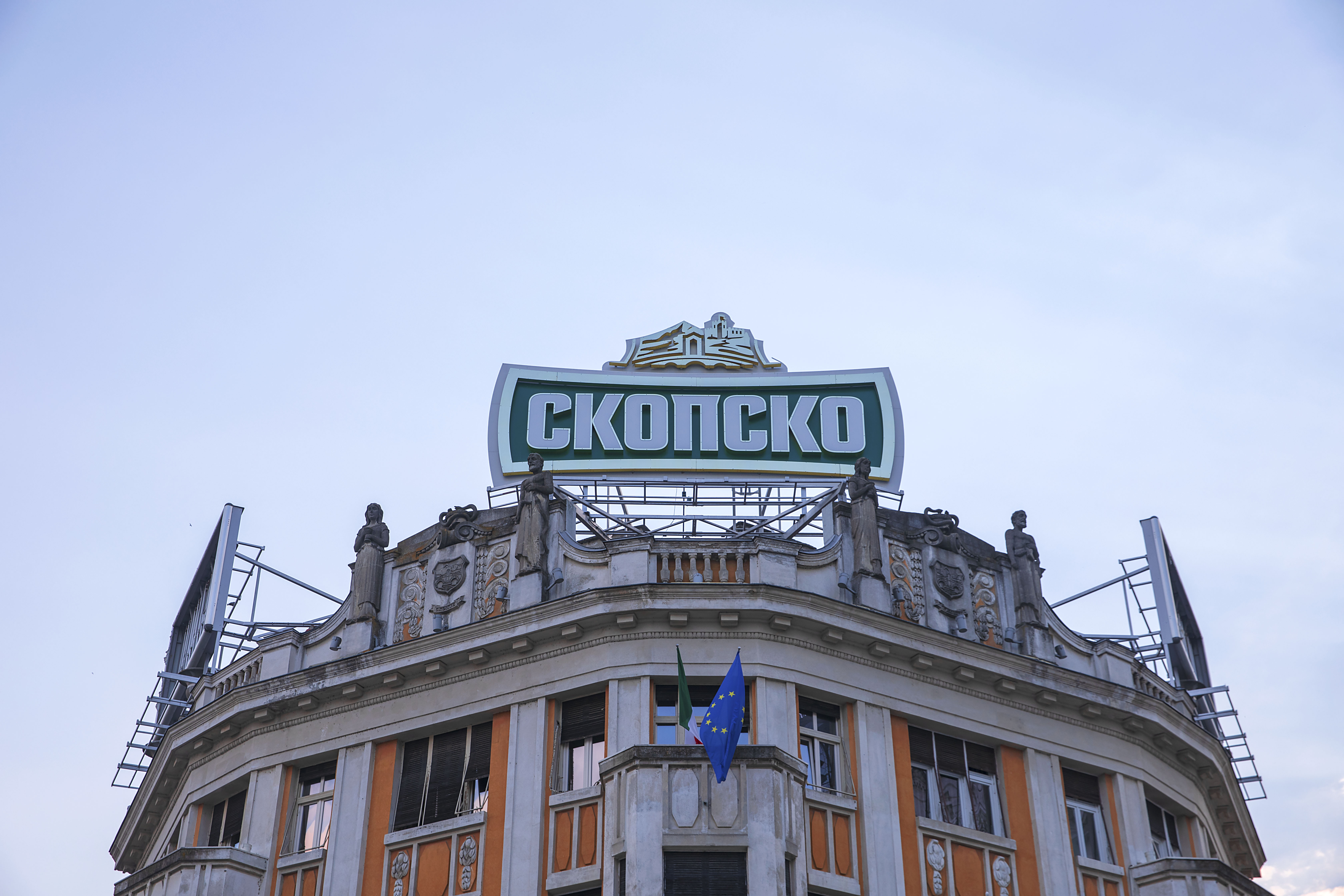
Before I get into the actual business, let me make a confession. I was seriously considering taking a little break from the blog and focusing on other things for a while. But then, every night, a tiny voice inside my head started screaming:
“Huseyin! You can’t do this to your readers! They’ve been waiting! They’ve been checking the blog first thing every morning! They probably haven’t been able to sleep wondering whether September’s post is finally up!” Well… okay. Maybe “screaming” is a bit of an exaggeration. And by “readers,” I may or may not be referring to the three people who accidentally bookmarked my blog years ago.
In a parallel universe, though, I am sure there is a massive crowd out there refreshing the page every morning, desperately waiting for my next adventure. Unfortunately, I don’t have quite that much confidence in this universe. 🙂
So, enough with the sweet talk. Let’s get to the good stuff. For the next few posts, we are heading to the juicy part of Europe, the part that decided not to join the European Union yet. We will be wandering through the streets of old Rumelia, or, in modern geographical terms, the Balkan Peninsula.
And what better way to begin than by hopping on a flight from SFO, spending a couple of hours pretending that an Istanbul layover is actually part of the vacation, and then catching a ninety-minute flight to Skopje, the capital of North Macedonia.
So buckle up. The Balkans await.
After landing at Skopje International Airport (formerly known as Alexander the Great Airport from 2006 to 2018) and making it through border control, I headed straight to the rental car agency to pick up my wheels for the trip.
Before we hit the road, though, there are a few things worth knowing if you’re planning to do a Balkan road trip. If your itinerary includes neighboring countries such as Kosovo, Serbia, Montenegro, Albania, Greece, or Bulgaria, you’ll need to make sure your rental car comes with a Green Card (International Motor Insurance Card). This is essentially proof that your car has the required insurance coverage when you cross into other countries in the region. And you will be asked to show your Green Card almost every border check. And this is where things get a little more interesting than your typical European road trip.
Most of these countries aren’t EU members, so don’t expect the kind of border-crossing experience you might be used to in Western Europe. There are actual border controls, passport checks, and depending on the country, season, and your luck that particular day potentially some serious waiting. A few hours at a border crossing is not entirely out of the question. So if you’re planning a Balkan road trip, build some buffer time into your itinerary. Google Maps may tell you it’s a three-hour drive. The border guard may have other plans.
As for the Green Card, I had read that getting permission for cross-border travel could be difficult with some of the big international rental companies. So rather than spending half my vacation negotiating with rental-car bureaucracy, I decided to go with a local company, ABD Rent a Car – Skopje.
If I remember correctly, I paid around €55 for permission to take the car into the non-Schengen countries (Albania, Kosovo, Montenegro), plus another €75 to enter Greece, on top of the regular rental fee. Bulgaria was another €75, although this is where things can get even trickier. Some rental companies simply don’t allow their cars to enter Bulgaria at all, for various reasons. Fortunately, ABD Rent a Car – Skopje did.
This was actually one of the main reasons I decided to start the trip from Skopje. There seemed to be considerably more flexibility when it came to finding a rental company that would allow the car to cross multiple borders. From what I had read during my research, doing the same thing starting from Greece, Bulgaria, or sometimes even Montenegro can be extremely difficult or, in some cases, practically impossible.
When you hear the word “Macedonia,” there is probably one person who comes to mind almost immediately: Alexander III of Macedon, or, as most of us know him, “Alexander the Great.”
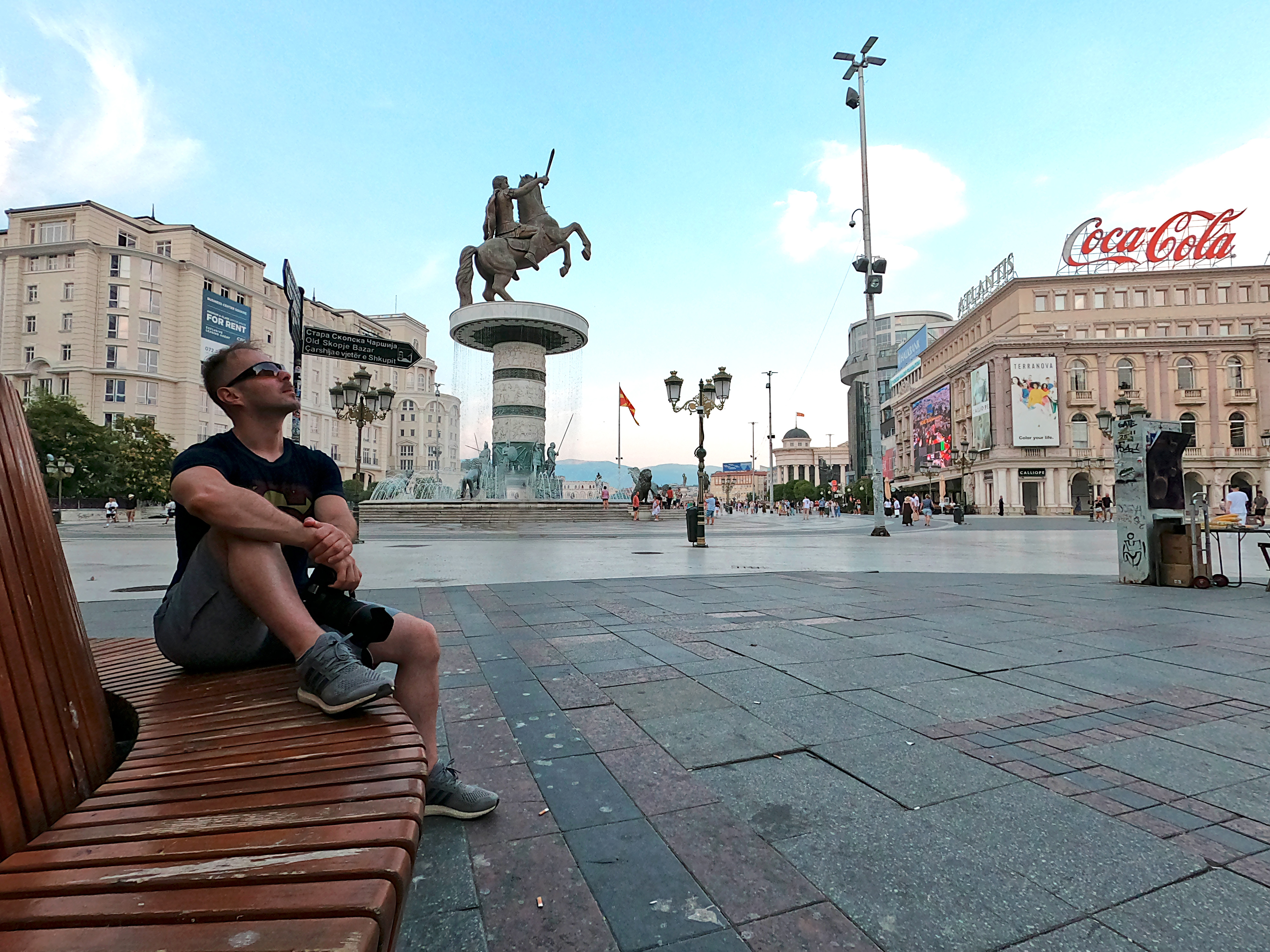
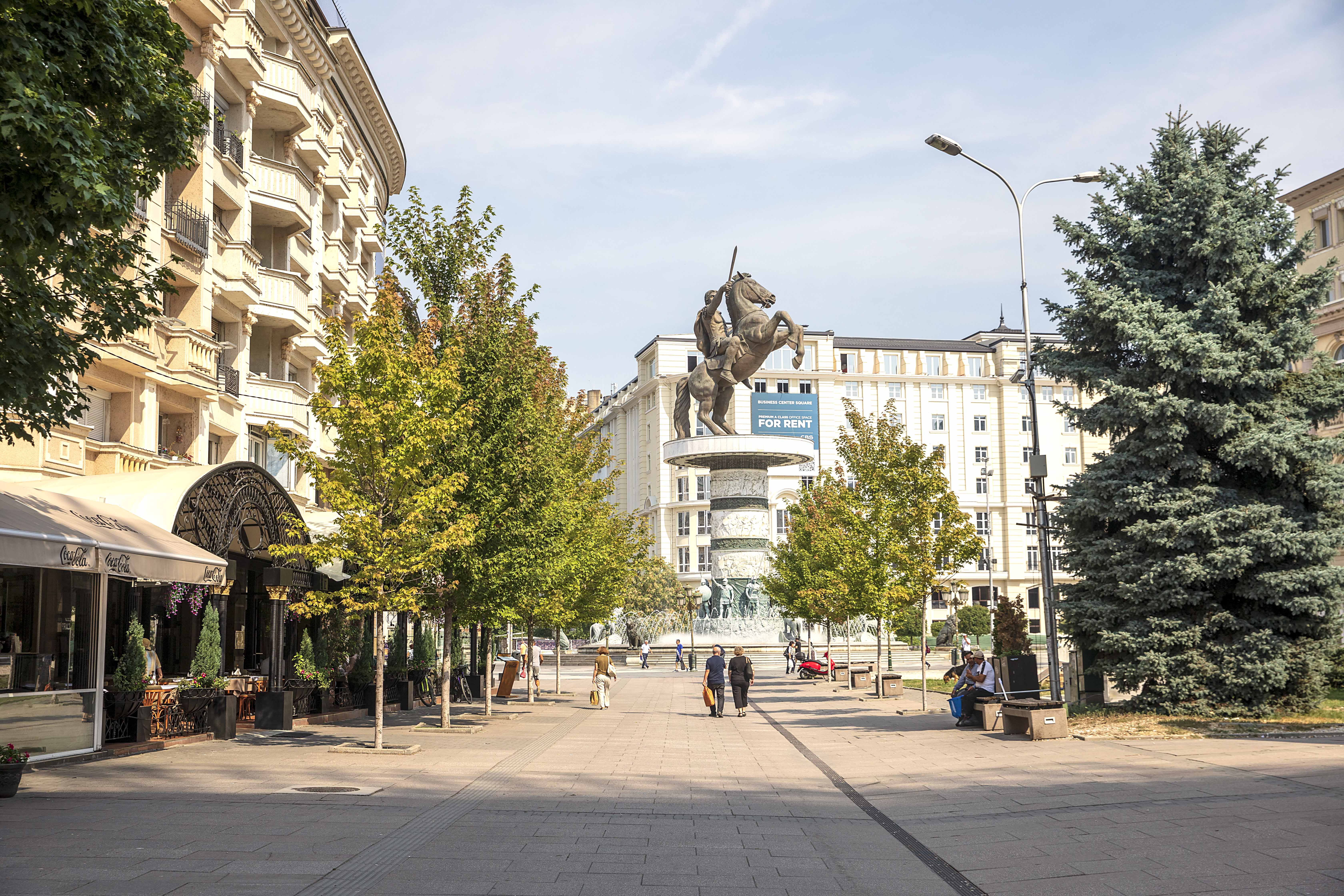
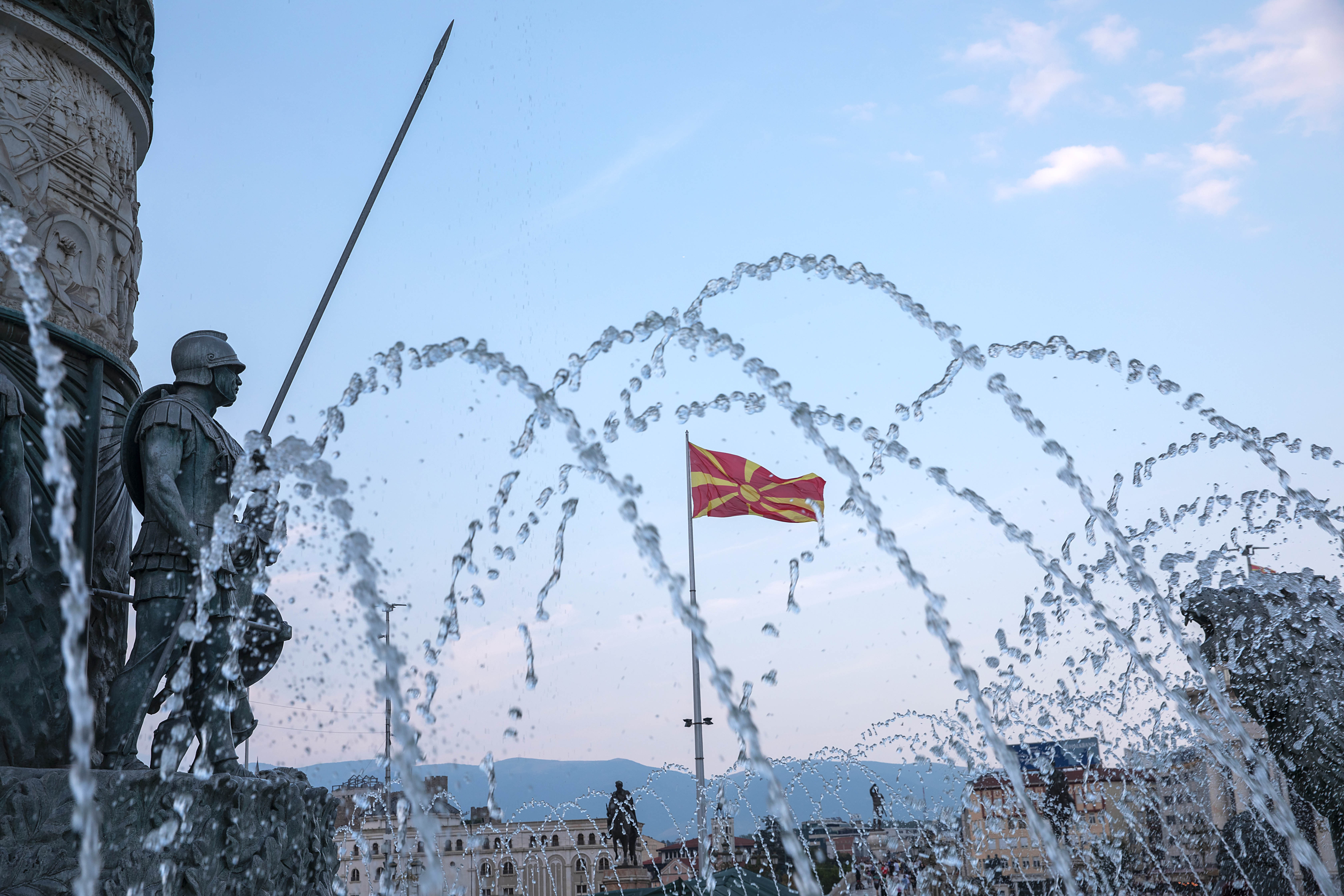
He was actually born in Pella, in what is now Greece, but his legacy is still at the center of a decades-long dispute over the history and heritage of Alexander the Great and ancient Macedon. Let’s not open that particular can of worms here, at least not yet. We have a Balkan road trip to get to. 🙂 Instead, start your journey in Macedonia Square, the heart of Skopje. Here you’ll find the magnificent statue of Alexander the Great, officially known as “Warrior on a Horse,” along with a statue of his father, Philip II of Macedon.
I’ll touch on this fact multiple times throughout this blog post, but Macedonia remained under Ottoman rule for 520 years, from 1392 to 1912. So, everywhere you look, you’ll see a piece of their legacy.
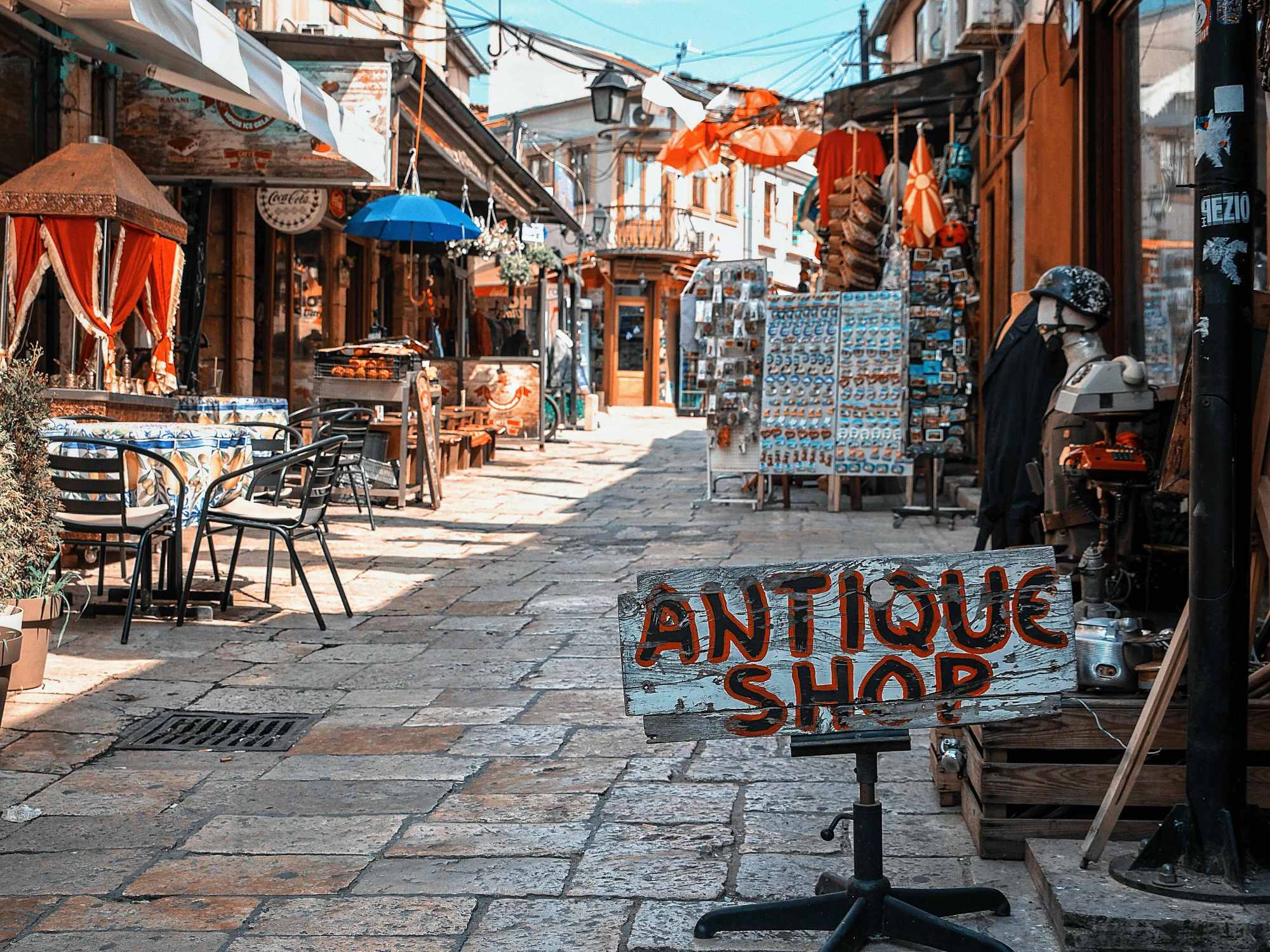
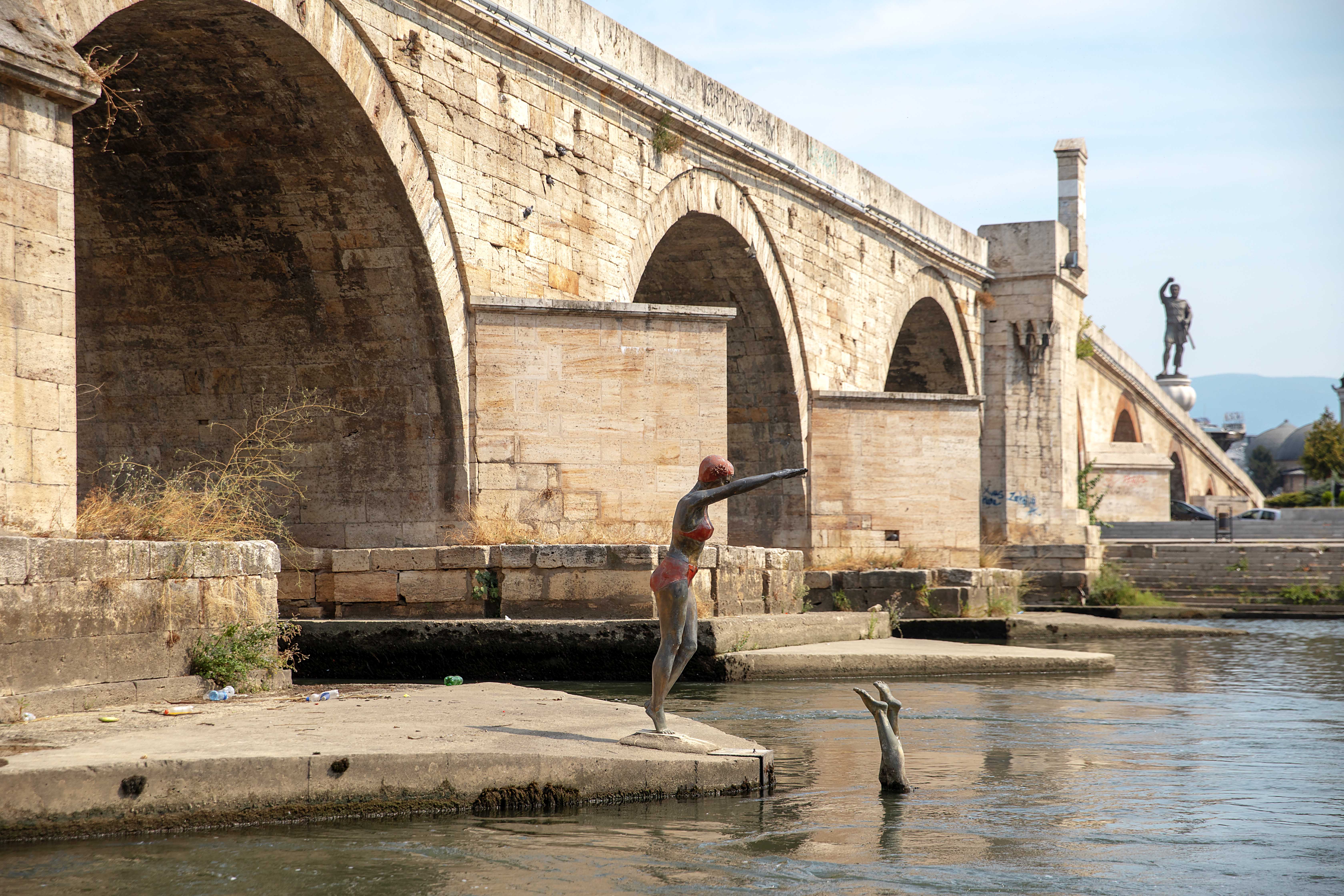
For example, one of the most popular areas in Skopje is the Old Bazaar, which definitely feels like a small Ottoman bazaar. You’ll also need to take a walk across the old Stone Bridge to reach the other side of the city, which is divided by the Vardar River.
The bridge was built by Sultan Mehmed II the Conqueror (Mehmed II Fatih) between 1451 and 1469. So, the construction of this bridge actually started two years before Istanbul was conquered by the Ottomans.
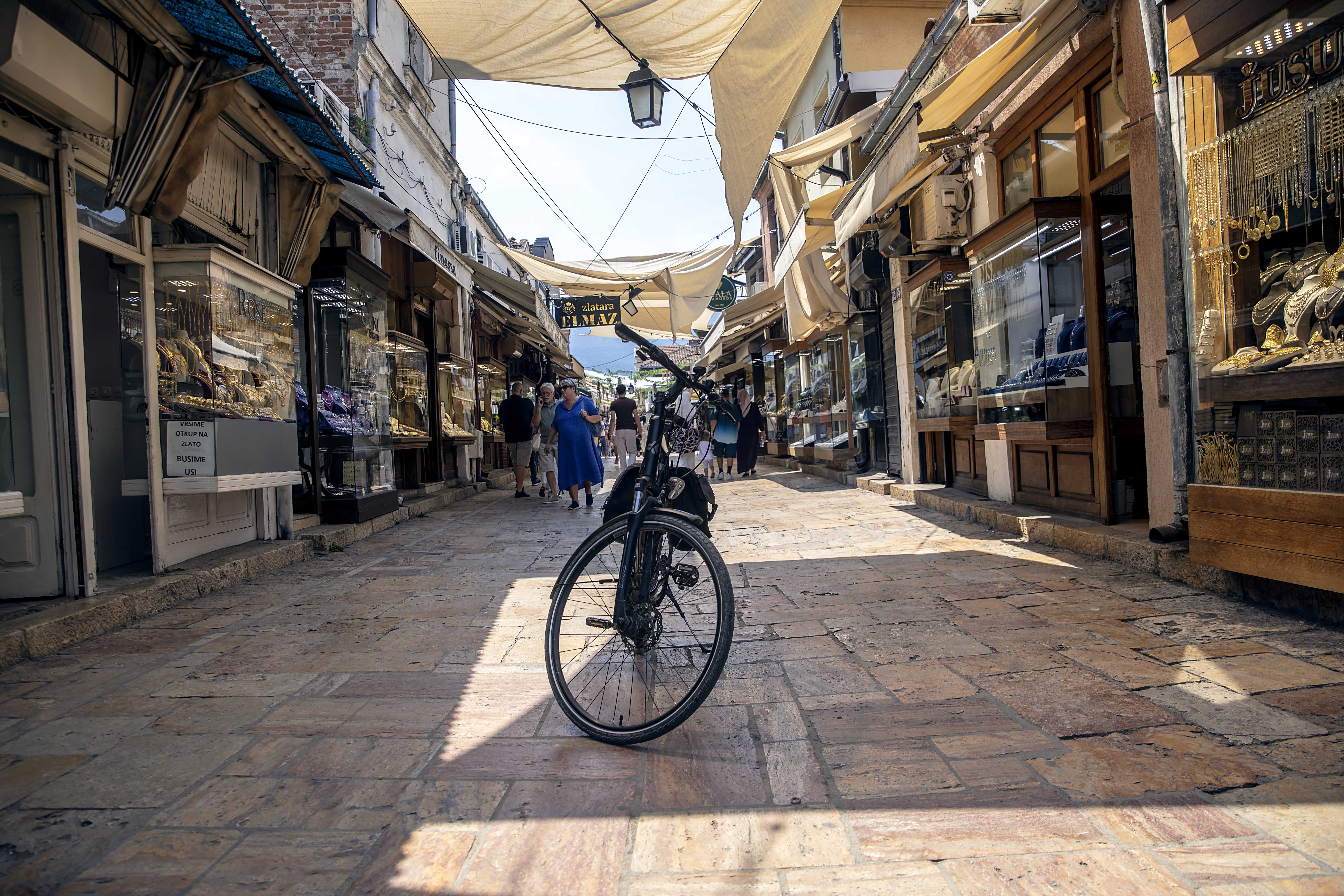
The Old Bazaar is mostly filled with souvenir shops, cafes, restaurants, and jewelry shops. It’s nice to walk around for a few hours, grab a bite to eat, have a drink and shop.
We were there in the second half of August, and it was absolutely burning hot. I think the temperatures were averaging around 90-95F every day. So, if you visit during the summer, it might be hard to stay outside for too long during the day.
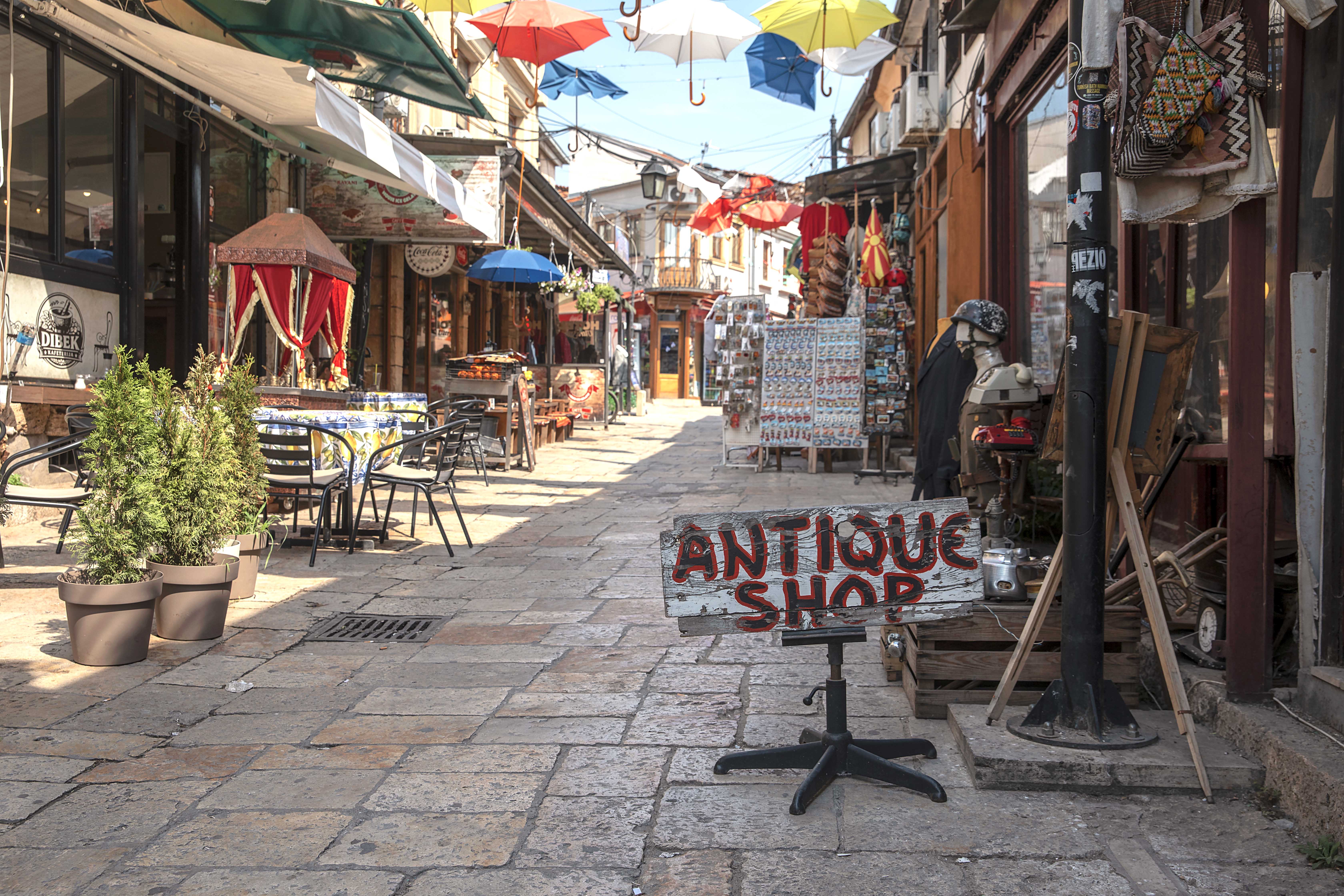
While walking around, we came across an antique shop. I don’t remember the exact name, but I believe it was “Michel Antique Shop.” We ended up talking to the owner for almost an hour, chatting about the history of Macedonia, Yugoslavia, Tito, and the Balkans. He also showed us a bunch of old maps from 19th century showing the demographics of the region.
There was plenty of stuff from the old days inside the shop. He showed us the hat that young kids used to wear during celebrations in old Yugoslavia, called the “Union of Pioneers of Yugoslavia” hat, or “Titovka.” He told us that he was part of the last generation to wear it. It was a really fruitful conversation, so if you have some time, definitely check out the store. Or, if nothing else, it’s a pretty good place to escape the heat outside. 🙂
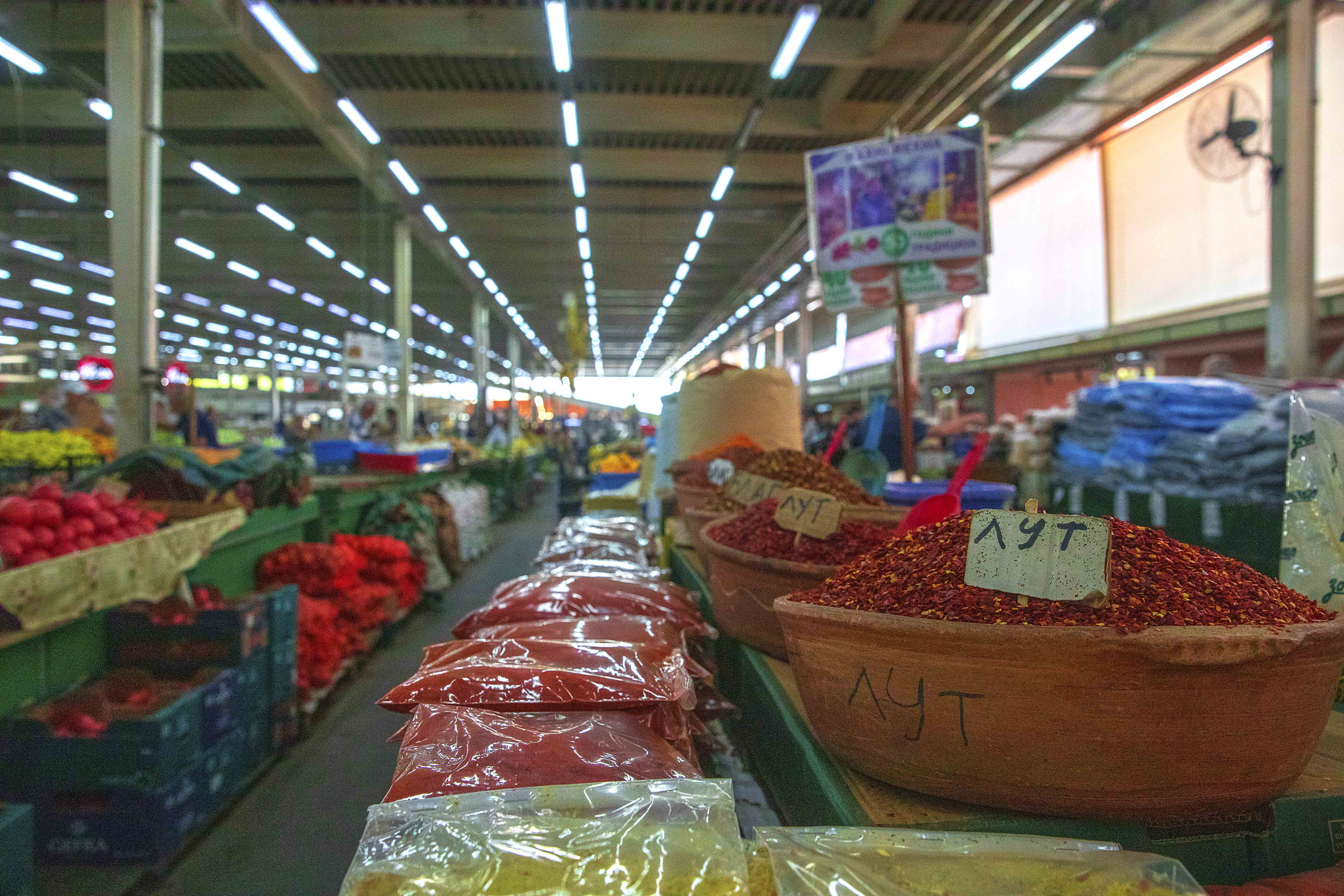
Do you know that feeling when you go to a supermarket in the US and there is almost no smell in the fruit section? You look at all those perfectly displayed fruits and wonder what you’re actually eating.
Maybe you remember from your childhood, if you’re not Gen Z, the aromatic smell of fruits and spices you would experience when visiting a greengrocer, herbalist, or simply a local grocery store. You might think that kind of smell has long gone extinct, but that’s not true.
At the northern end of the Old Bazaar, there is another market called Bit Bazaar, which has a covered food and spice section. Even just walking around and smelling the fresh produce and spices is worth the visit to Skopje. Most sellers only accept cash, so be prepared to have some with you. Macedonia uses the Macedonian denar as its currency, and as of September 2026, the exchange rate is around $1 = 54 denars.
Also, keep in mind that Skopje is not an expensive city. You can easily have a great meal for around $7-10, or even less.
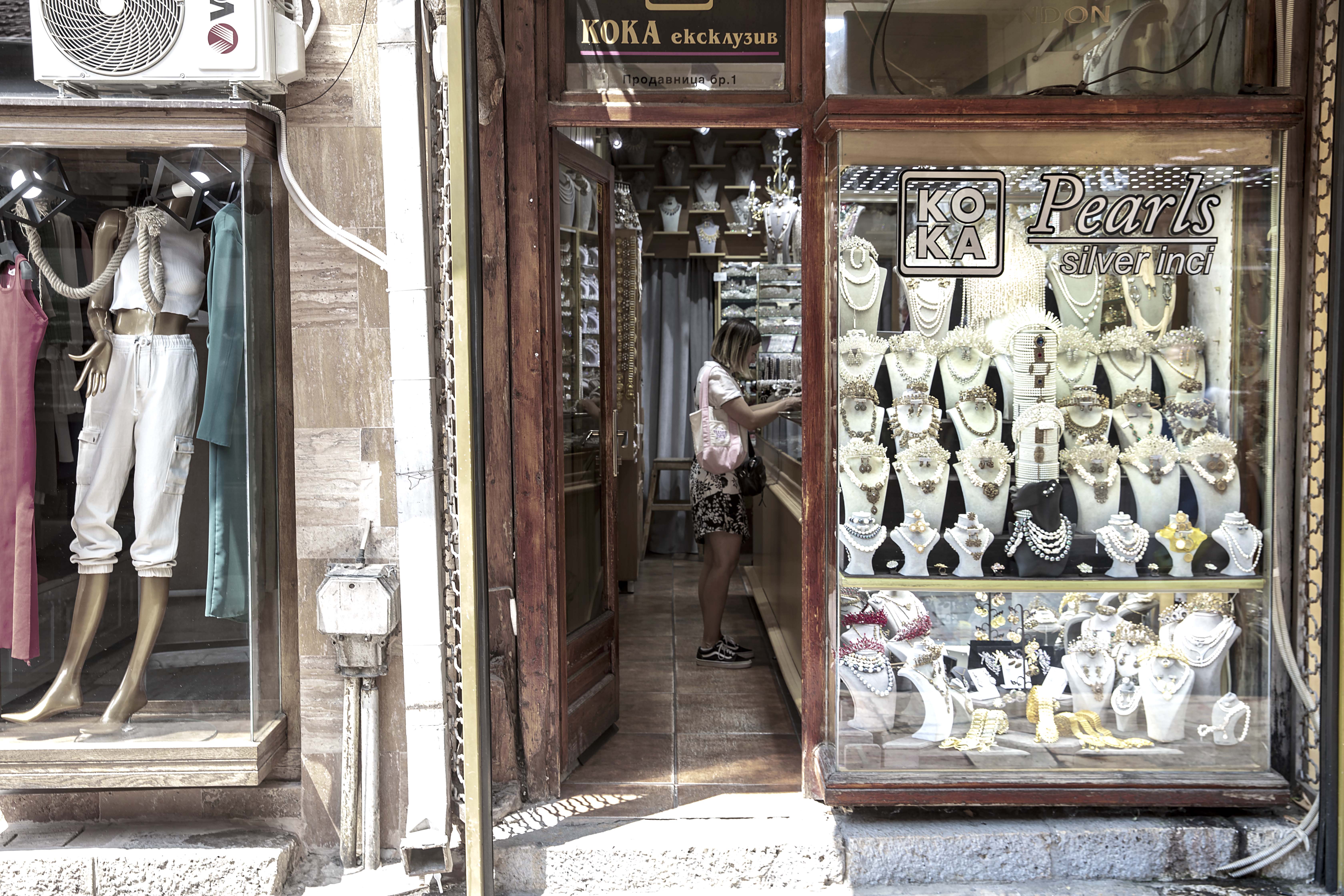
The Old Bazaar has plenty of jewelry shops, and you’ll see a bunch of them selling pearls supposedly from Lake Ohrid. Make no mistake, most of them, if not all, are fake. Lake Ohrid pearls are highly sought after, and if you want the real deal, you should buy exclusively from one of only two families: the Talev family or the Filev family.
Pretty much every shop in the Old Bazaar will tell you that they can provide a certificate of authenticity if you buy from them. Well, I’m sure they have thousands of those certificates freshly printed on an HP printer at the local print shop.
In the picture above, you can see a tourist who is about to be ripped off by a local fake-pearl seller, simply because of her love for Lake Ohrid pearls and her refusal to listen to anyone. So, definitely a no on the pearls. 🙂
Accommodation is also not that pricey in the Skopje area, but if you’re looking for a relaxing retreat, your options might be somewhat limited, especially if you’re traveling with a rental car.
We stayed at Hotel Centar, which is about 10-15 minutes away from the Alexander the Great statue. They also provide free parking, so you can leave your car there while exploring the city. Oh, plus the delicious breakfast…
However, if it’s burning hot outside and you have bags in the car, definitely look for a covered parking spot. I also used the “26 July” parking garage for a day because of the extreme heat. They have very affordable rates, just a few euros for the whole day.
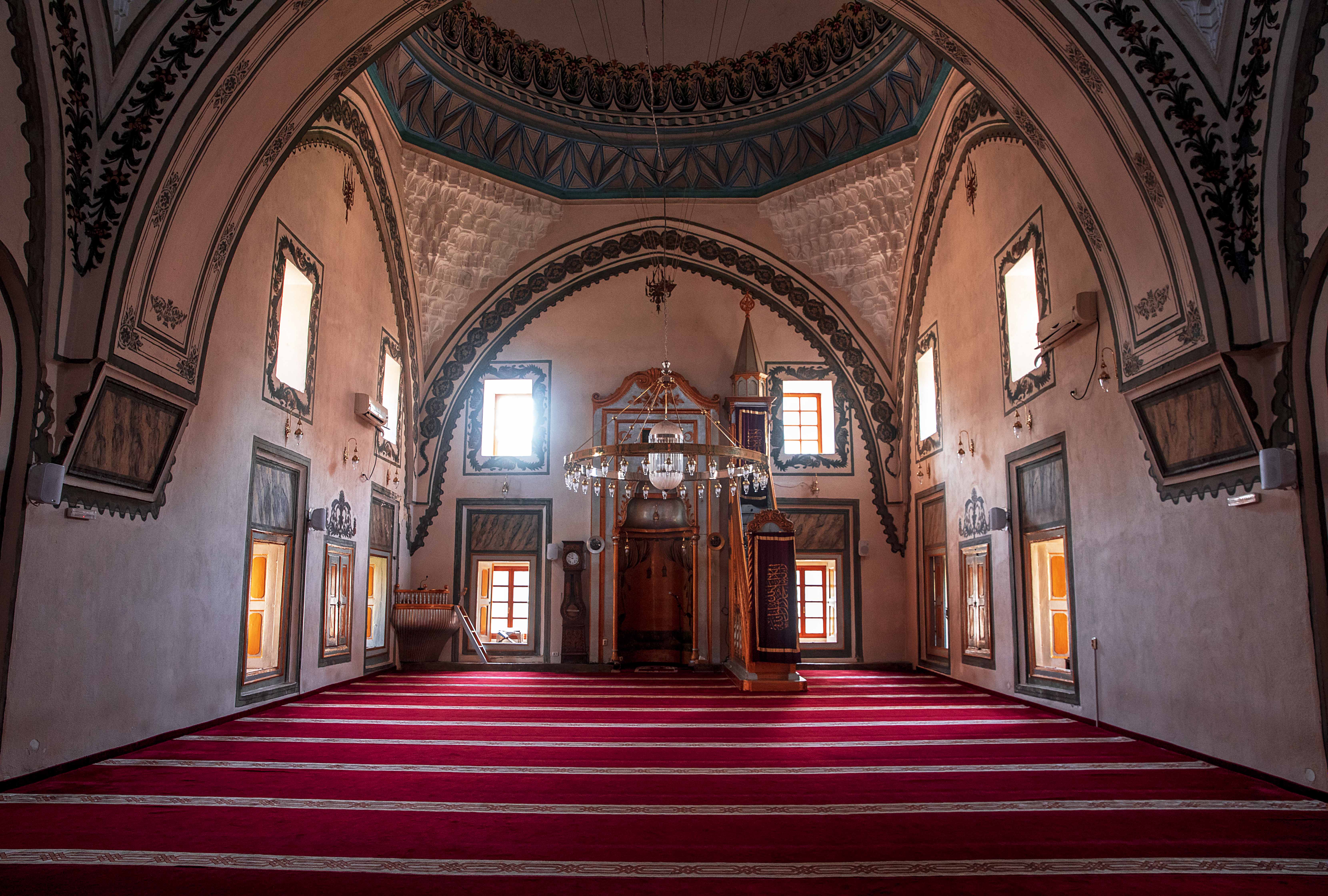
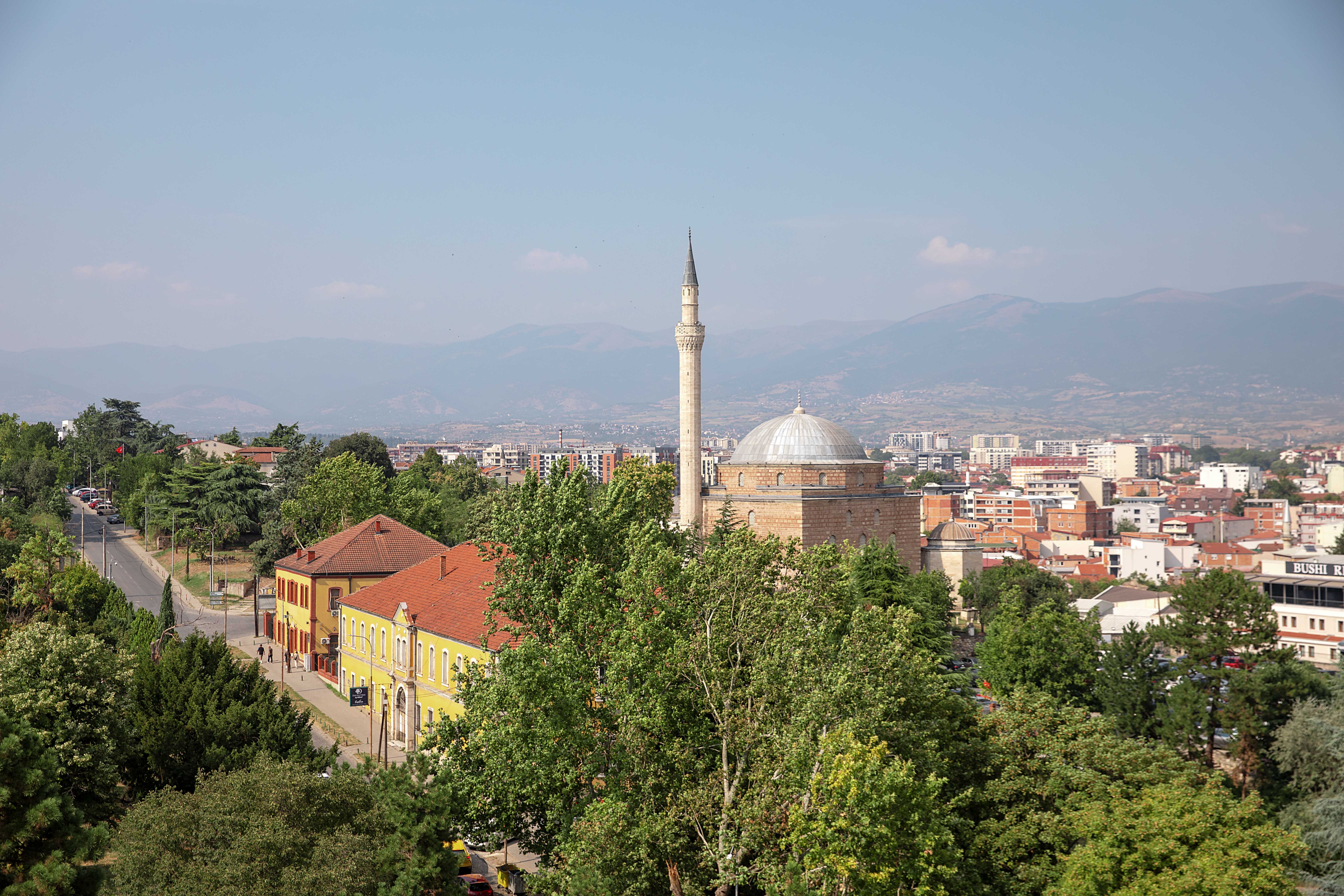
North Macedonia is predominantly Christian, with Christians making up around 60% of the population. The Muslim population accounts for around 32%. However, Old Town Skopje is full of mosques, most of which were built during the Ottoman period. Definitely check out Mustafa Pasha Mosque, Sultan Murat Mosque, and Murat Pasha Mosque. Many of these mosques have been restored with support from the Turkish Ministry of Culture and Tourism.
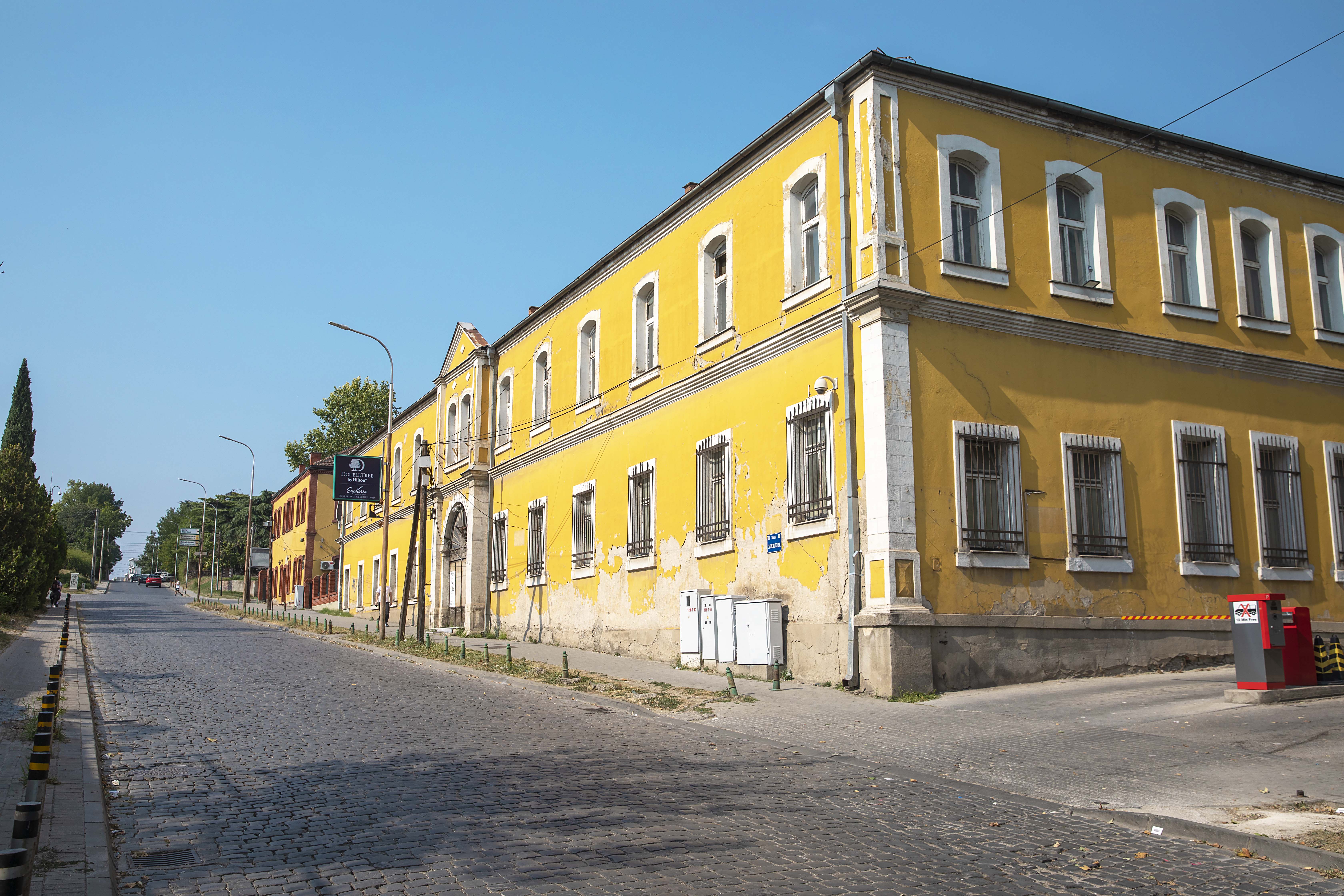
The building above is another witness to Ottoman rule in Skopje. The Ottoman Redif Barracks is one of the city’s finest surviving examples of late-Ottoman military architecture. The complex served as a vital administrative and logistical hub for Ottoman forces across the central Balkans throughout the late 19th and early 20th centuries.
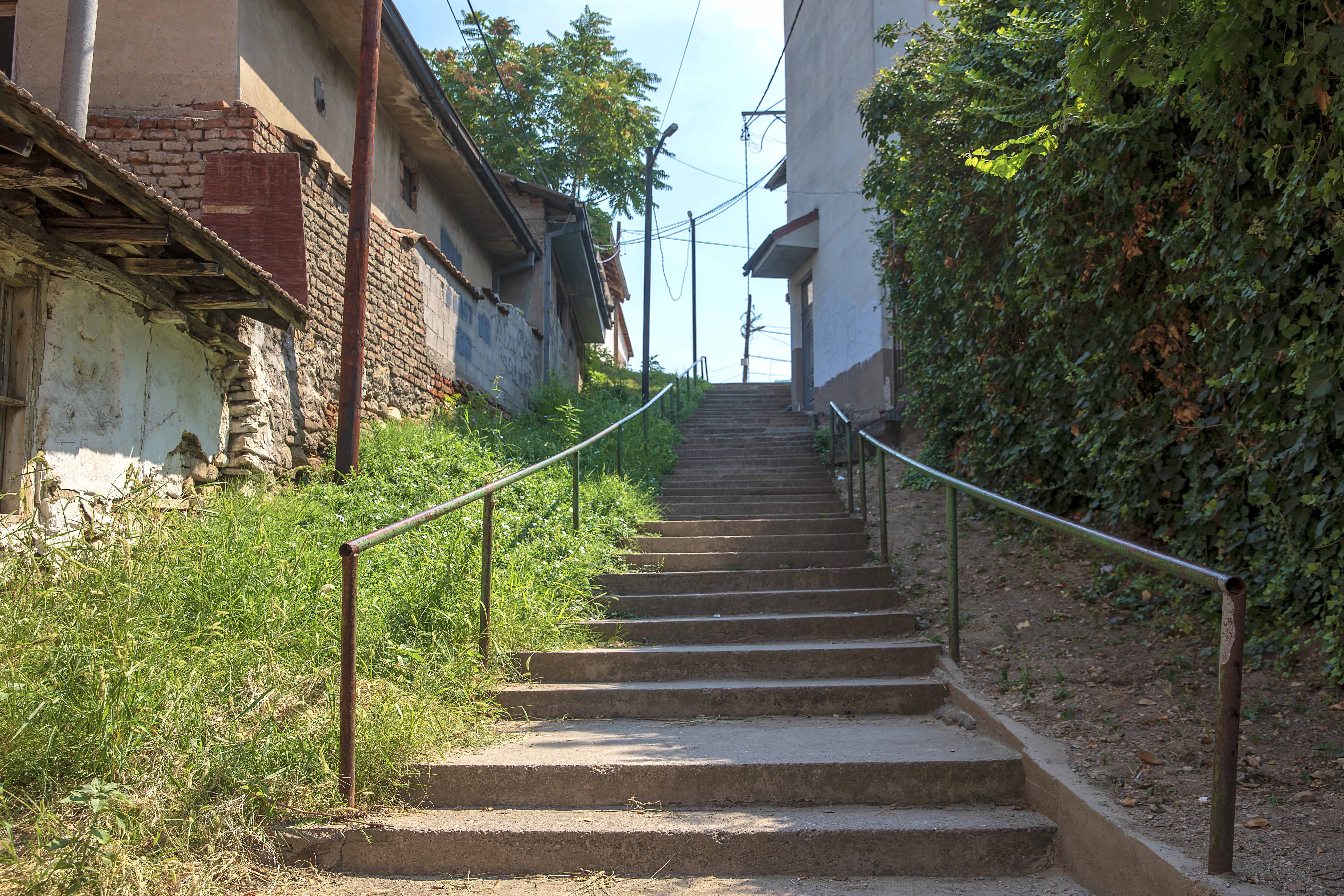
One thing to note, though, is that this becomes pretty obvious when driving or walking through the suburbs of North Macedonia and some parts of Skopje: the infrastructure needs some work. There are plenty of buildings that are almost in ruins, along with roads full of potholes and they feel like village roads.
The outskirts of the Old Town also look quite old and could definitely use some work. I’m sure things will improve as North Macedonia gets closer to joining the EU, although I’m also sure that will take some time based on my observations. For example, the road from Greece to Skopje is super smooth. It is a toll road, but it was built with the help of EU funds, so you can definitely see the difference. I definitely hope it gets better.
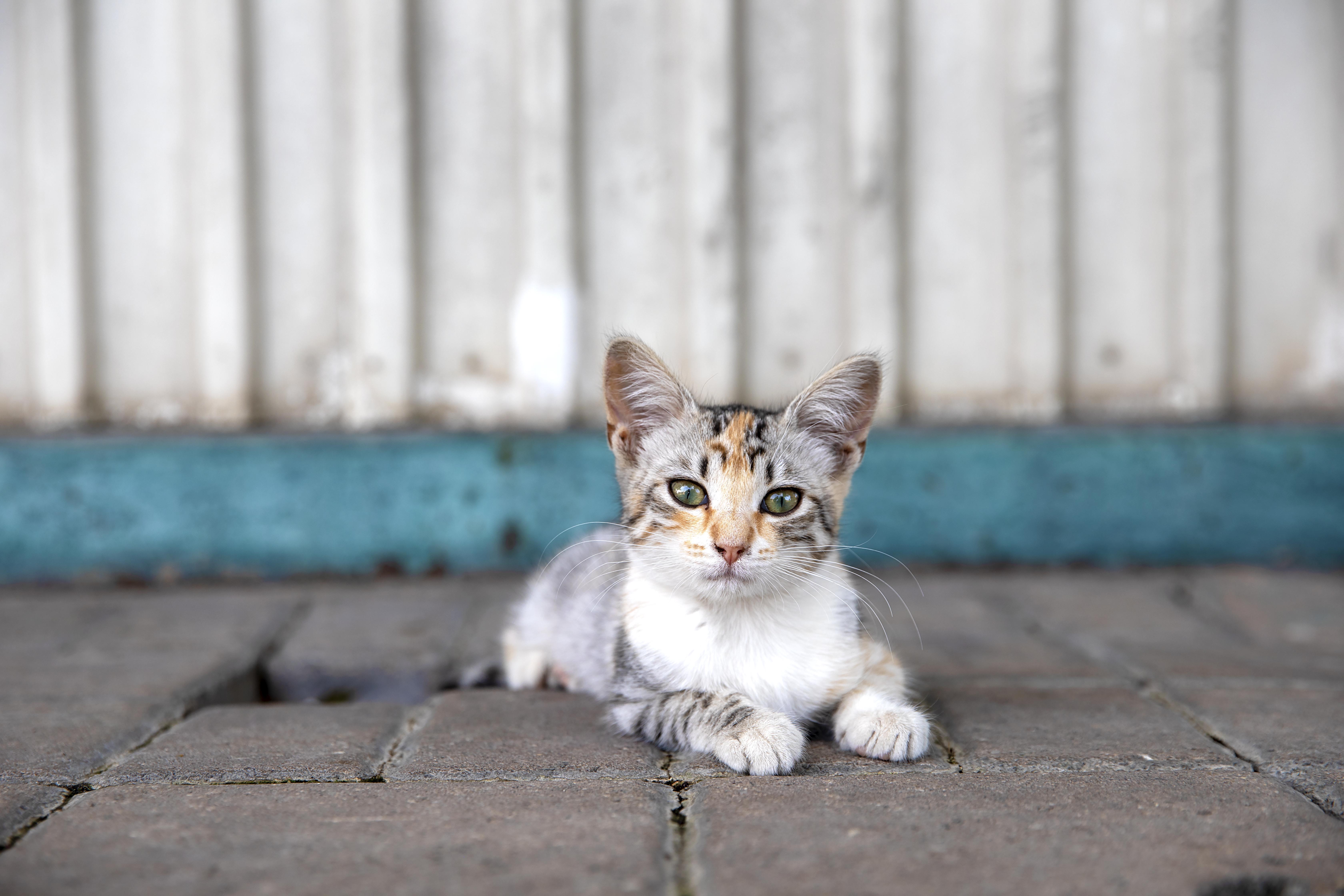
Cats are an integral part of Balkan life, and you might see them all over the place. Macedonian cats are definitely friendly, too. And this kitty knows how to pose. 🙂
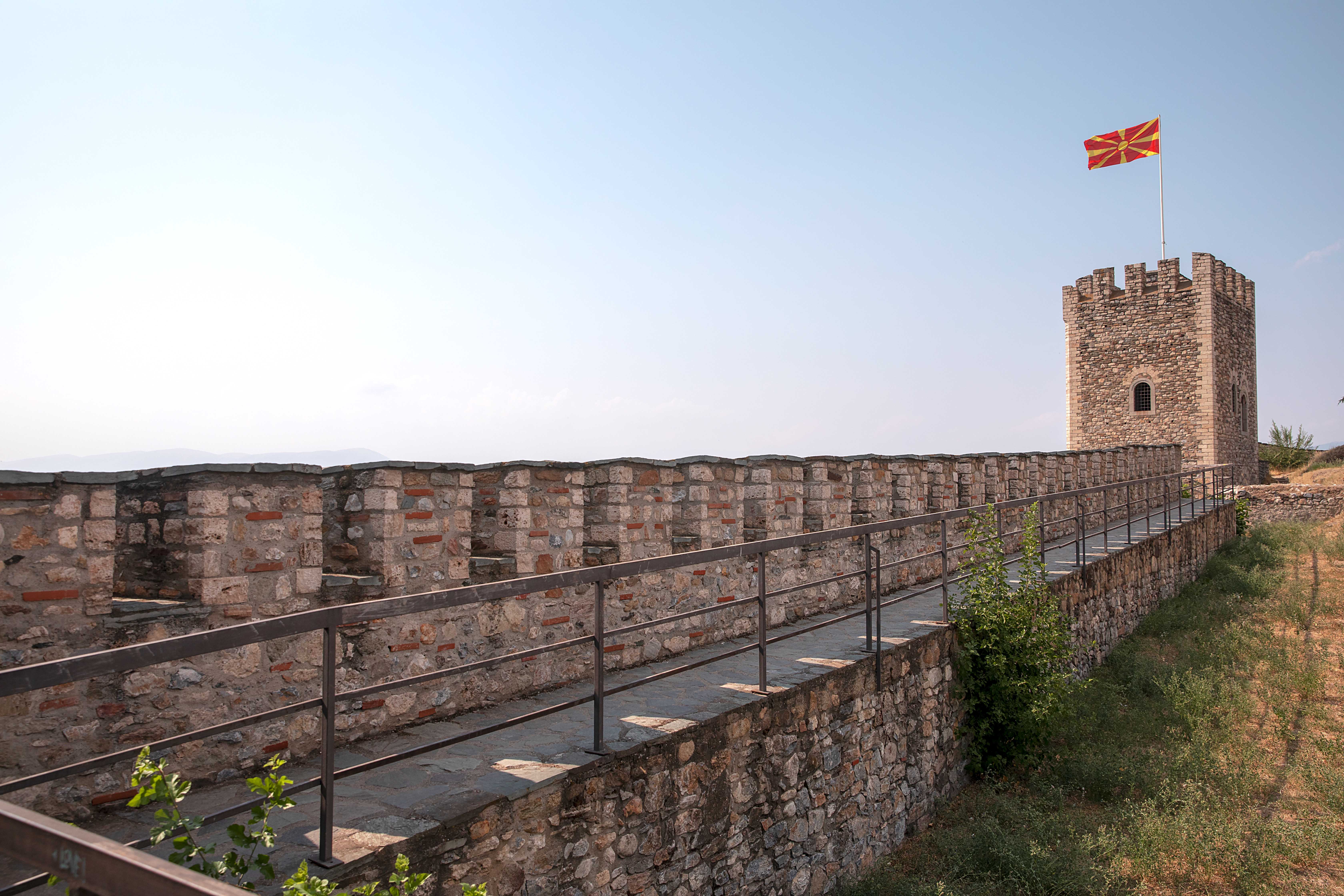
If it’s hot outside, it might be a bit challenging, but I definitely suggest visiting the Skopje Fortress as well. The history of the fortress goes all the way back to the 6th century AD, during the reign of Byzantine Emperor Justinian. The walls are pretty well preserved and maintained, although the inner garden has quite a bit of dumped trash, including plastic bottles, wrappers, and some debris.
Still, definitely take a walk along the walls and capture the giant Macedonian flag proudly waving in the center of the fortress.
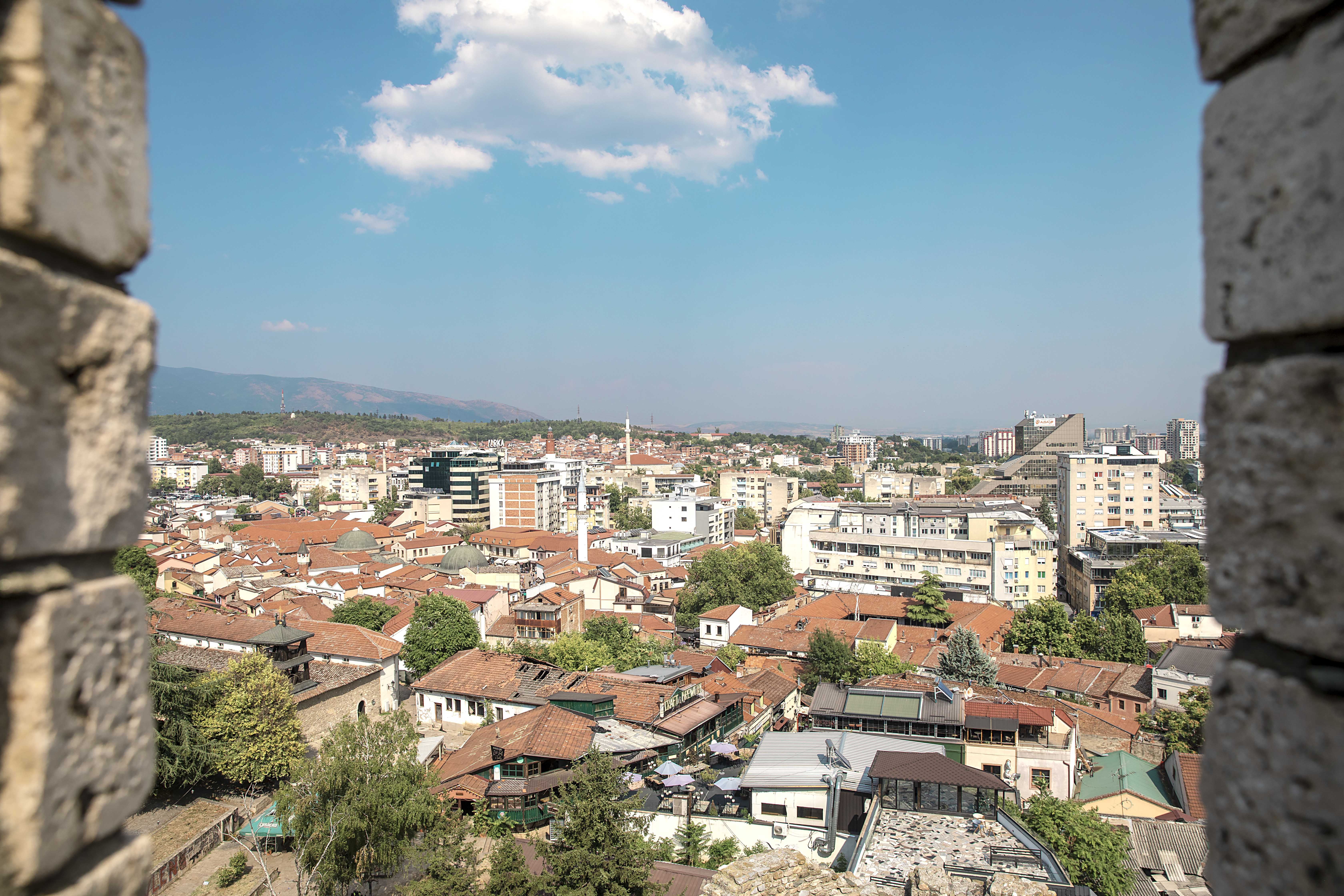
The fortress also offers great viewpoints (small towers on the walls) for taking pictures and enjoying beautiful views of the city.
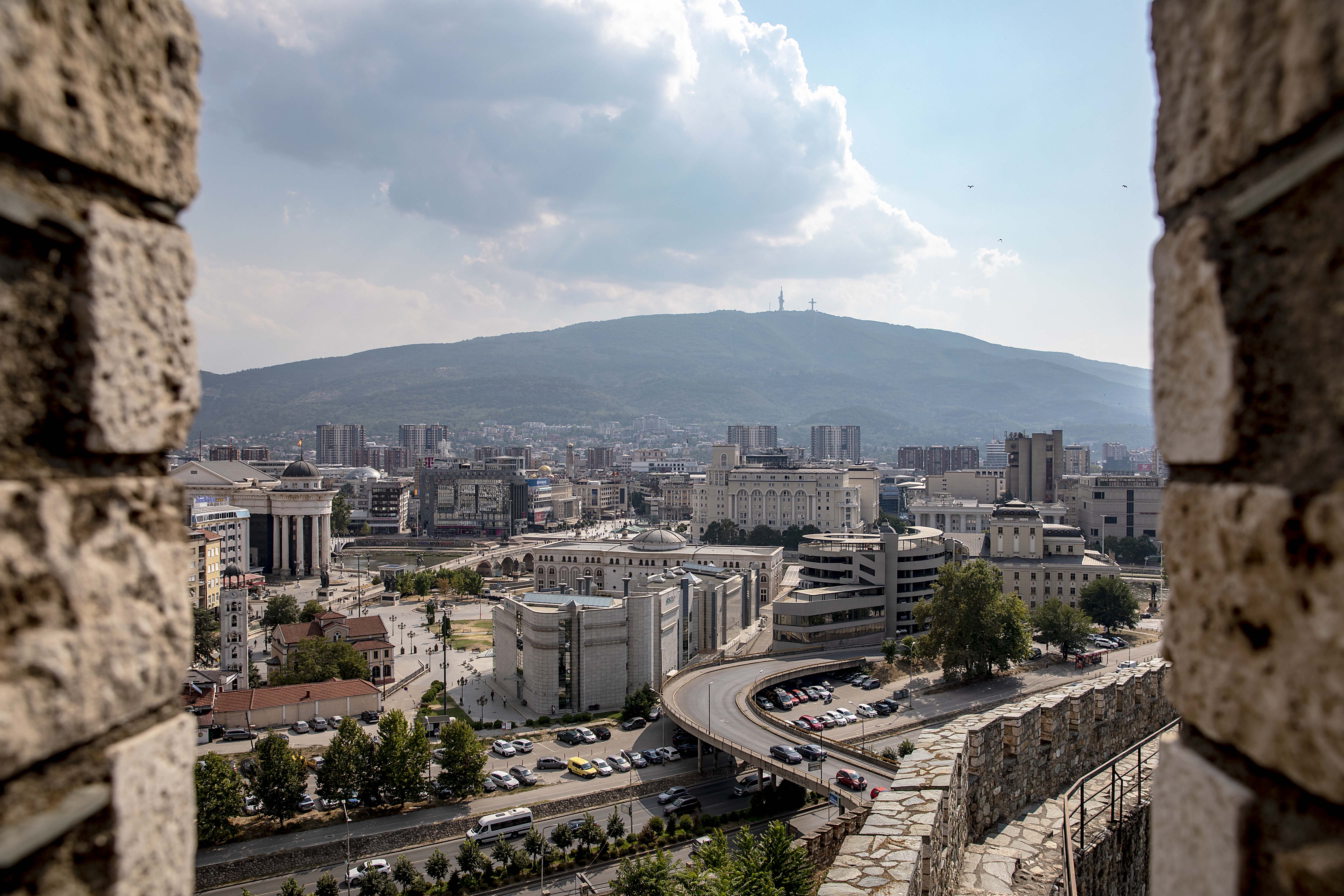
We wanted to visit the Millennium Tower in Skopje as well. However, at the last minute, I noticed that the cable car that takes you up from the Vodno station was out of service for maintenance, and it wouldn’t be open for some time.
You could still hike up there if you have the time, and I believe it takes about 90 minutes or so one way, but under the extreme heat, it would not have been very pleasant. And I believe you cannot drive up to the top of Mount Vodno either.
Well, you can still see the tower and the cross from Skopje Fortress as well.
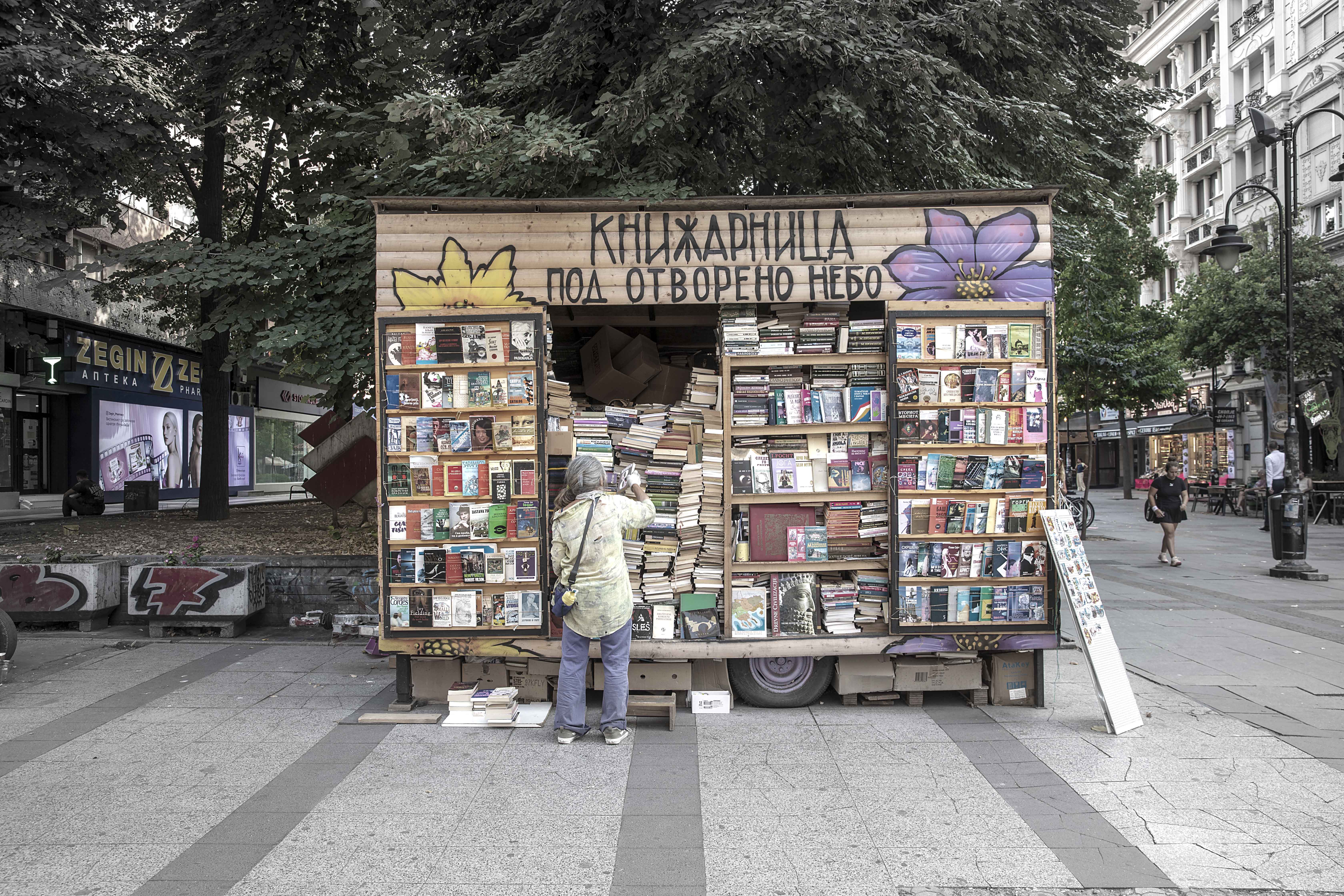
Up until this point, we had mostly explored the Old Town of Skopje. However, the western side of the Vardar River felt much more upscale and modern.
There are plenty of decent cafes, restaurants, and shopping malls on this side of the city, especially along Macedonia Street, which starts at the square where the Alexander the Great statue stands.
Don’t be surprised if you see a bunch of Turkish stores and people around. Turks have strong connections with the countries in the Balkans, and Macedonia is no exception. On top of that, thanks to visa-free access, affordability, and, of course, the historical ties between the two regions, North Macedonia is one of the popular destinations for Turkish people.
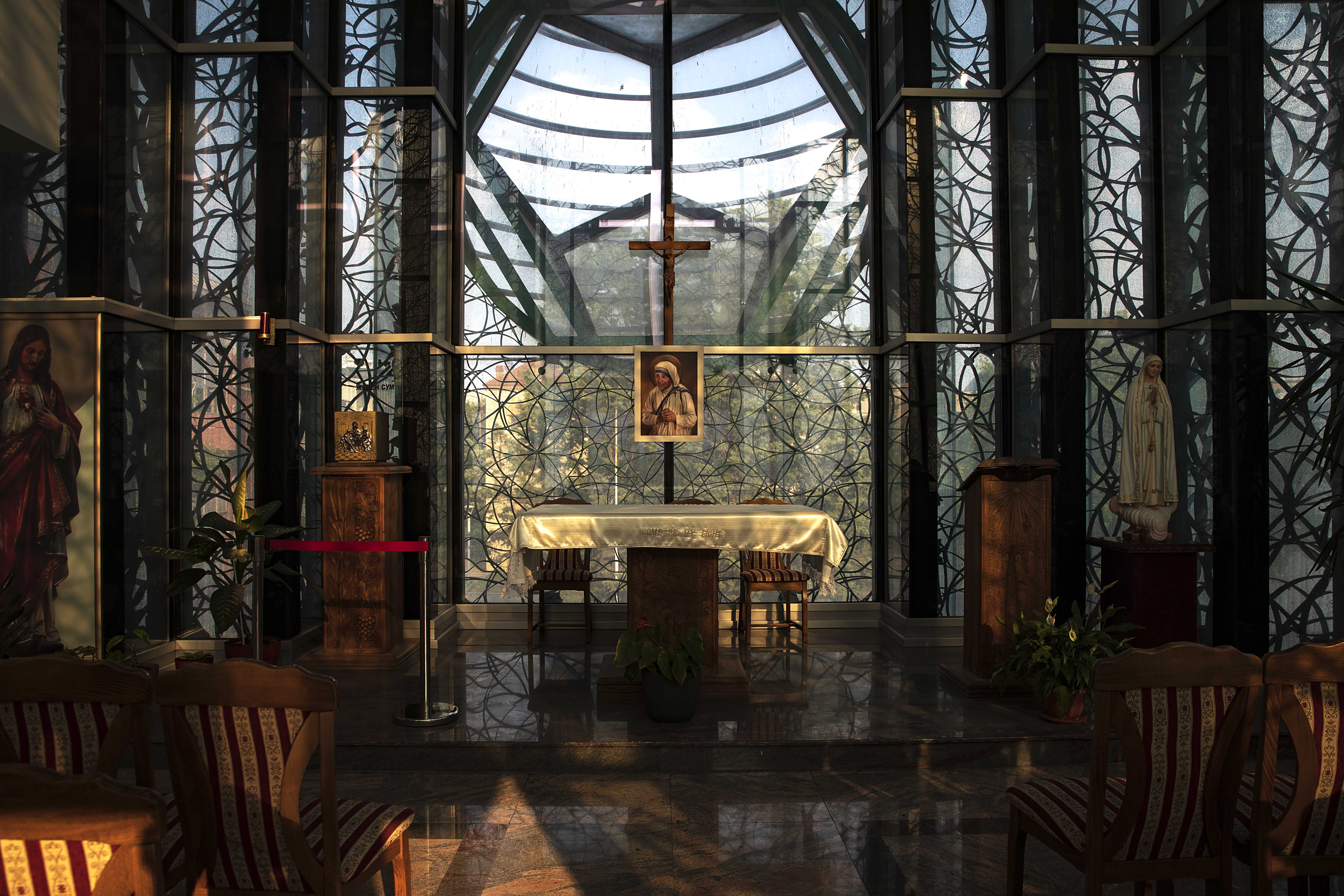
There is one more place you shouldn’t skip in the Centar neighborhood. Did you know that Mother Teresa, the Roman Catholic nun, missionary, and humanitarian, was born in Skopje? She became one of the most recognized figures of the 20th century for her work helping the poor.
Her house has been turned into a museum and is open to everyone free of charge.
Well, we almost came to the end, but we haven’t even mentioned anything about food yet, have we.
Our food experience in North Macedonia was not so great at first. Most places in the city center offer OK food. We initially wanted to try Macedonian kebabs at Kosmos Kebabchilnica, but it’s a small place and you have to wait outside for a while to get in.
Then I found a place called Kaj Serdarot, which had good ratings and was located near the entrance of the Old Town. We were happy that we were finally going to have some delicious Macedonian kebabs. Unfortunately, the food, including the Macedonian beans, was very salty, dry, and not very tasty. Even the so-called handmade bread they brought us was cold.
I was honestly surprised to see how Kaj Serdarot had so many good reviews. Well, after I paid the bill, I noticed that we had been sitting right next to another place called Kaj Goce, which actually had not-so-good ratings and Kaj Serdarot was closed for the day although Google Maps said it was open. Lesson learned: Don’t go to Kaj Goce. 🙂
Even in Ohrid, the food was so-so, way below our expectations.
However, there were two places that saved the Macedonia trip when it came to food. One was Restaurant Sofra Veljanov in Negotino, where we stopped on the last night of our trip while heading from Greece to Skopje. It was a rainy night, and this local place turned out to be a great find. Service, good quality, atmosphere… it definitely exceeded our expectations.
The other was a Bosnian place called Restaurant “Saraevo”, which I visited on my last day in the Old Town of Skopje. They had very delicious Macedonian kebabs and veal soup. I would highly recommend trying this place. And again, bring cash. Most places in the Old Town are cash only.
For now, that’s all from Skopje. We will cover Ohrid in the coming months, hopefully.
There is so much to explore in the Balkans, and the experience is truly unique. Don’t miss the opportunity to visit the Balkans now, because in the future it might become harder to tell the difference between these cities and the rest of Europe.

