In the previous chapter, we wandered through the enchanting streets of Mostar, the jewel of Bosnia and Herzegovina, where stone bridges and the river seem to hold time still. And if you thought that marked the end of our Bosnian journey and that it was time to head home, you are completely mistaken. We are far from done here. There are still plates of juicy Ćevapi waiting to be savored, warm trays of Bosnian burek layered with history and comfort, and cups of Bosnian coffee strong enough to slow the rush of the world. Not to mention the desserts, small sweet reminders that this cuisine does not just feed you but lingers with you.
Beyond the food, there is something even more enduring: the history this small yet profoundly layered country carries within its hills, rivers, and cities. Bosnia does not just tell its story. It invites you to walk through it, taste it, and feel it in every corner.
After wrapping up our time in Mostar, we set off northeast toward Sarajevo. The drive takes just a little over two hours, but it is worth keeping an eye on the road. There are plenty of speed cameras along the way, and the speeding limits drop quite a bit in several sections of the highway. It feels like a sensible precaution, likely aimed at preventing high-speed driving and reducing accidents.
However, before we continue on to Sarajevo, there is one more intriguing stop ahead. A hidden place carved deep inside a mountain, once built to shelter the head of state in the event of a nuclear apocalypse. And we are going to explore it.
The phone is ringing… We should probably answer that.
After spending the night in the town of Konjic, we set out early in the morning toward a top-secret nuclear bunker hidden deep within a Bosnian mountain. To visit, you need to email in advance to make a reservation. They clearly instruct you to bring local currency for the entrance fee, although once inside, the process felt surprisingly relaxed, they even seemed to accept any types of payment.
The entire site sits within a military compound. You arrive at the gate and park outside, but there is no real parking area. I would strongly recommend arriving at least 30 to 45 minutes early, since you will likely be parking along the roadside without blocking traffic until the gate opens.
Once the gate opens, visitors are taken in shuttle buses down into the complex which look nothing but a 3 story apartment from the outside. You step off the bus briefly to pay the entrance fee, though the level of strictness around it does not feel very formal. It even made me wonder whether anyone would have noticed if we had not been properly checked for tickets.
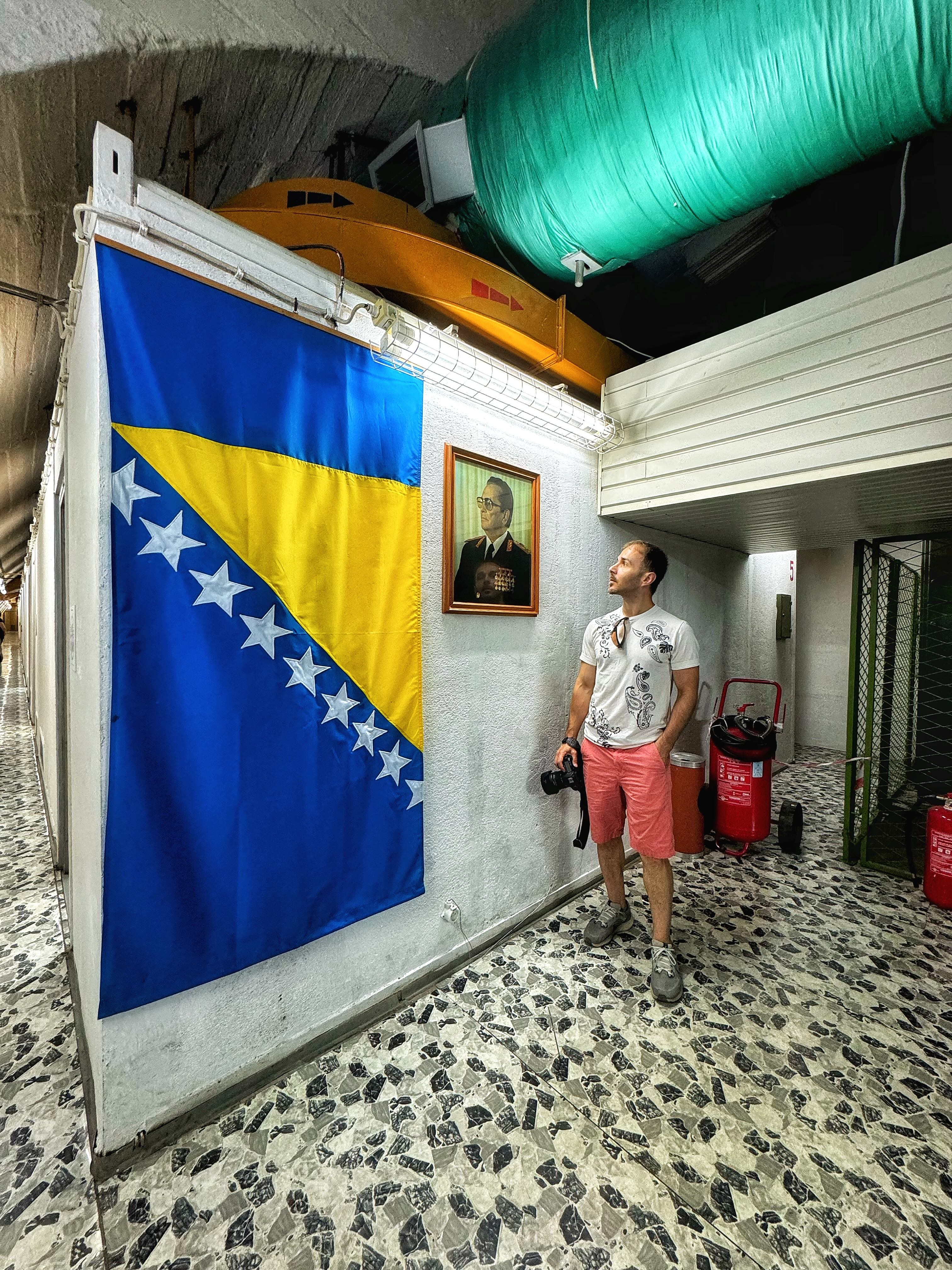
Inside, the bunker feels eerily mysterious. You move through endless corridors, chambers, and rooms, many still bearing traces of its original purpose. Portraits of Josip Broz Tito, the Yugoslav revolutionary and long-time leader for whom the bunker was built, appear throughout the complex. It was intended as a doomsday command center and shelter for him and a small circle of Yugoslav elites, designed to function in the event of nuclear war. Walking through it, there is a lingering sense of isolation and secrecy, as if the structure itself was built to forget the outside world existed.
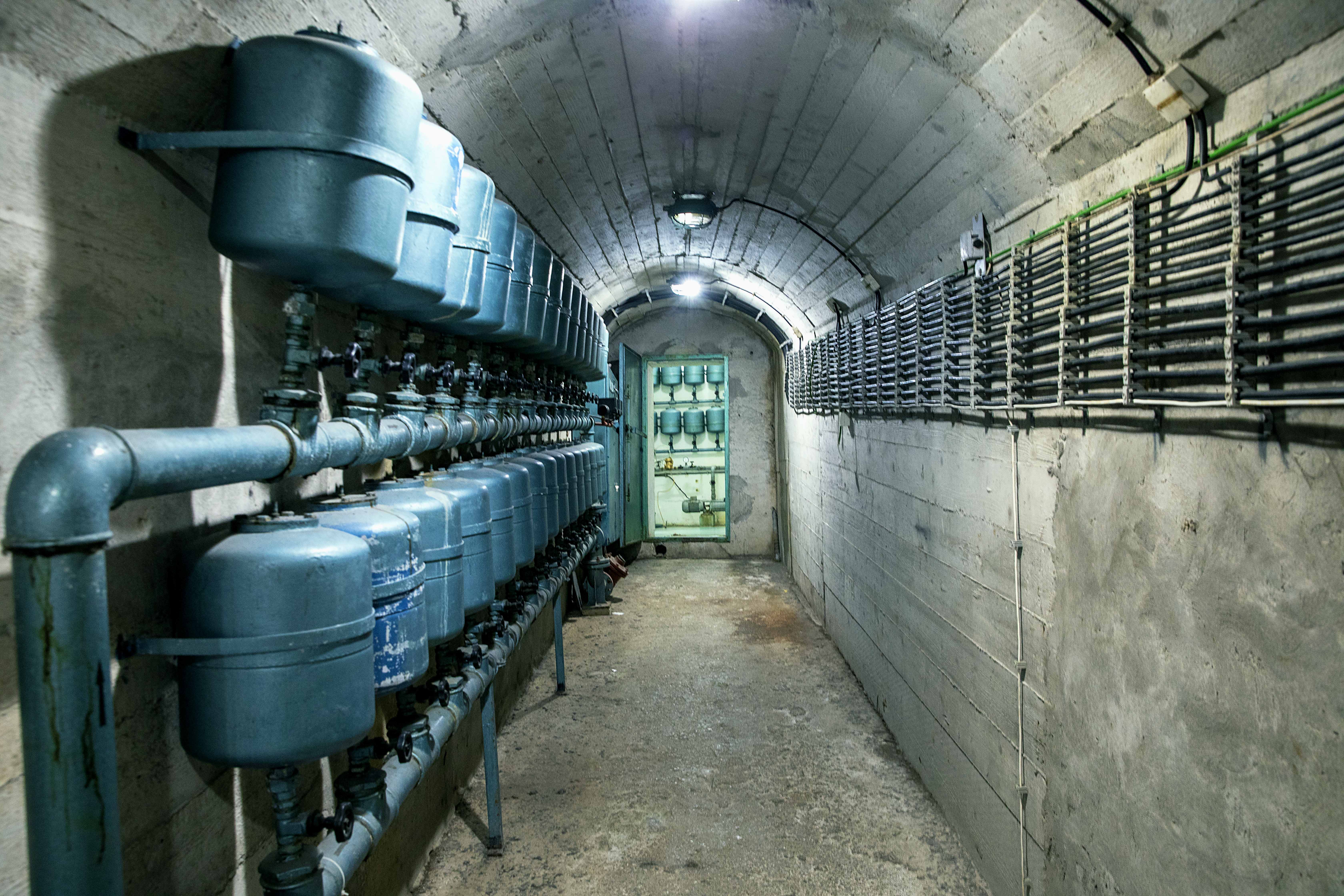
The nuclear bunker officially known as ARK D-0 (Atomska Ratna Komanda, Atomic War Command) was a well-kept secret for decades. The construction started in March of 1953 and wasn’t finished until 26 years later in September of 1979.
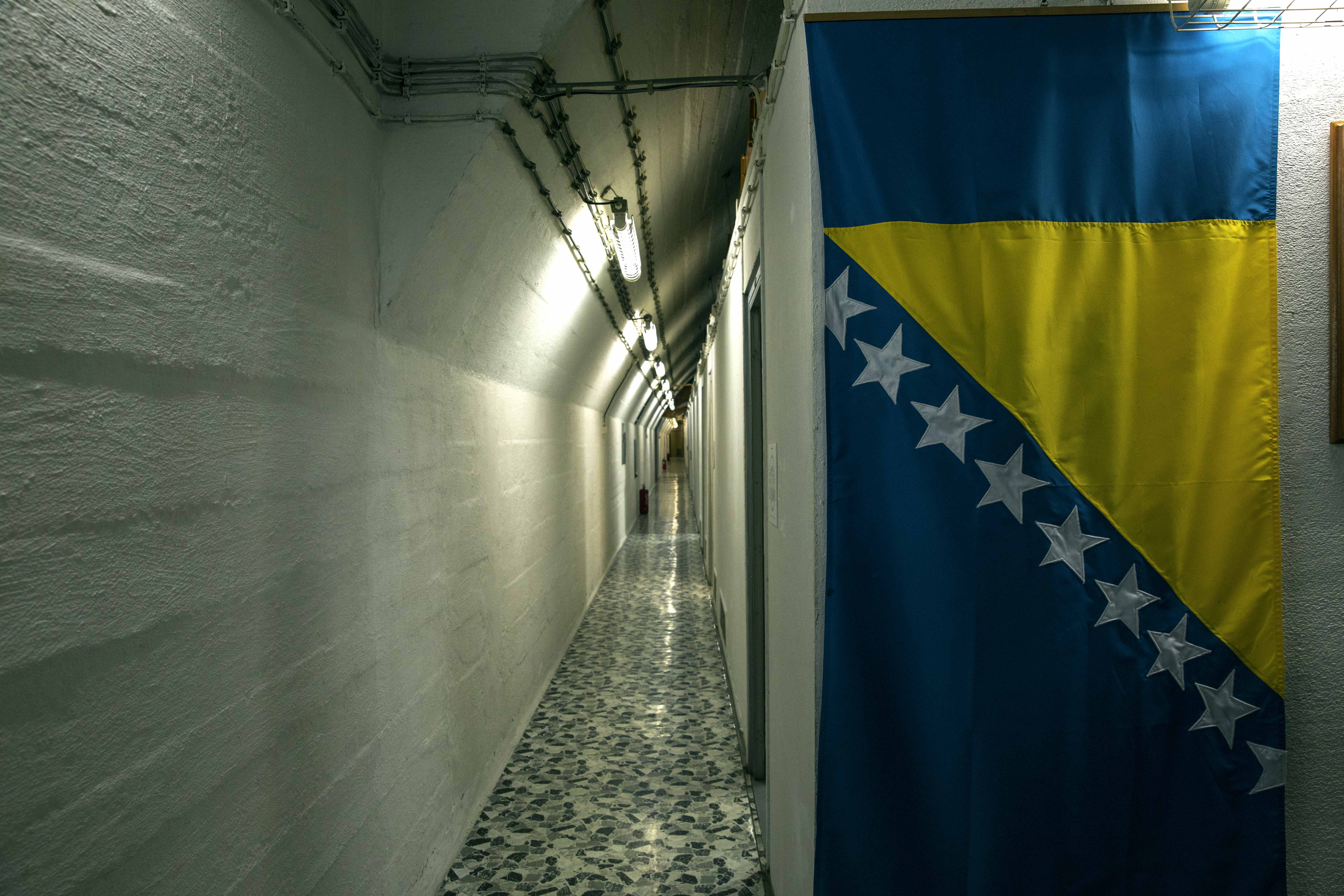
The entire visit is done as a guided tour, so as you walk through the bunker, you learn a great deal about the history of Yugoslavia, Tito, and the significance of the facility.
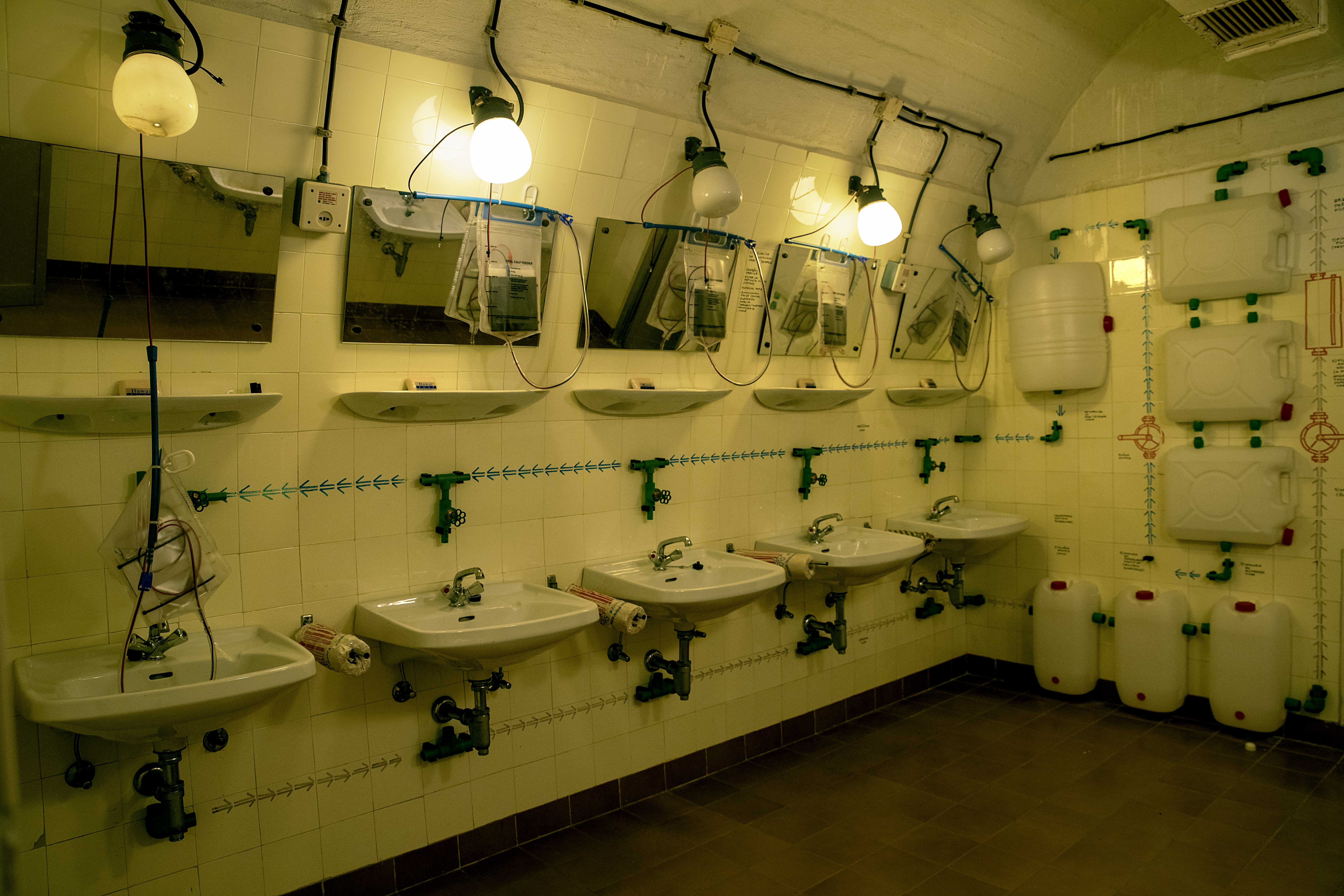
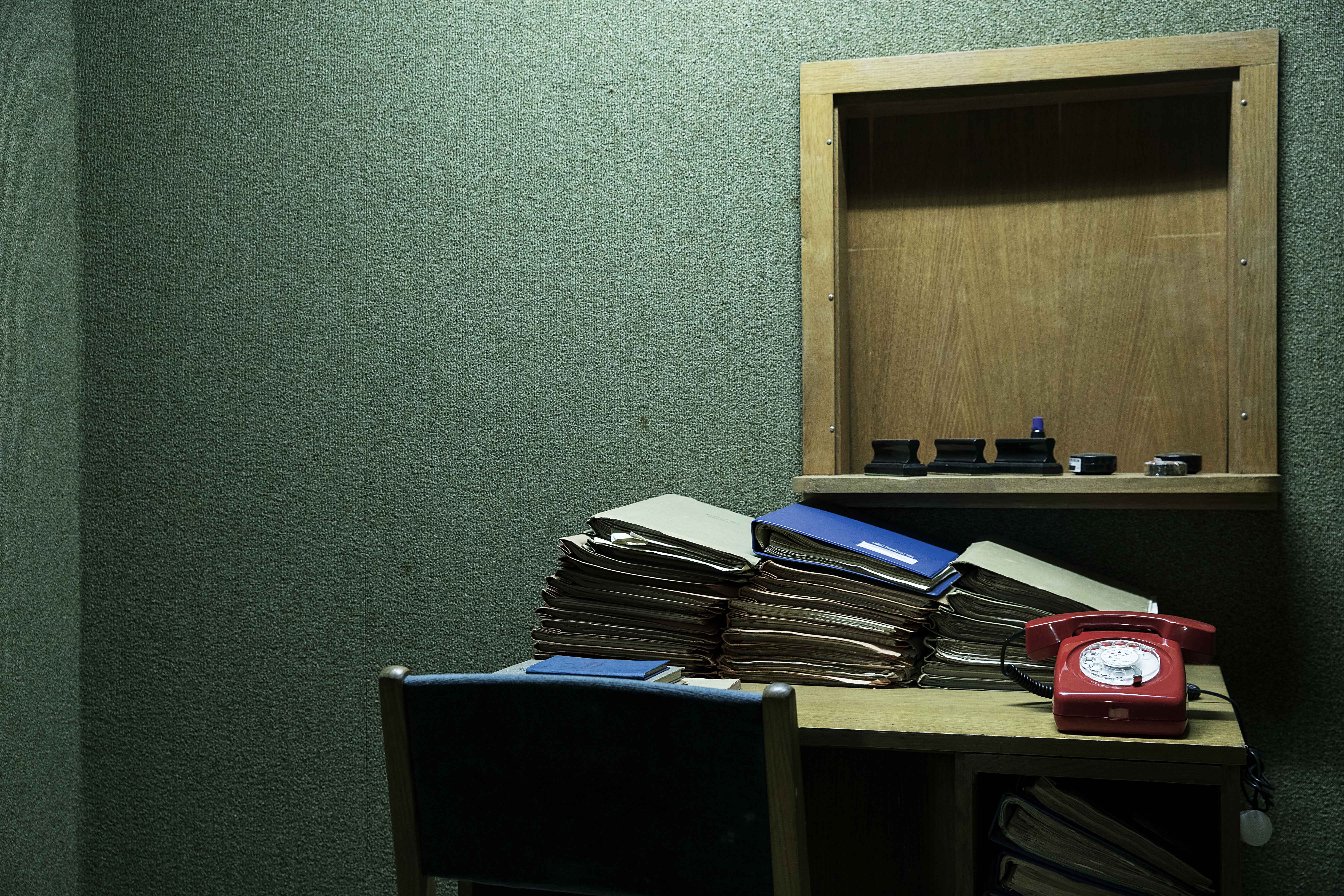
Although the bunker was built using 1970s technology, the facility, equipment, and even the furniture have been meticulously preserved. Everything inside, from the vintage rotary telephones and typewriters to the original air conditioning and water purification systems, remains exactly as it was in 1979. Even more impressively, much of the machinery is still fully operational today.
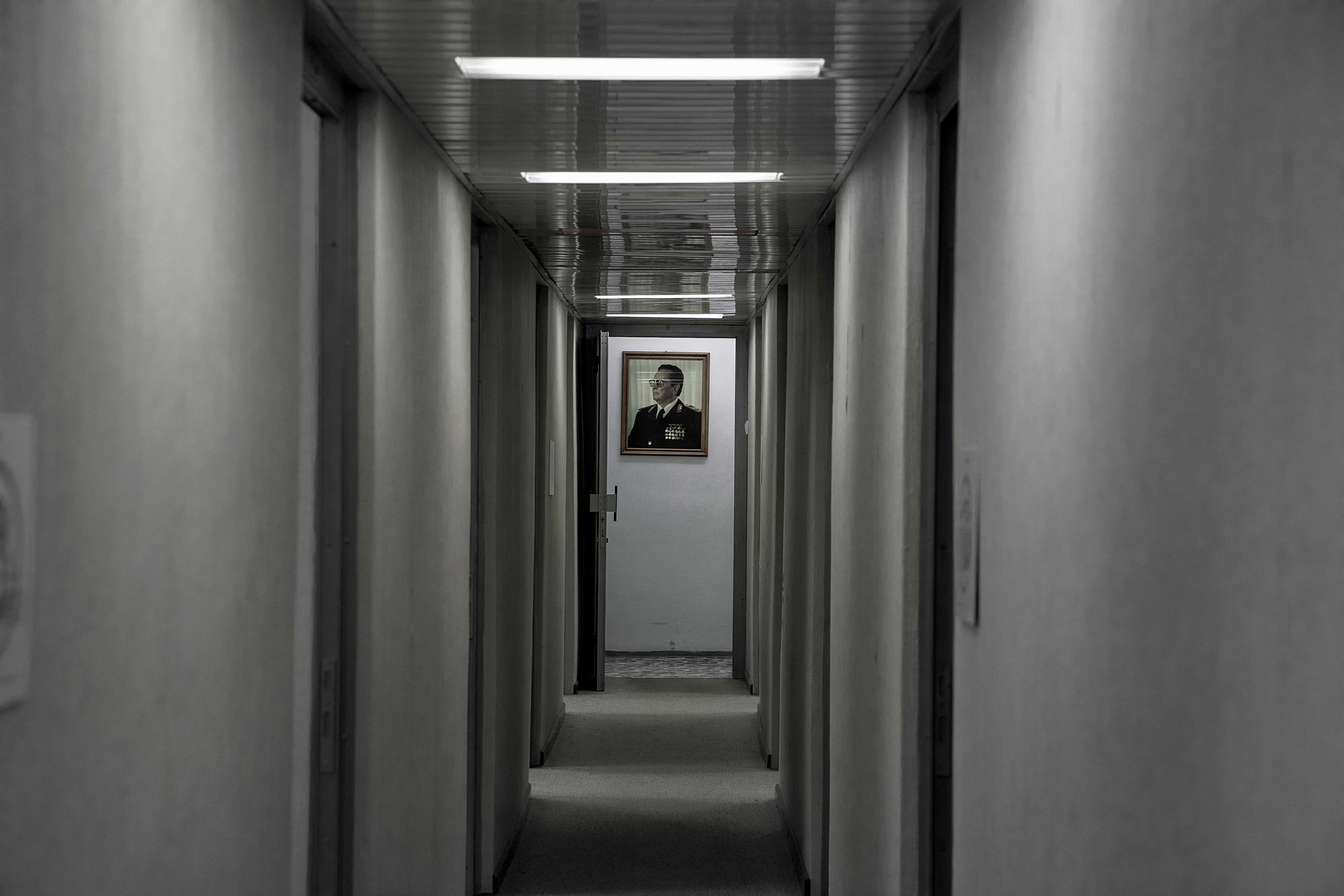
Upstairs, there is a special suite reserved for Comrade (Druže) Tito. However, there is no official record of him ever visiting the bunker.
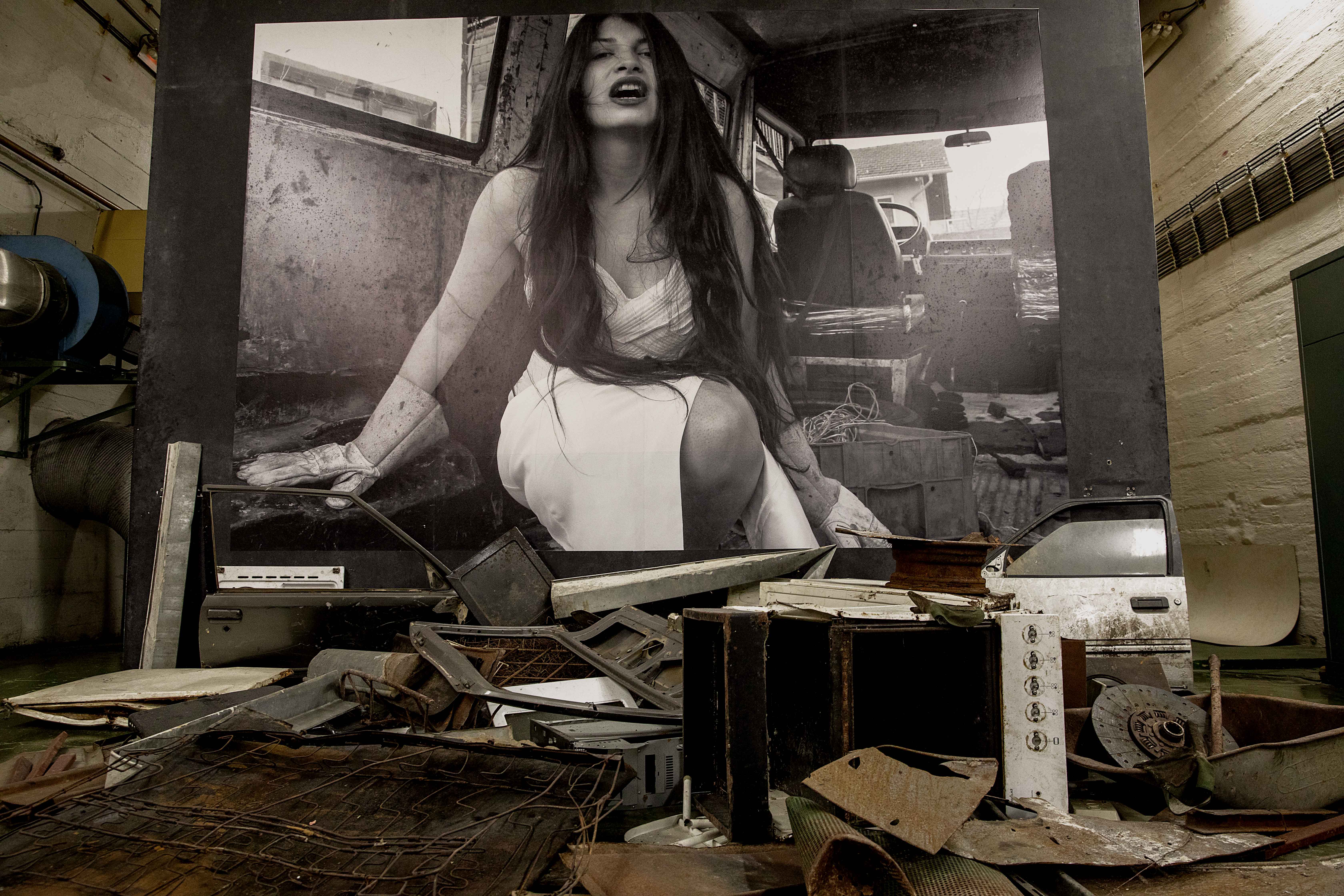
Today, the bunker serves as a contemporary art museum. While there are some very interesting artworks inside, I personally would have preferred it to remain closer to its original form, with more photographs and artifacts from the Yugoslav era. That would have made the experience feel even more immersive and memorable.
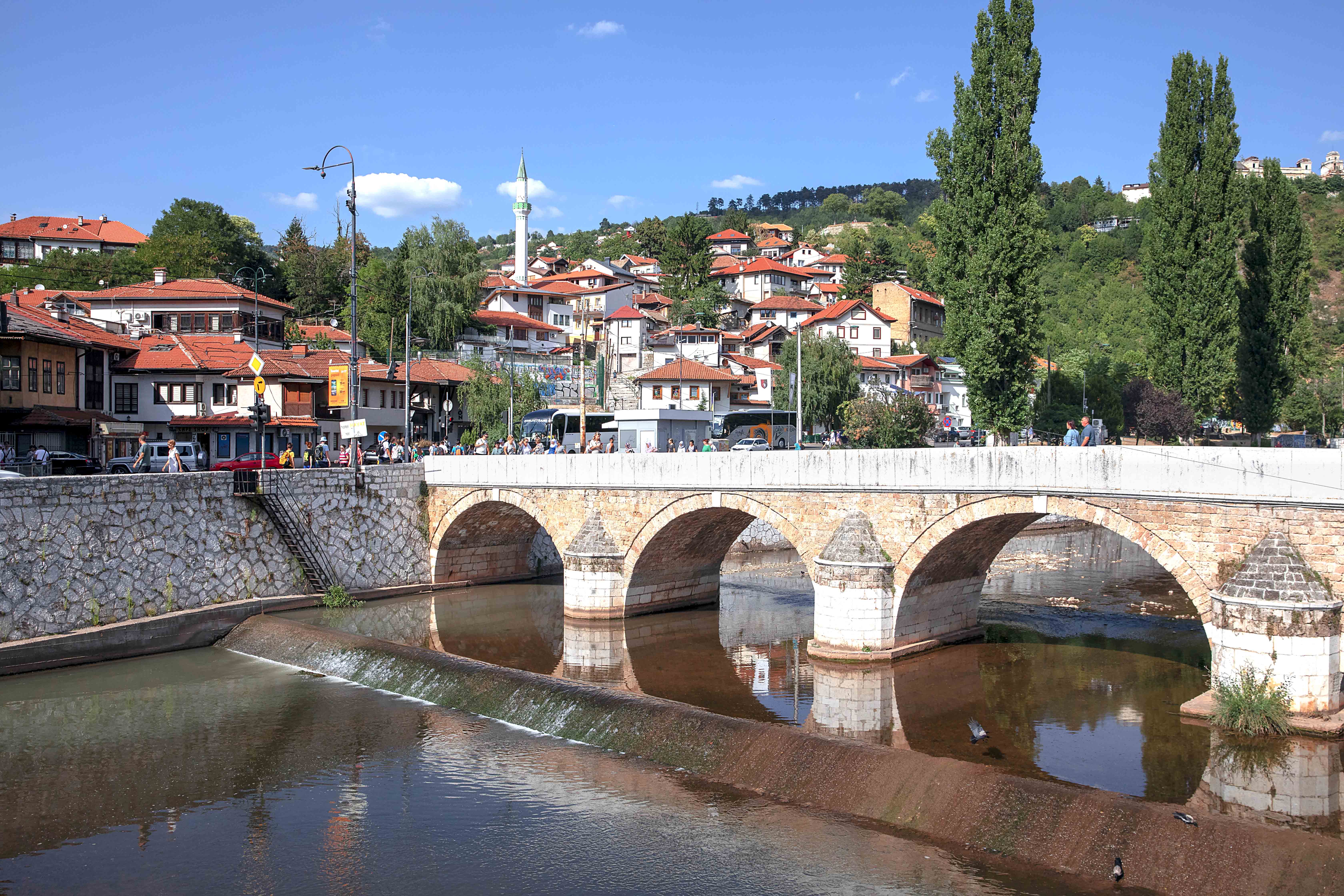
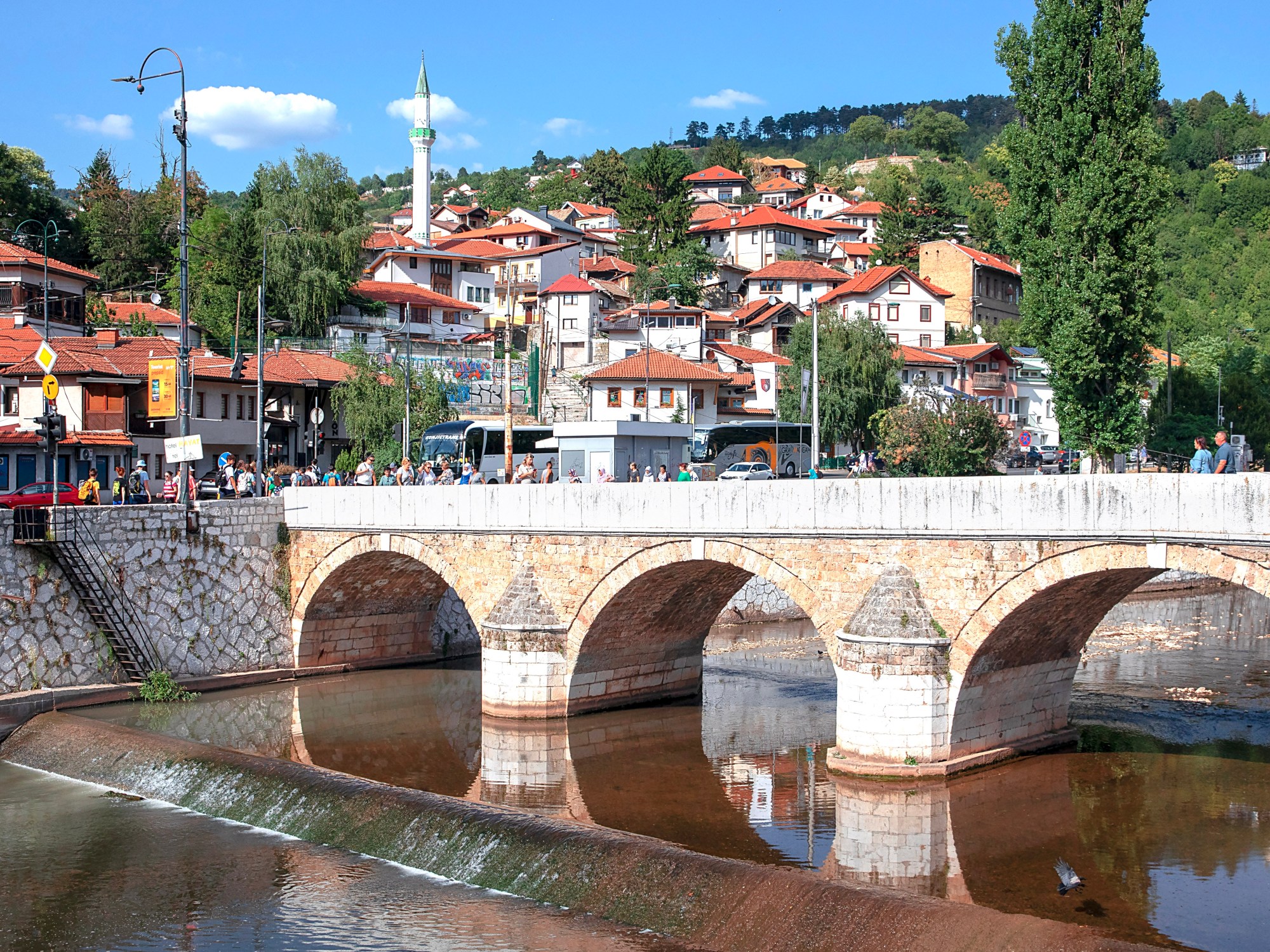
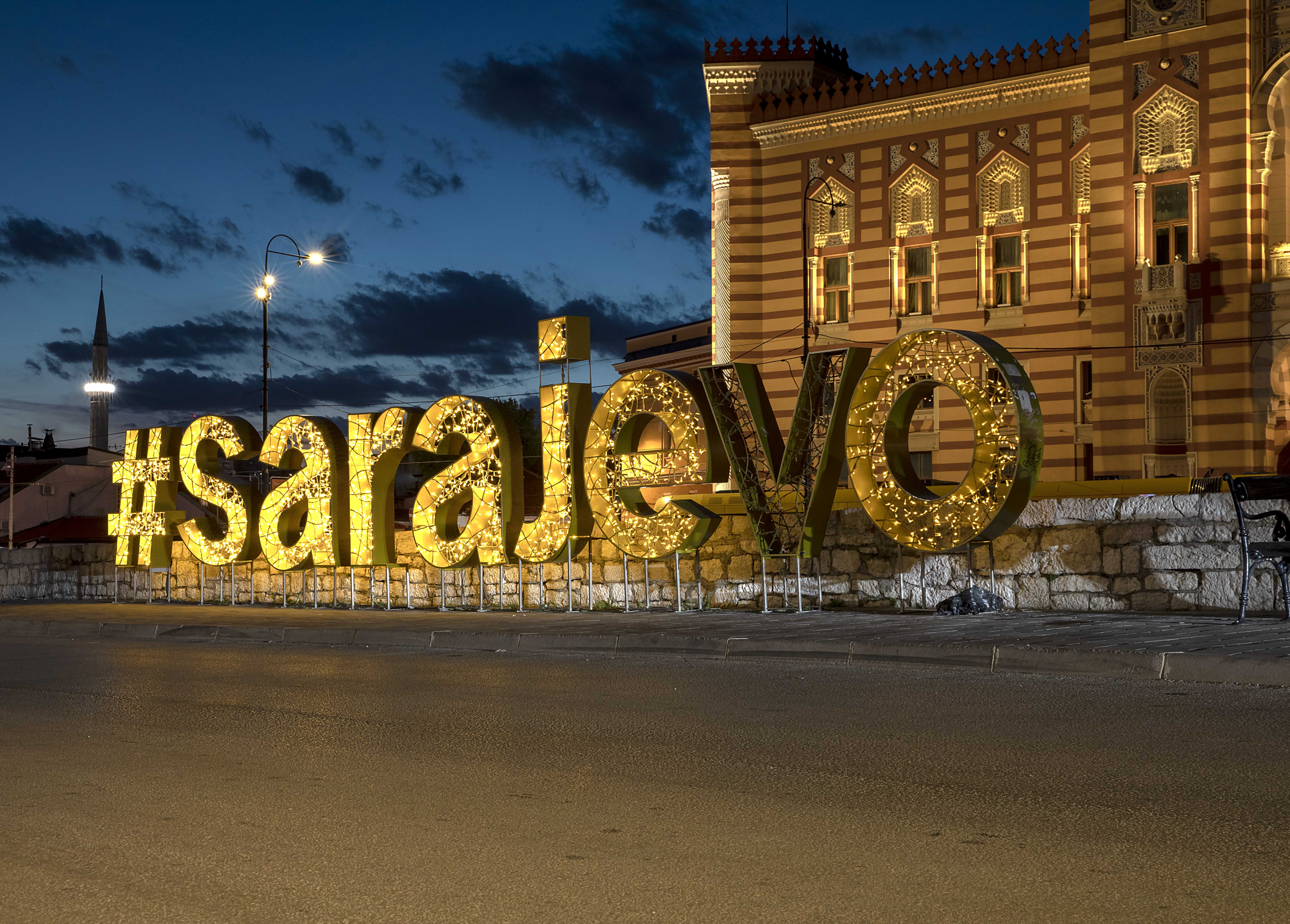
I believe we are now finally ready to explore Sarajevo. As I mentioned in my Mostar post, the cities I visited in Bosnia felt like small, charming Ottoman towns to someone who grew up in Türkiye. Wherever you look in Sarajevo, minarets proudly rise into the skyline, surrounded by two or three story Anatolian-style houses and old Ottoman bridges that give the city its timeless character.
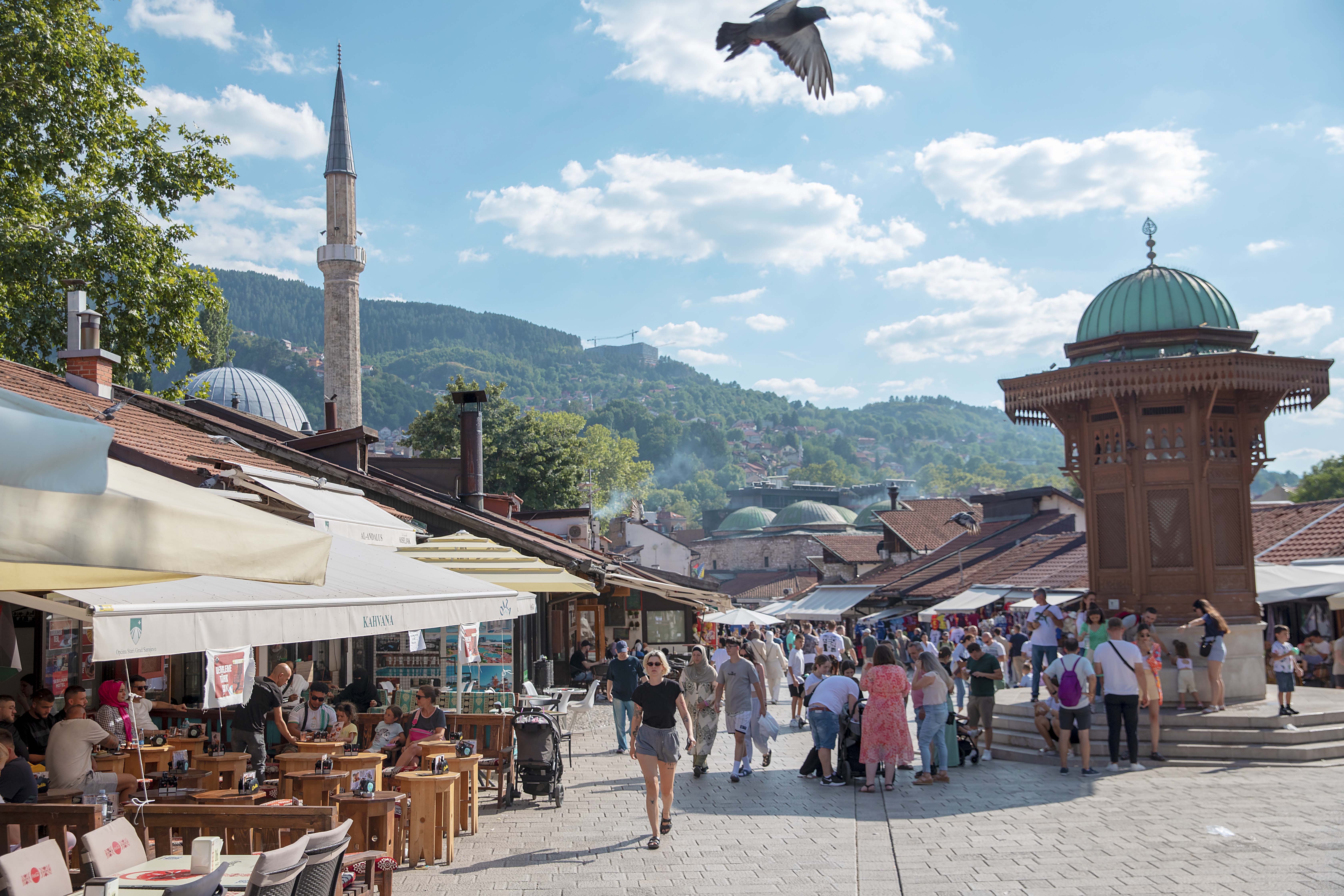
There is no better place to begin exploring Baščaršija, the historic heart of Sarajevo. Bosnian contains many loanwords from Turkish, and Baščaršija is no exception. This old bazaar, dating back to the 15th century, takes its name from Ottoman Turkish roots: “baş” meaning “main,” “head,” or “central,” and “çarşı” meaning “market” or “bazaar.” Together, the name translates to “the main bazaar.”
Walking through its narrow stone streets, the Ottoman influence is impossible to miss. It is not unusual to see Turkish flags waving beside Bosnian ones, and many shops and restaurants employ staff who speak fluent Turkish. The connection is hardly surprising given the deep historical and cultural ties between Bosnia and Türkiye. During the peak tourist season, the area fills with visitors arriving from all over Türkiye (I guess also due to mostly visa free access and reasonable prices), adding even more life and energy to the streets.
Baščaršija itself feels endlessly alive. Coffee houses spill onto the sidewalks, the scent of fresh burek drifts from bakeries, copper workshops echo with the sound of hammering, and restaurants, clothing stores, and souvenir shops line nearly every corner. It is the kind of place where wandering without a plan becomes the plan itself.
Right in the heart of the bazaar, we stopped by Cream Shop for drinks and some delicious desserts. The waiter serving us spoke almost flawless Turkish. Curious, I asked him where he had learned it. His answer came instantly, and unsurprisingly: Turkish TV series.
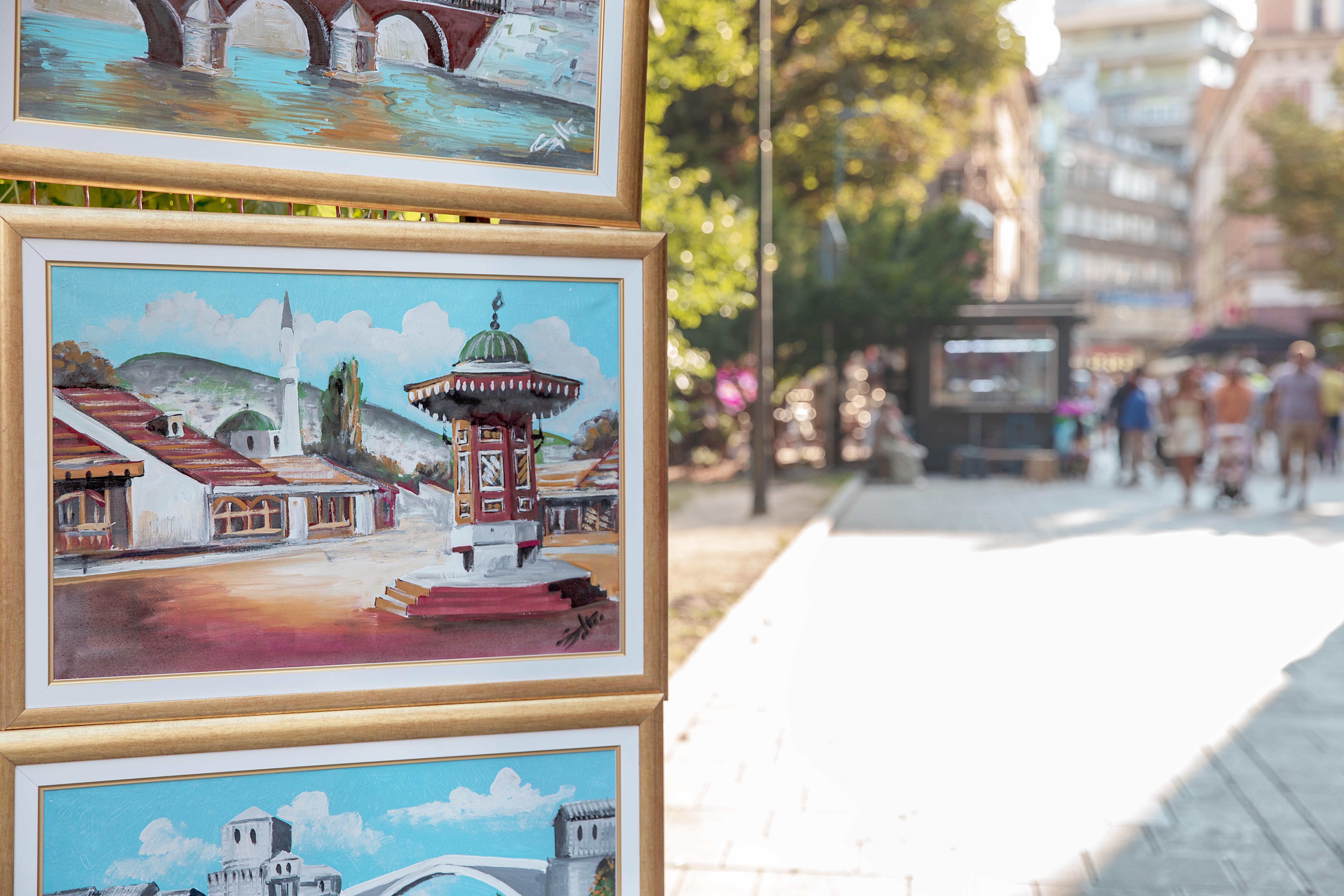
One of the main pedestrian streets in Sarajevo is Ferhadija, which serves as a bridge between the city’s Ottoman and Austro-Hungarian identities. Bosnia was under Austro-Hungarian administration for about 40 years, compared to more than 400 years under the Ottomans. Stepping into Ferhadija from Baščaršija feels like being transported from a charming Ottoman-style village into an elegant Austro-Hungarian era cityscape.
The street is very pleasant to walk along, with several points of interest along the way, including the Sacred Heart Cathedral, the Museum of Crimes Against Humanity and Genocide, and a war memorial. At some point, you will likely get hungry after all the walking and start looking for a place to try authentic Bosnian Ćevapi. Ćevabdžinica Nune is a great choice, a small local spot concealed in an alley that serves some of the best Ćevapi in Sarajevo.
If you are also craving homemade Turkish food while on Ferhadija, The Marash Restaurant is another excellent option.
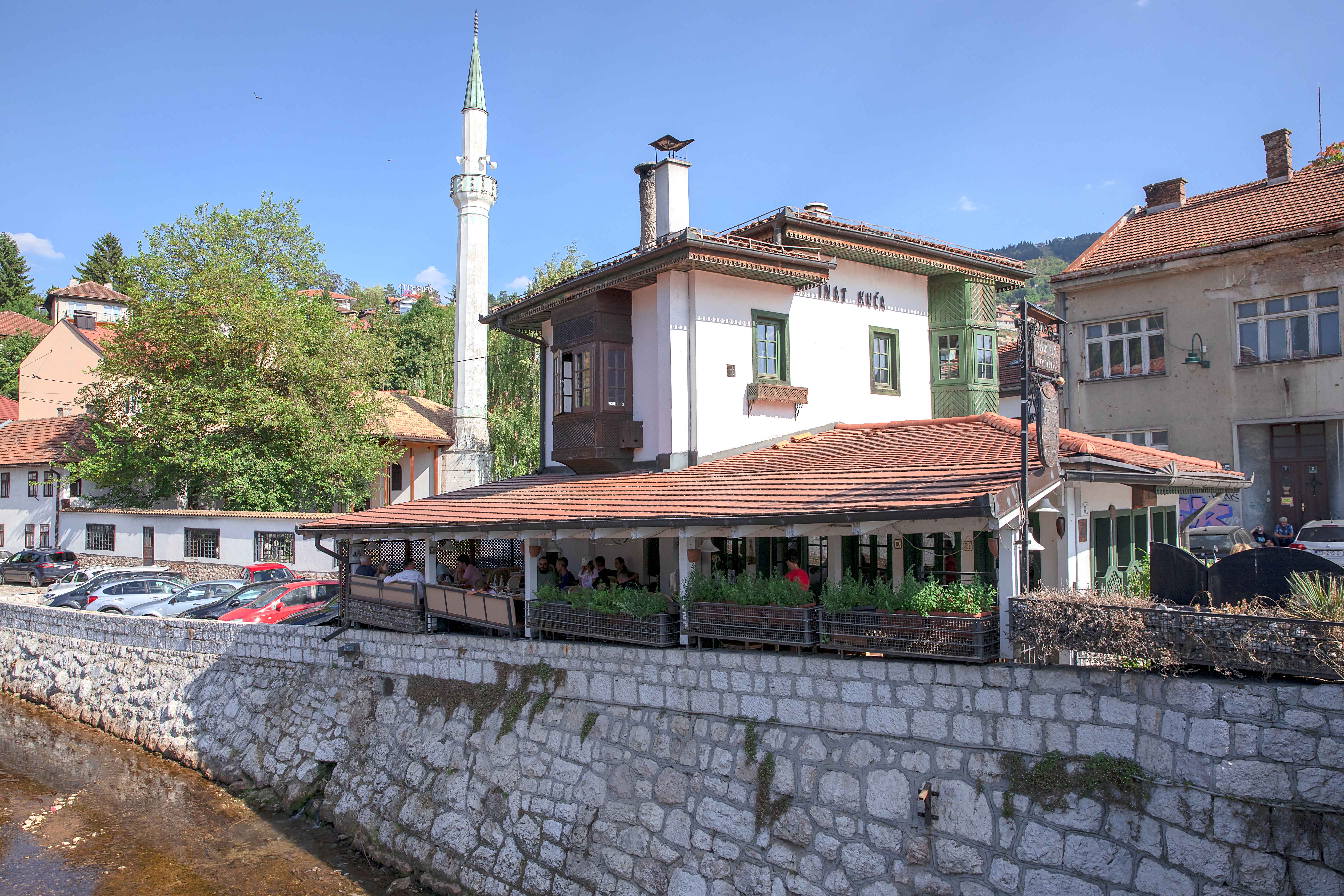
If you look at the Sarajevo City Hall on the north side of the Miljacka River, you will notice a restaurant called Inat Kuća on the opposite bank. It has a very intriguing story behind it.
When the Austro-Hungarian Empire took control of Sarajevo, they began extensive construction projects across the city. As part of this plan, they wanted to build a grand government building right along the river. Although they managed to purchase almost all the properties and the land they needed, the owner of this house, Mehmed Benderija, refused to sell. Despite repeated attempts and even offers of large sums of money, he rejected every proposal.
In the end, they reached a compromise. He agreed to give up his house only if it was carefully rebuilt, brick by brick, on the other side of the river, along with all of his belongings moved there. That new building became known as Inat Kuća. Today, it operates as a restaurant.
“Inat” means stubborn defiance in Turkish, which fits the spirit of the story quite well. At the entrance, there is a sign that reads, “I was on the other side and I did not give you the house because I am stubborn.”
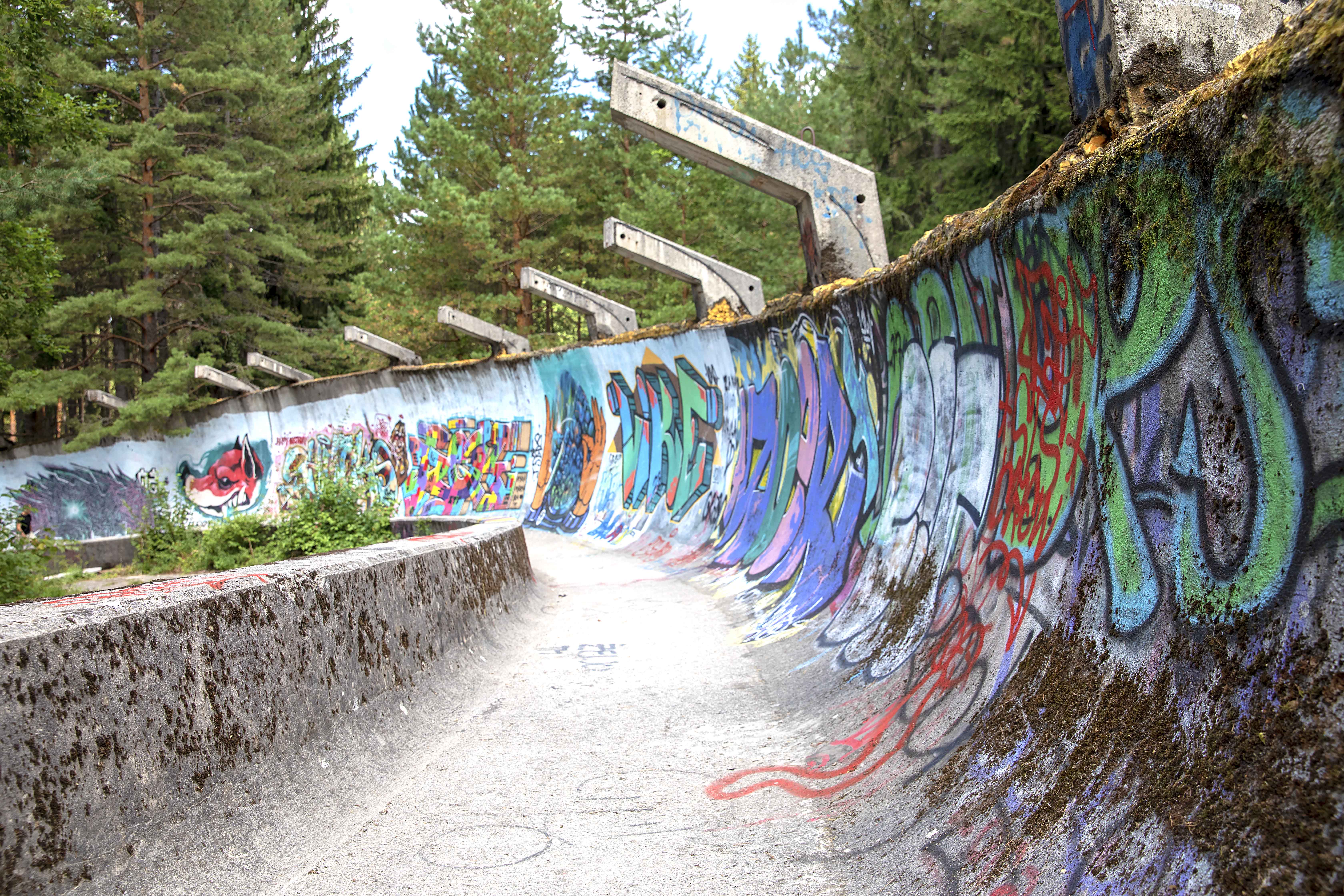
Did you know that Sarajevo, then part of Bosnia and Herzegovina in Yugoslavia, hosted the XIV Olympic Winter Games in 1984? You can still see the Olympic bobsleigh and luge tracks on Trebević Mountain, now left to slowly decay. We drove up there, although there is also an option to take a gondola.
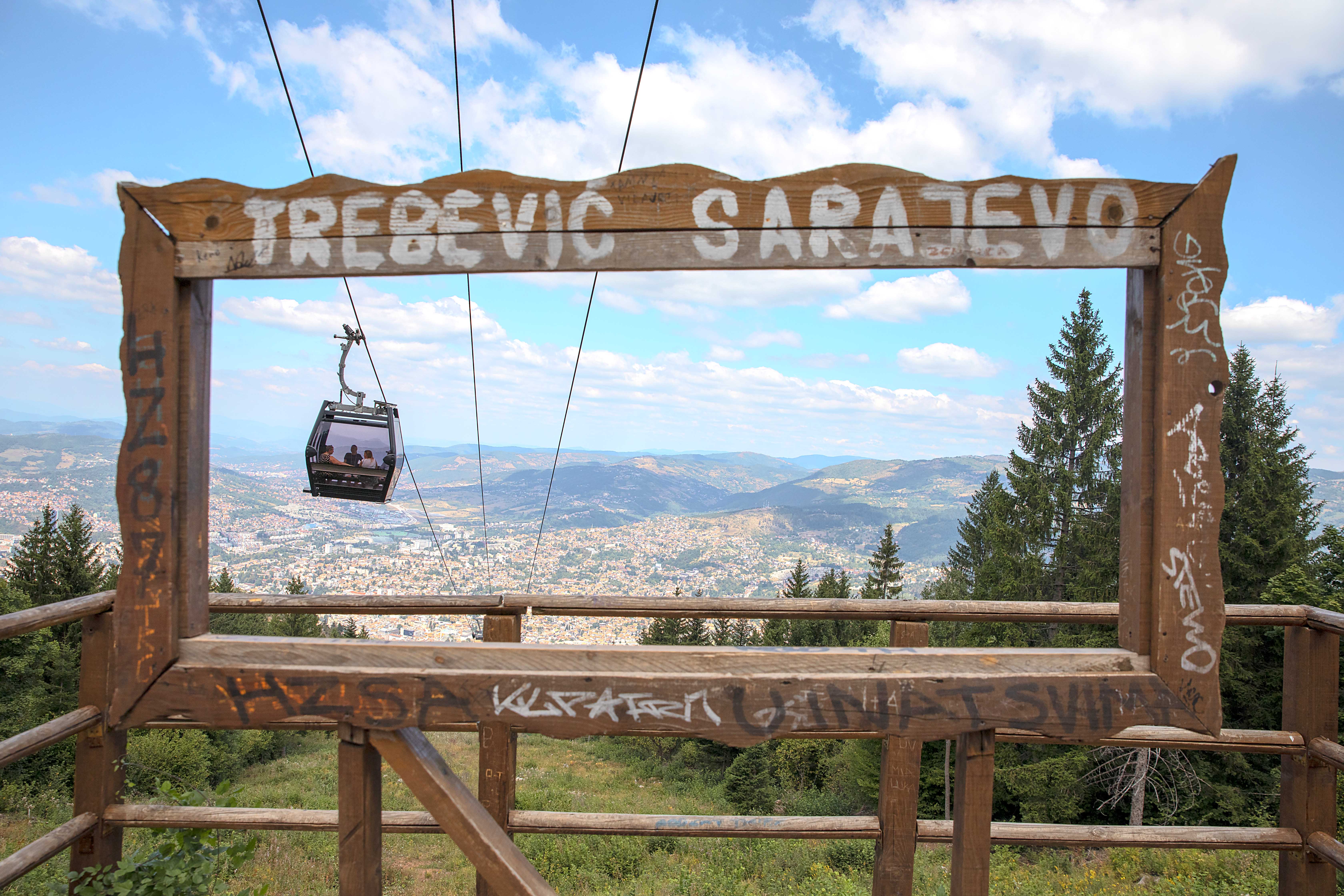
Trebević Mountain is one of the most beautiful spots to get a panoramic view of Sarajevo from above. The area has several hiking trails, so you will often see locals out and about, especially on weekend mornings, staying active and enjoying nature. I also have to mention that there were a few horses wandering around, calmly enjoying the scenery as well.
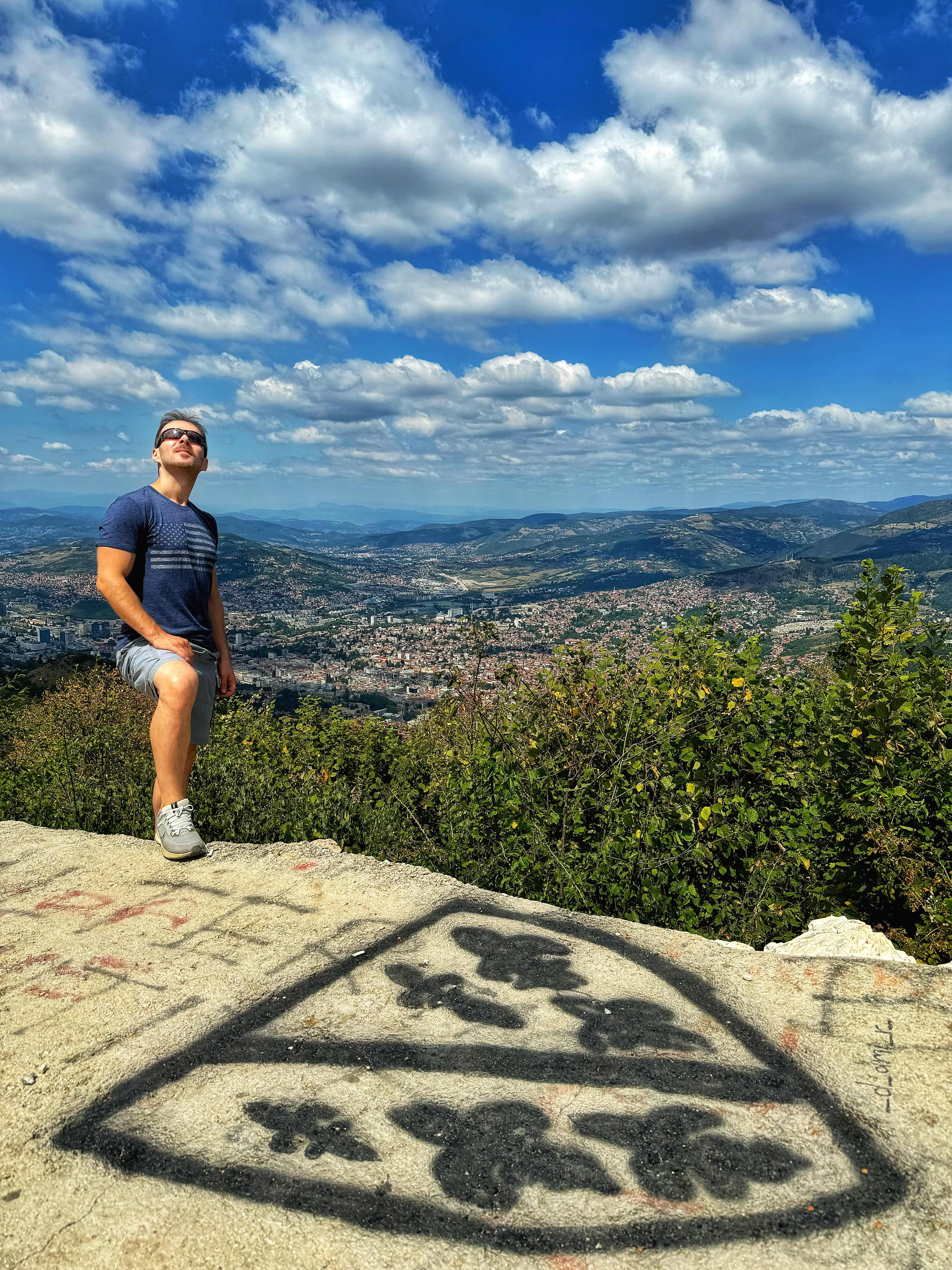
Well, the horses are not the only ones enjoying the view 🙂
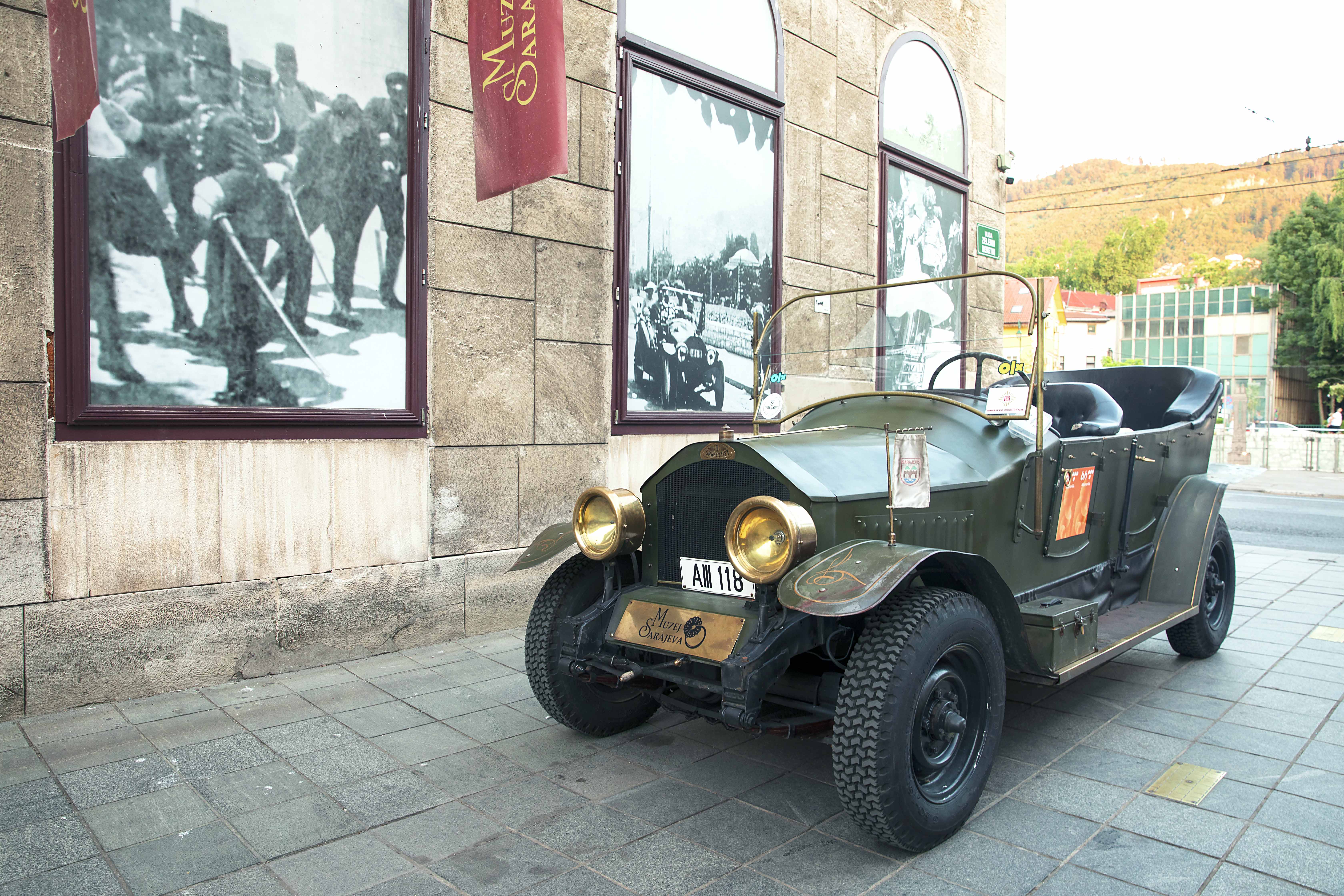
Let’s head back to the city center and explore a few more spots you should not miss. During history classes in primary/elementary school, it was always mentioned that World War I began after the assassination of Archduke Franz Ferdinand of Austria-Hungary by Gavrilo Princip, a Bosnian Serb nationalist. While most people know the event, fewer know exactly where it took place.
And yes, you guessed it right. It happened right outside the Sarajevo Museum, across the Latin Bridge. The exact location is marked with a bronze plaque, known as the Monument to the assassination of Franz Ferdinand and his wife Žofie Chotková. It is a chilling feeling to stand on the very spot where an event unfolded that ultimately triggered a war which cost the lives of millions.
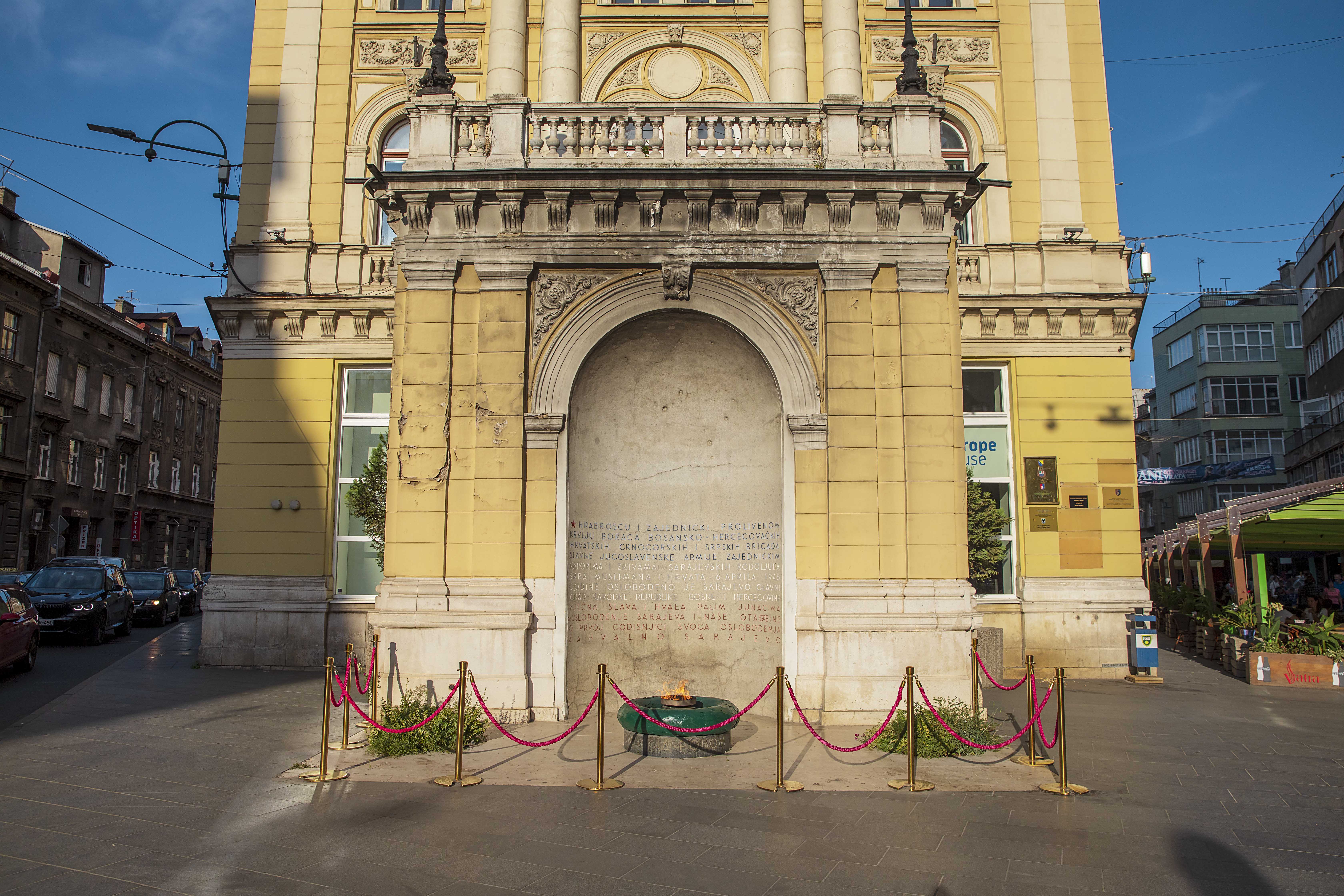
It is not only World War I that shaped this land. At the end of Ferhadija Street, you will find another well-known memorial called Vječna vatra. It is a permanent flame monument that honors the fighters and civilians who lost their lives during the liberation of Sarajevo in World War II.
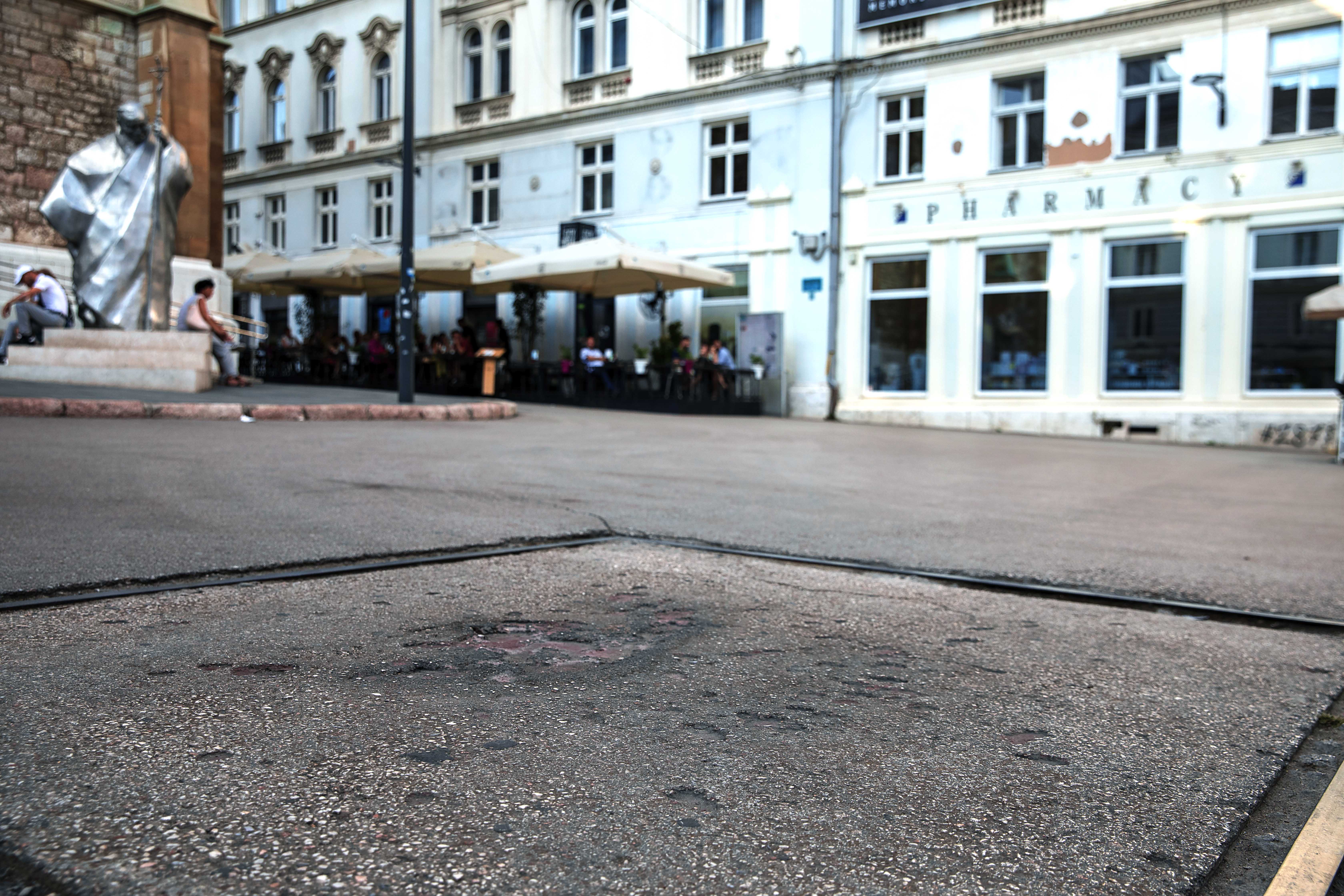
As I mentioned in my previous post, Bosnian people suffered greatly during the Yugoslav Wars. During the Siege of Sarajevo, mortar shell explosions left craters across various parts of the city center. After the war, many of these damaged spots were filled with red resin and preserved as memorials. They call them Sarajevo Roses. The red color symbolizes the bloodshed and loss of life caused by the shelling. During the Bosnian War (1992 – 1995), around 100,000 people were killed in Bosnia and Herzegovina in total, and most of them were innocent civilians.
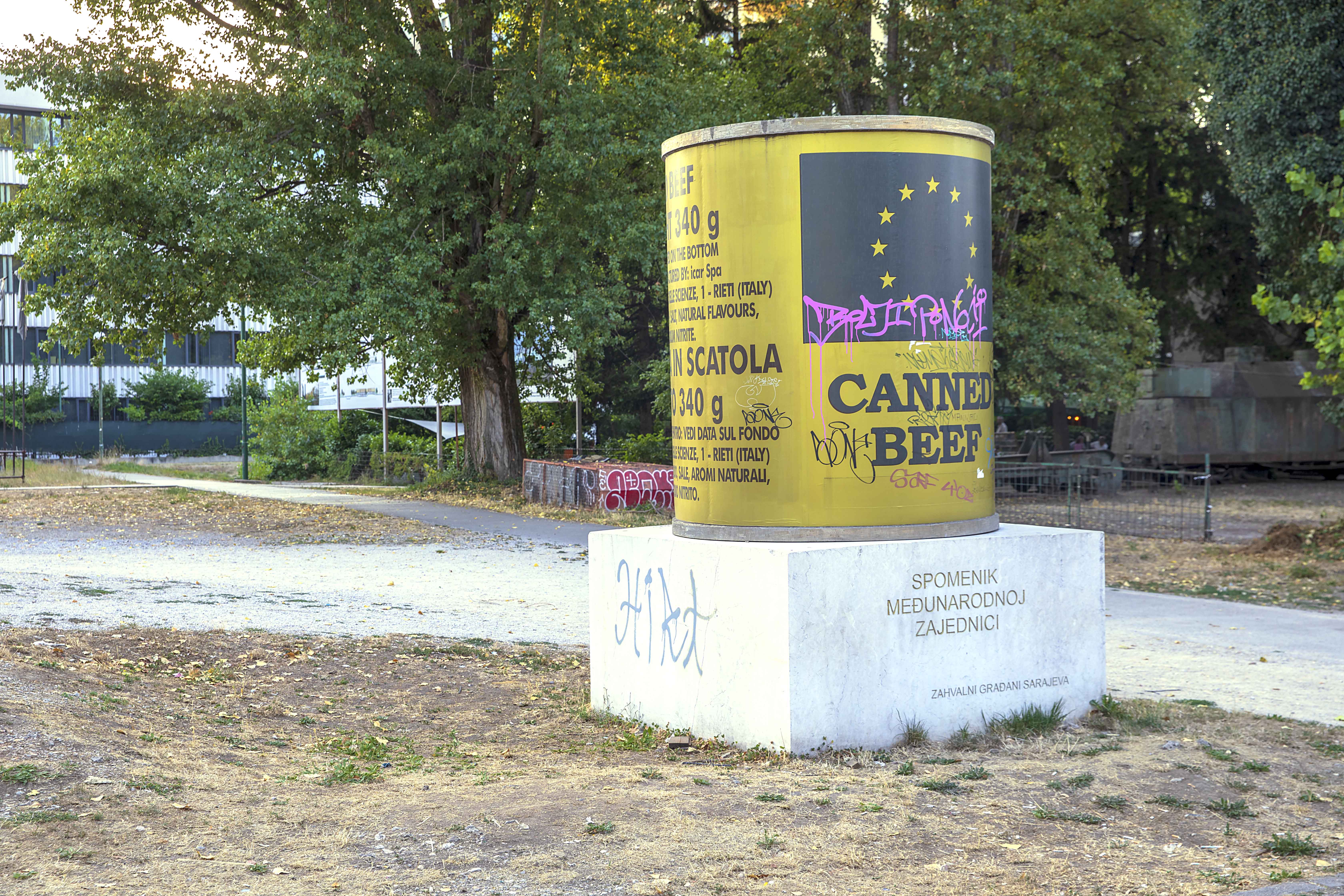
The Siege of Sarajevo triggered the longest humanitarian airlift in history, running from July 1993 to January 1996. Around 12,000 flights delivered about 160,000 tons of food and medicine. The aid, while vital, was often criticized for its poor quality and limited suitability, including surplus stock such as outdated rations from the Vietnam war that expired 20 years earlier, and pork that was not always appropriate for the local population, that was largely Muslim.
This ironic war memorial right next to Military-themed Playground playfully mocks a campaign of largely inedible humanitarian food aid products.
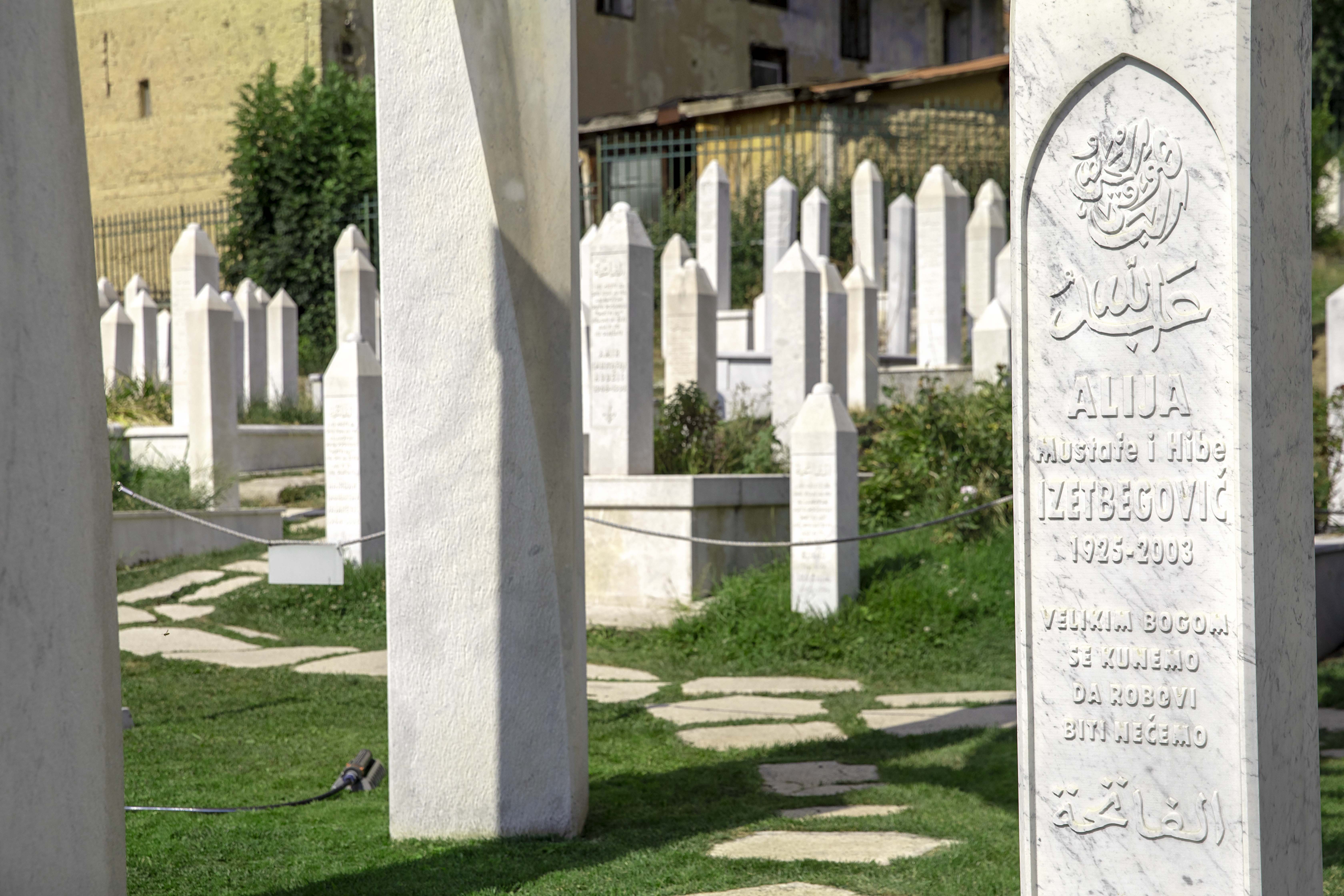
Well, I cannot end my Bosnia series without mentioning Alija Izetbegović, a central political figure during Bosnia’s most turbulent and defining period in the 1990s. He was a symbolic leader for many Bosniaks during the war and remains widely respected across Bosnia and Herzegovina. His grave is located at Kovači Cemetery, just a 5-minute walk from Baščaršija.
I suppose this brings the Bosnia series to an end. On our way from Sarajevo to Ljubljana, Slovenia, and having missed dinner in Sarajevo, it felt like the perfect chance to stop at one of the many roadside Bosnian bakeries, or “pekaras”. One important detail to keep in mind is that most of them do not accept credit cards or euros, so it is best to carry some Bosnian Convertible Marks if you plan to stop along the way.
We ended up stopping at a small bakery in a picturesque village just after sunset right next to the road. The atmosphere was lively and warm, with locals gathered outside chatting and drinking tea, and kids running around in the evening light. Inside, the lady at the bakery politely told us she only accepted Convertible Marks right before the payment. Ironically, we had almost completely run out of Convertible Marks ourselves. We must have looked a bit stranded, because a customer already waiting in line kindly stepped in and offered to pay for our burek and iced tea. It was not an isolated experience. Bosnia has a way of surprising you with small acts of generosity. Earlier in Sarajevo, when we were trying to pay for parking, the machine refused our credit card. Without hesitation, the person behind us stepped in and paid for it. Moments like these stay with you forever.
As for the burek situation, I tried offering the gentleman euros, but he declined. I went back to the car, found some remaining Convertible Marks, and settled the bill properly. It is something I really came to appreciate about Bosnia, the quiet generosity and warmth of its people I will never forget.
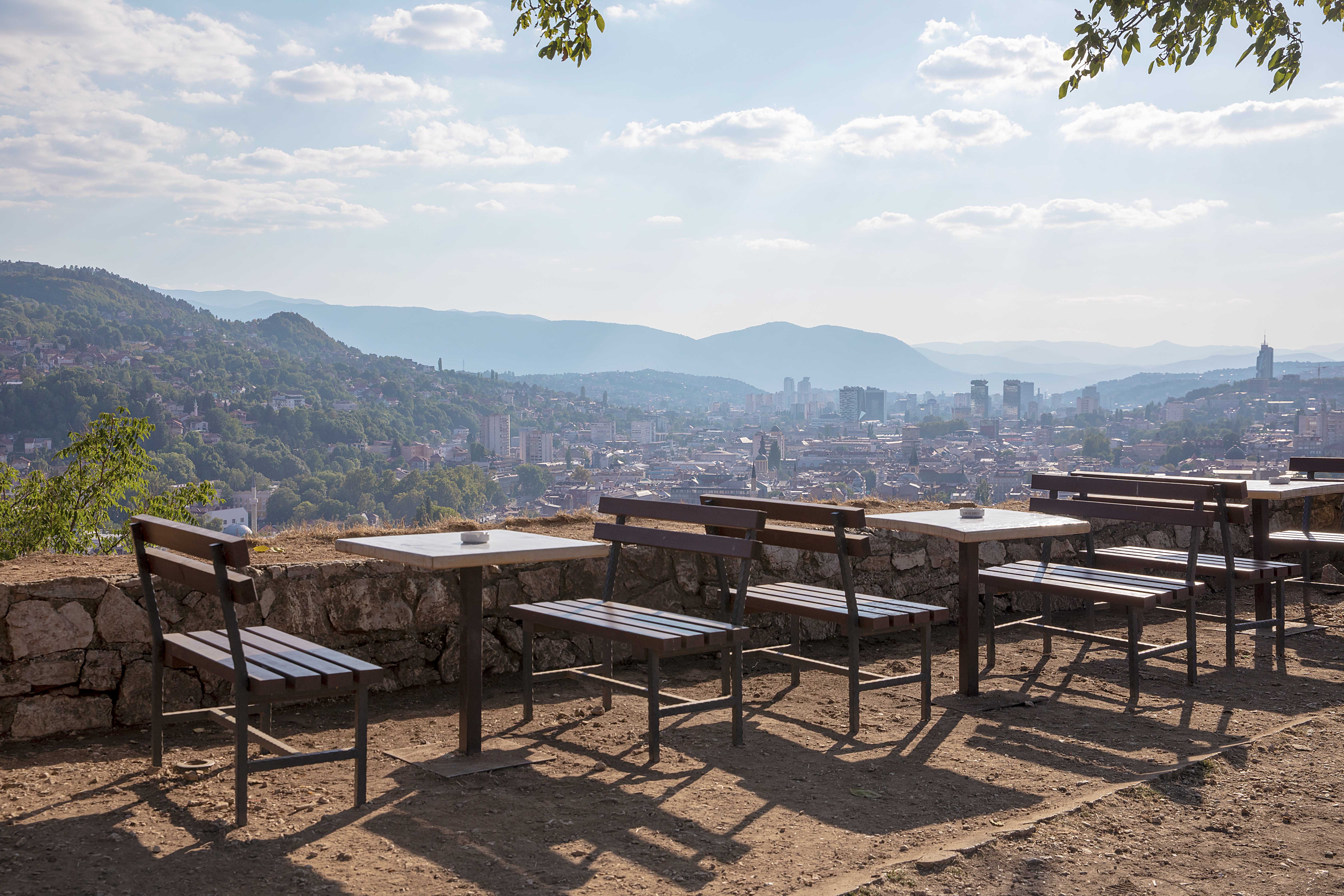
There is no better place to end this post than at sunset in the tea garden above the Yellow Fortress, where Sarajevo slowly fades into golden light. Bosnia has left me with countless moments I will carry with me, its people, its food, its history, its generosity, its mountains, and the winding roads that connect Croatia to Bosnia through shifting landscapes and stories.
It is a place that stays with you long after you leave. And, I hope this is not a final goodbye, but only a pause until I return one day.

