I found myself wondering the other day whether we truly have fewer conflicts now than when I was a child. We live in an era where humanity has reached the Moon and continues to explore the vastness of the universe, yet we remain just a tiny grain of sand within it. And still, people fight over land, ethnicity, and religion, often destroying lives without fully understanding the purpose behind their struggles.
When I was a kid, I remember constantly hearing about the war in Yugoslavia. I won’t go into the full history, but one front in particular was followed closely in Türkiye: the war in Bosnia. With the deep ties between the two countries, it was heartbreaking to witness the suffering of the Bosnian people and to see an entire nation being torn apart.
Ever since then, I have carried a quiet desire to visit Bosnia. This land, once defined by war, has lived in my imagination for decades. And now, nearly 30 years after the war ended, here we are.
Let’s begin our journey in Bosnia.
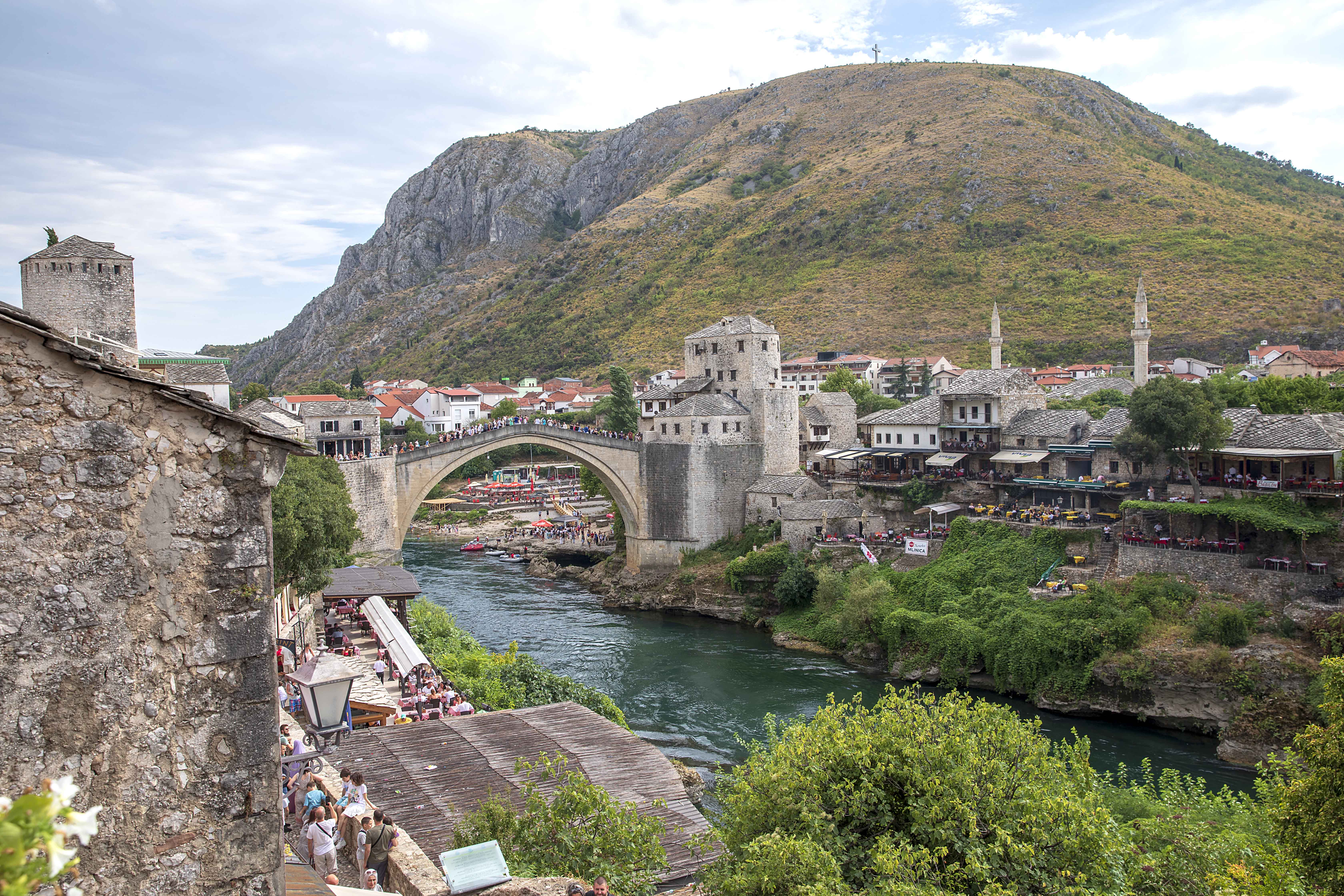
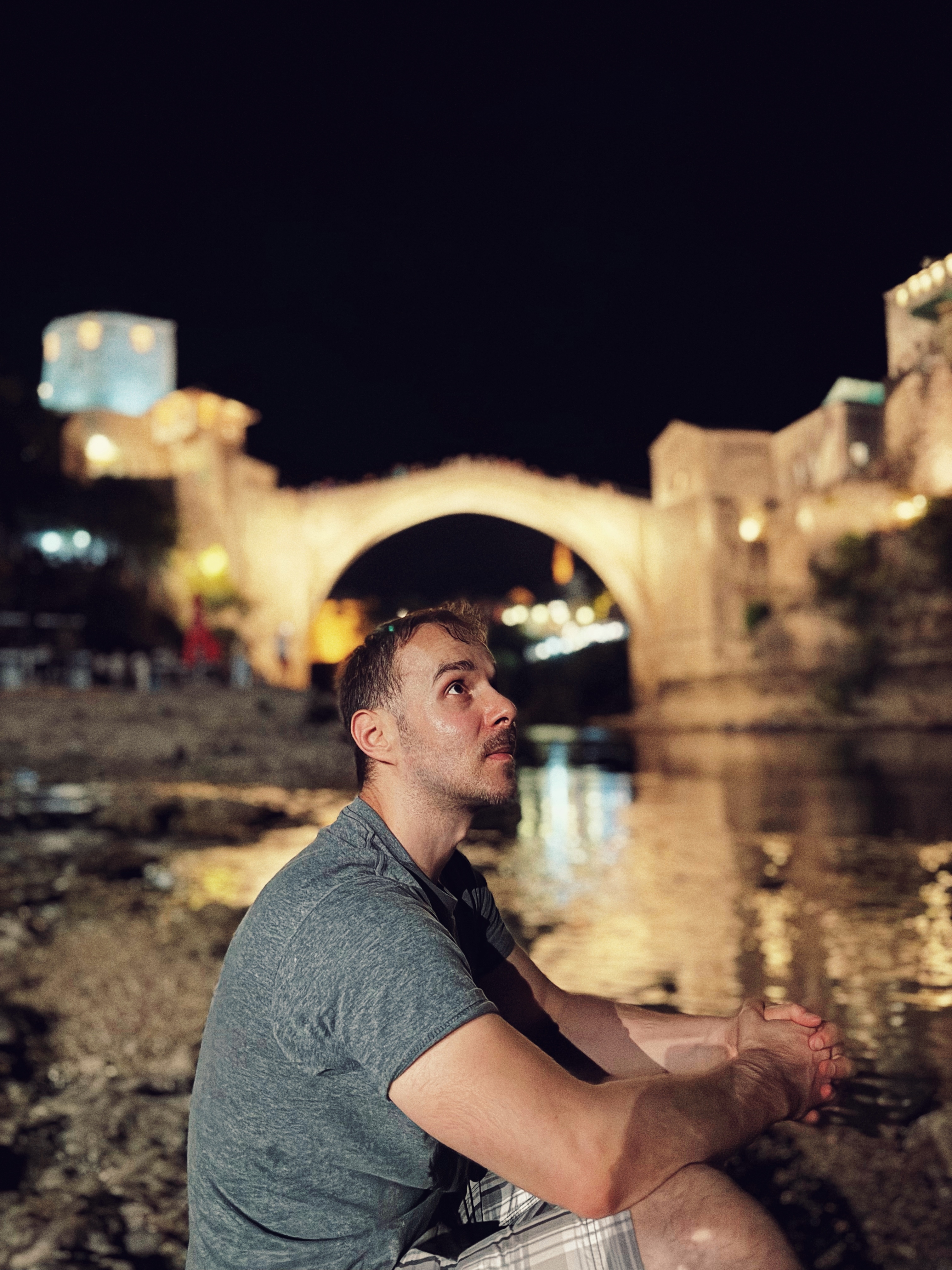
If you know Mostar, you know its bridge. Stari Most, the Old Bridge, is arguably one of the most significant architectural and symbolic landmarks in the Balkans, linking the two communities that share the city. Commissioned by Ottoman Sultan Suleiman the Magnificent, it took nine years to complete and opened in 1566. The bridge spans the Neretva River, connecting Bosnian Croats on the west bank with Bosnian Muslims on the east.
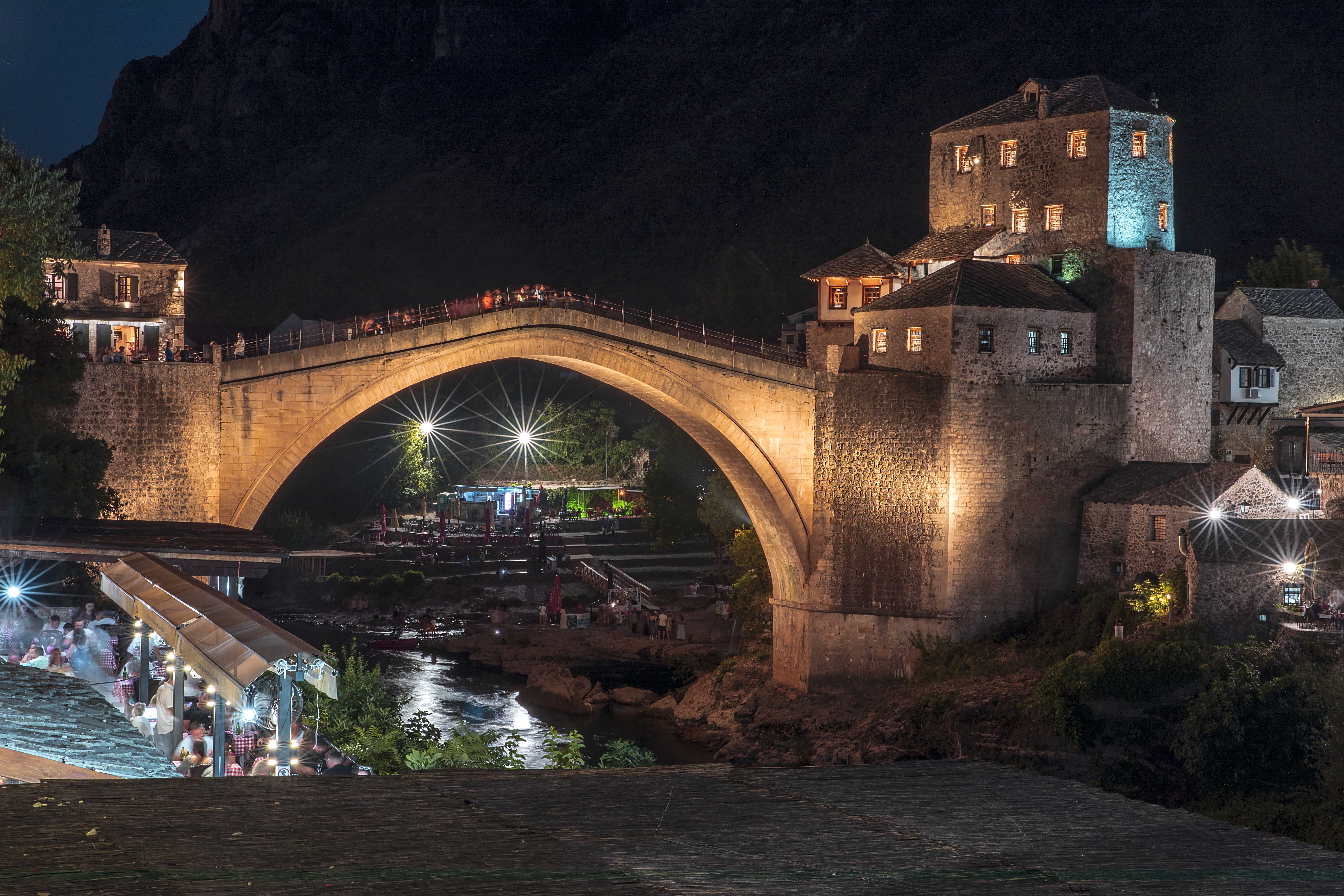
For centuries, this Ottoman-built masterpiece stood as a symbol of tolerance, resilience, and unity. Although the original bridge was destroyed during the war, its story continues and we will come back to that later. There is no better place to begin your journey in Mostar than here. If you linger for a while, you might see locals diving from the bridge into the Neretva below. This is not just a spectacle but a tradition that dates back over 500 years. For generations, it has served as a rite of passage, where a young man proves his courage with a leap into the river.
We drove to Mostar from Dubrovnik, a journey of just over two hours along well-maintained roads on both the Croatian and Bosnian sides. Along the way, you may also cross the Pelješac Bridge, a modern engineering marvel that offers breathtaking views, especially at sunset.

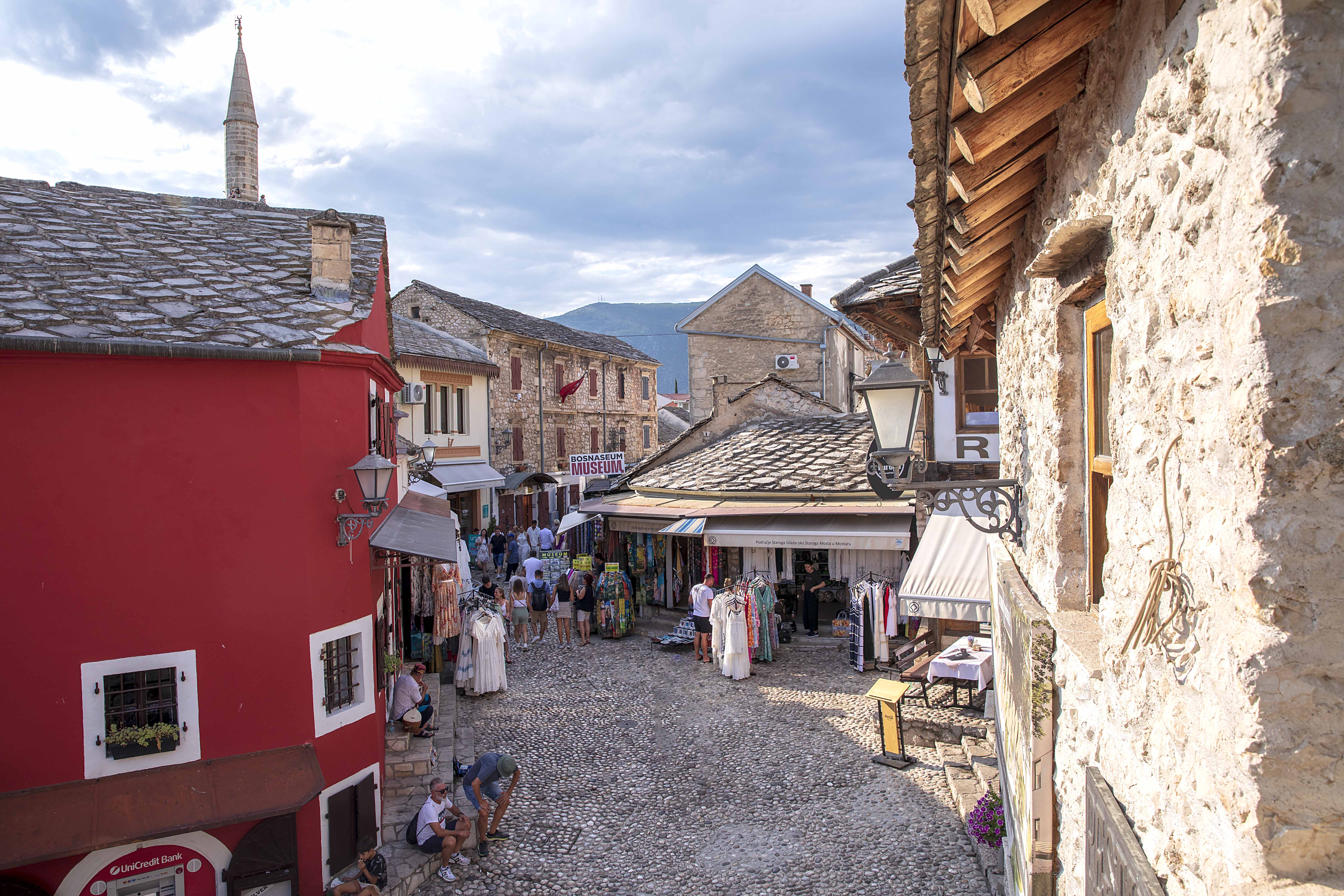
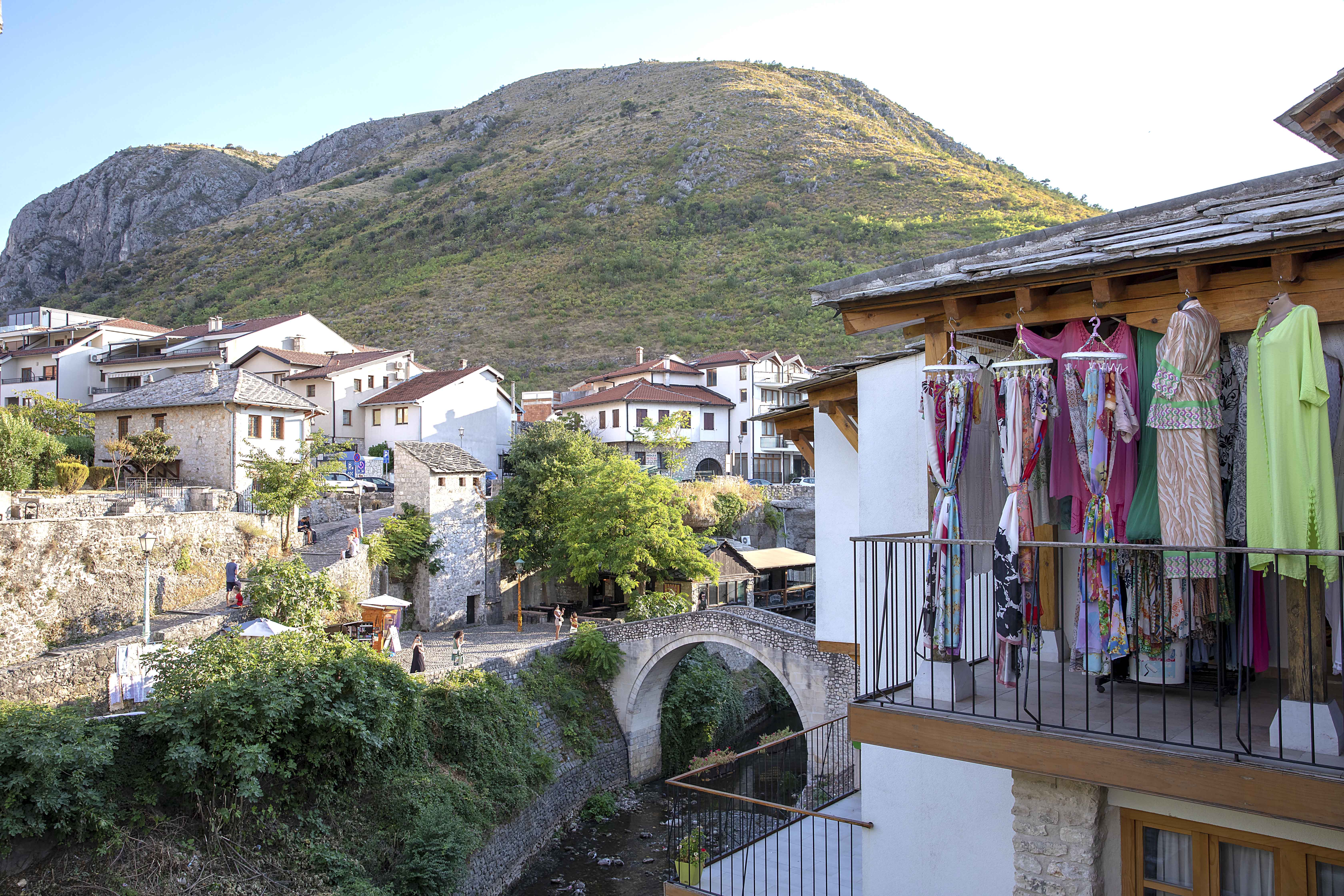
Around the bridge, you will find countless small shops tucked into Old Bazaar Kujundžiluk. Walking through this area feels like stepping back into the 16th century Ottoman world. Historically, this bazaar was the heart of trade in the region, once home to more than 500 years at the height of the Ottoman era. Like the bridge, it is part of the protected UNESCO World Heritage Site.
If you have a few hours to spare, I highly recommend joining a free walking tour. I went with Sheva Walking Tours and found it both engaging and informative, offering a deeper understanding of the city’s history and culture.
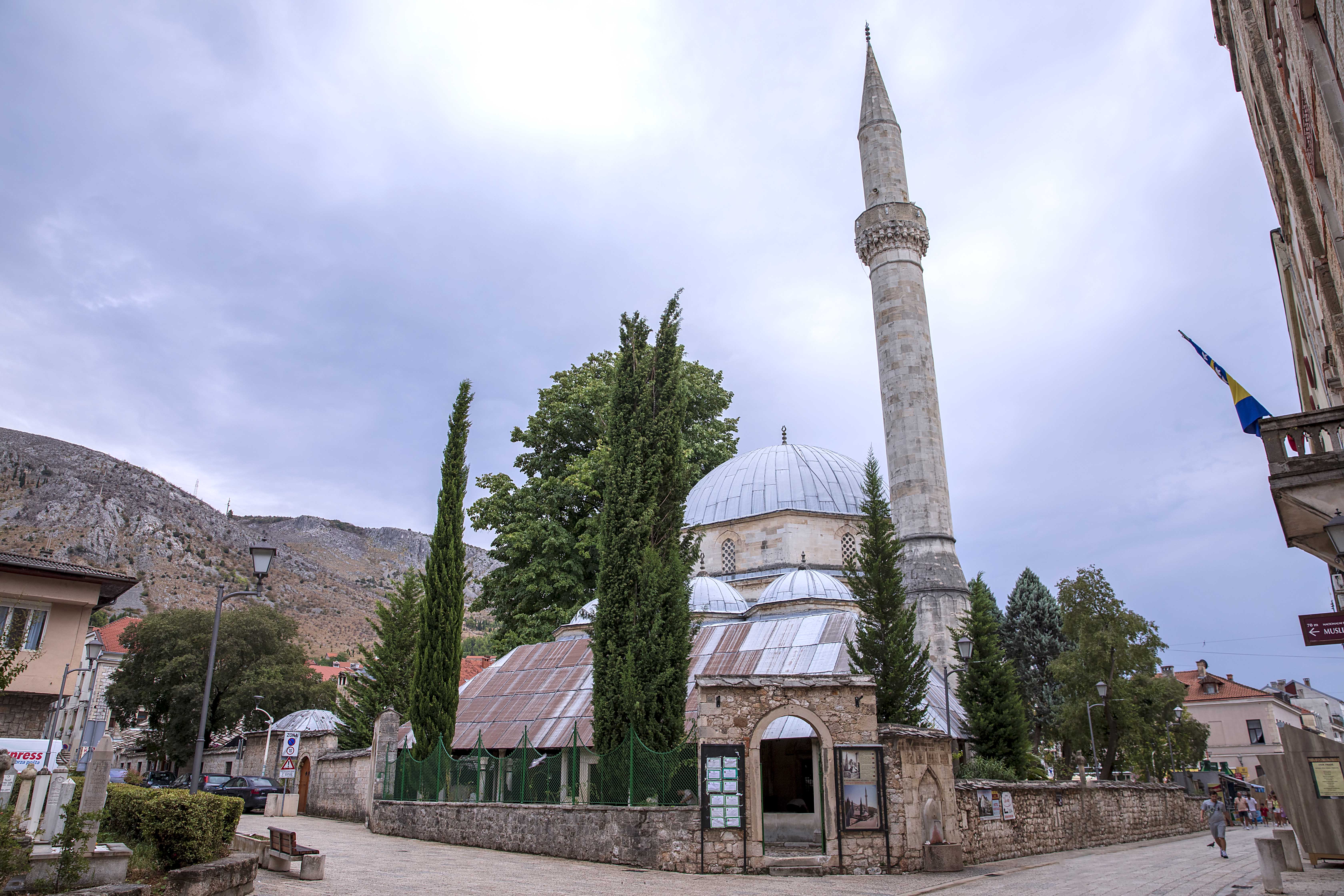
The Ottomans ruled Bosnia for more than four centuries, and their imprint is still deeply woven into the fabric of Mostar. As you wander through its stone streets, the city can feel like a Mediterranean echo of Istanbul, where minarets rise above red-tiled roofs and the rhythm of daily life carries a familiar warmth.
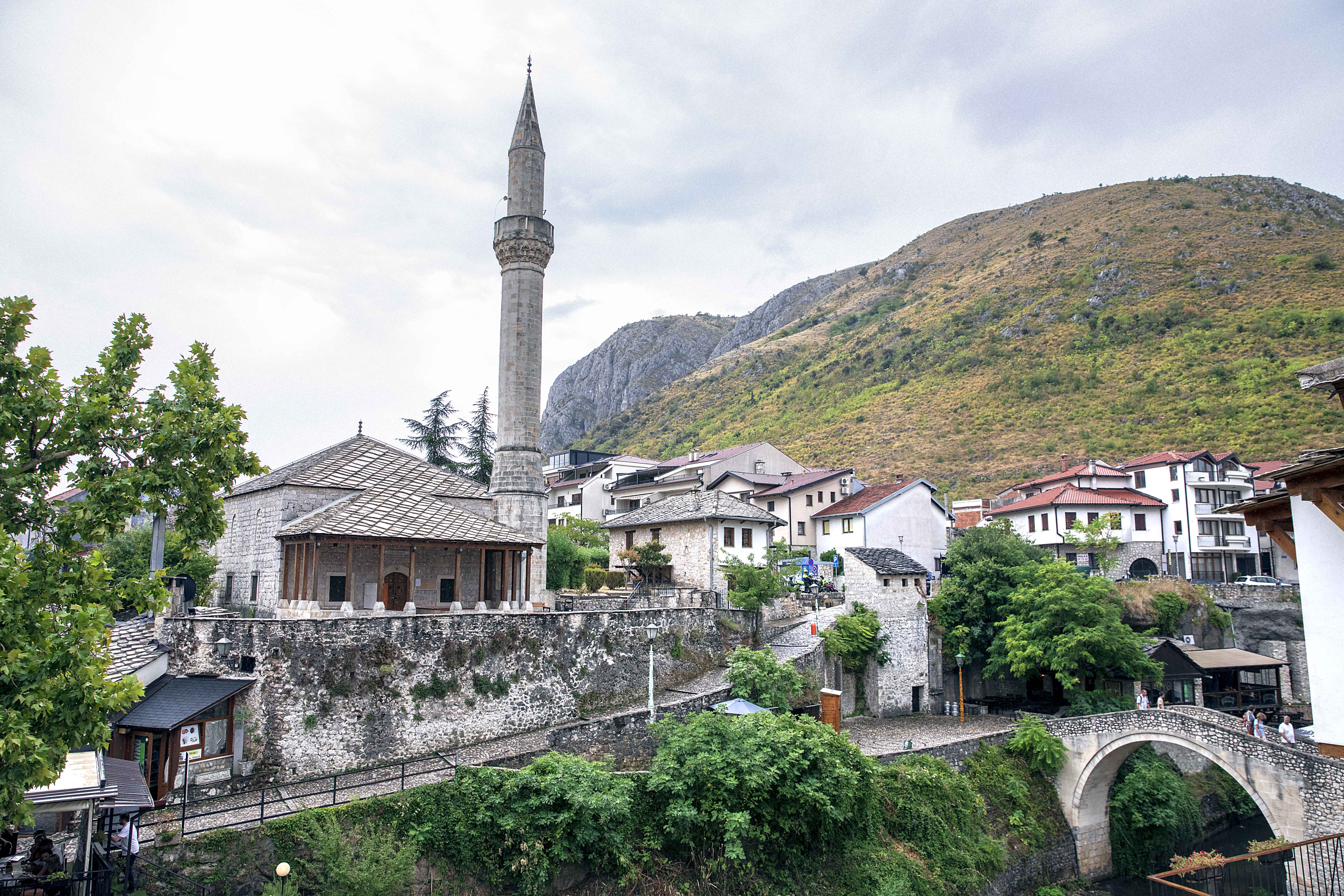
You will come across remarkable examples of Ottoman architecture at every turn, including Karađoz Beg Mosque, Koski Mehmed Pasha Mosque, and Ćejvan Ćehaja Mosque. Each of these sites reflects the elegance and spiritual presence that defined the era.
One aspect that felt a bit disappointing, however, was that many of these mosques require an entry fee. While understandable from a preservation standpoint, it can make the experience feel more like visiting a museum than stepping into a living place of worship.
If you are in Bosnia, there is one dish you simply have to try: Ćevapi. And there is no better place to enjoy it than in the heart of the old bazaar. Tima – Irma serves some of the best ćevapi in Mostar, with simple flavors done exceptionally well.
If you would rather enjoy your meal with a view across the bridge and the Neretva River, consider heading to Terrace Lagero in the historic Tabhana district. This area was once home to the city’s tanners, and today it offers a quieter setting with a beautiful perspective of Mostar’s timeless scenery.
I also heard great things about Najstariji Kafić Čardak, a coffee shop located on the top floor of Halebija Tower at the western entrance of the Old Bridge. It is said to offer a unique atmosphere along with lovely views, making it a spot worth adding to your list.
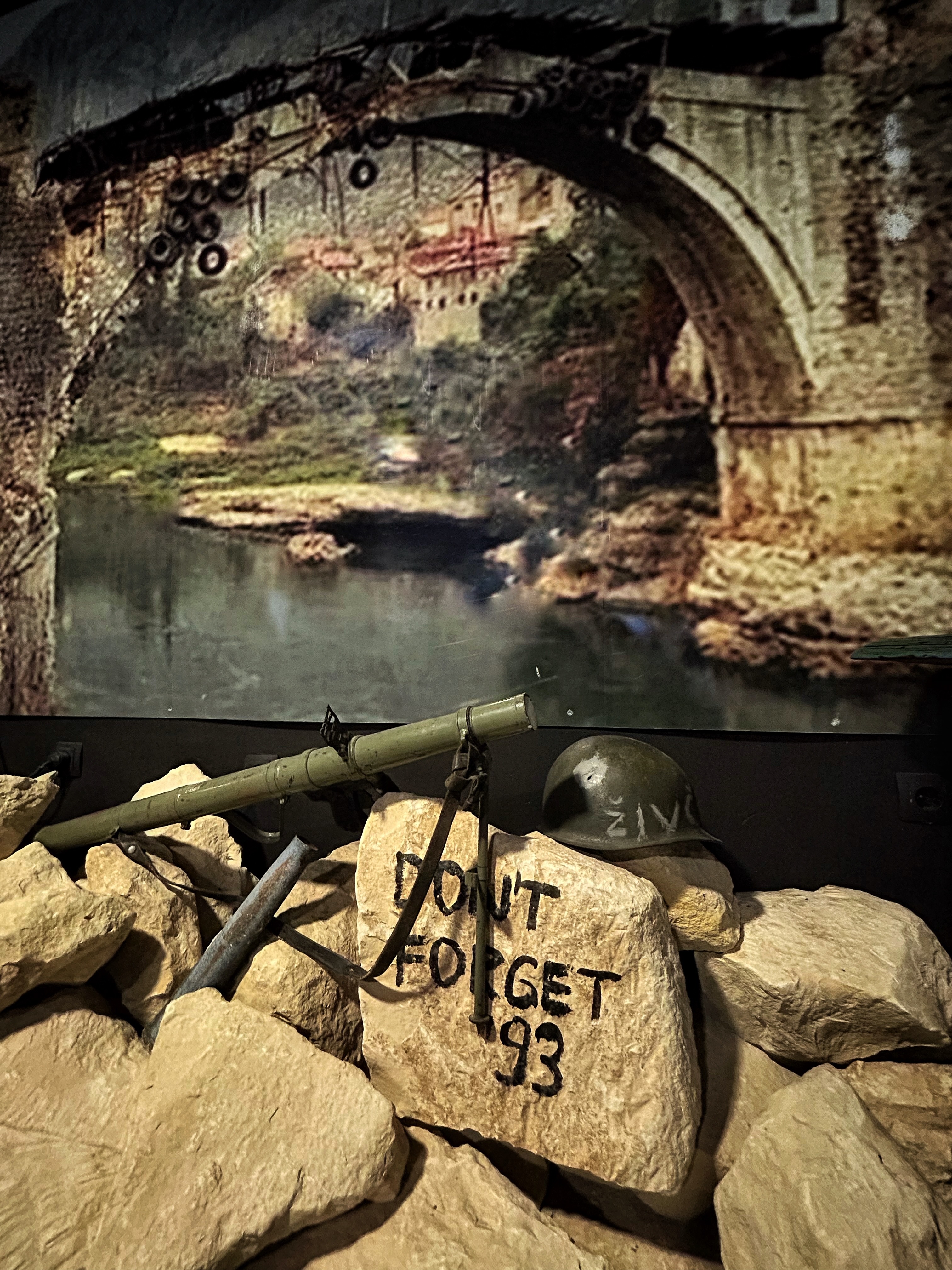
One of my most vivid memories of the war in Bosnia is watching the destruction of Stari Most on television. It felt as if someone had chosen to bury the entire history of the city beneath the cold waters of the Neretva River.
The war in Bosnia and Herzegovina unfolded in two phases over three years. At first, Bosnian Croats, organized under the Croatian Defence Council, and Bosniaks, represented by the Army of the Republic of Bosnia and Herzegovina, fought together as allies against advancing Serb forces, managing to push them back. But the alliance did not last. Driven by ambitions tied to the idea of a “Greater Croatia” or the creation of a separate Croat entity, the HVO later turned against the Bosniaks and launched a coordinated offensive in Mostar.
During this period, the Old Bridge became a deliberate target. For hours, it was shelled by tank fire, even as it stood as a powerful symbol of connection in a city being torn apart. When it finally collapsed, the empty space it left behind became one of the most haunting images of the war. For many locals, it felt like losing a member of their own family.
After the war, the bridge was painstakingly reconstructed. Türkiye played a significant role as one of the main financial contributors, and also provided historical records and skilled stonemasons to ensure the new bridge remained faithful to the original 1566 design by Mimar Hayruddin. Today, the bridge stands again, not only as a reconstruction of stone, but as a restoration of memory and identity.
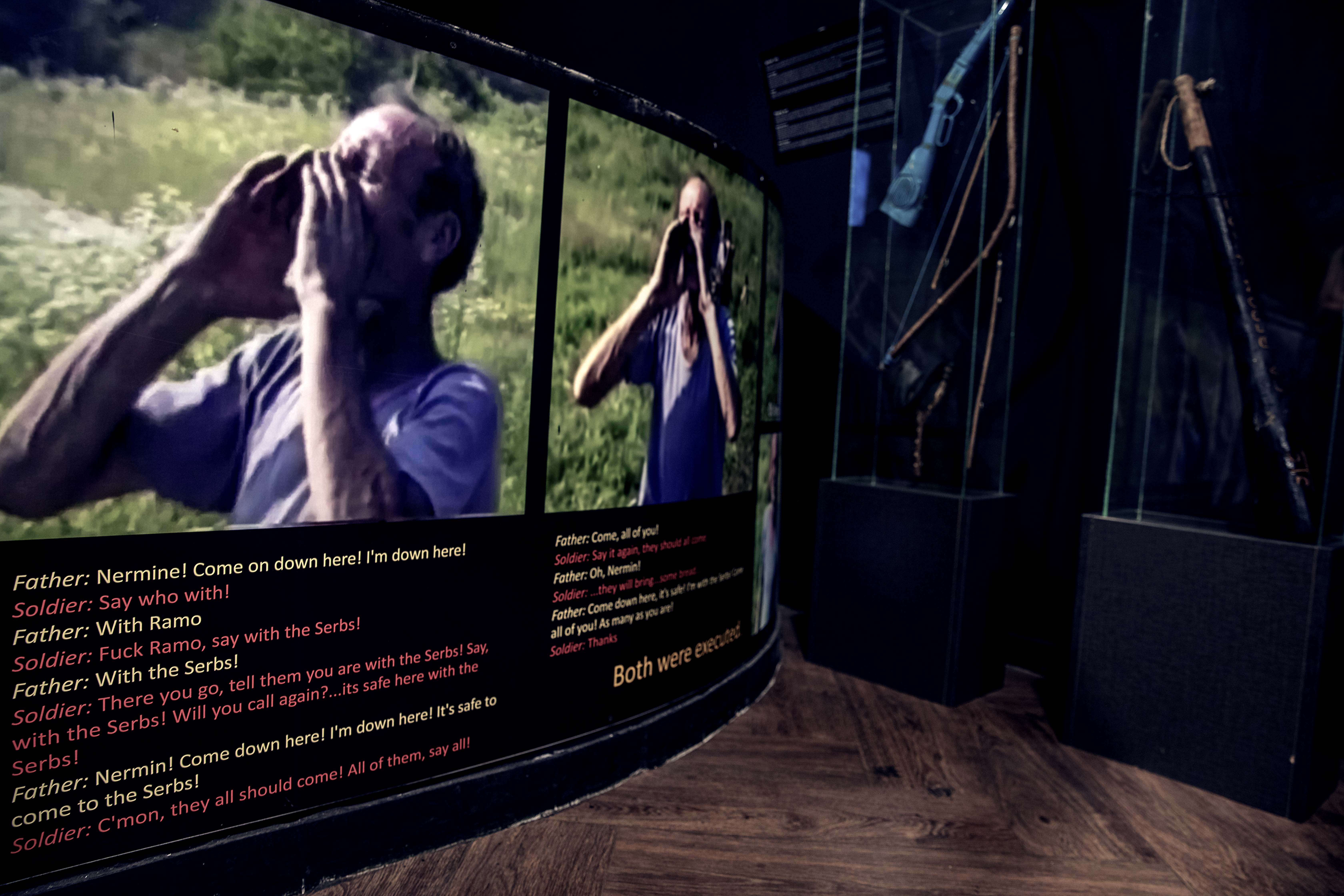
It is estimated that around 2,000 people lost their lives in Mostar during the Croat – Bosniak conflict. Many of the victims were Bosniak civilians in East Mostar, an area that endured relentless shelling by the Croatian Defence Council.
Across the country, the scale of suffering was far greater. Forces aligned with Slobodan Milošević, Radovan Karadžić, and Ratko Mladić carried out some of the worst atrocities of the war against Bosniaks. Among these, the most horrific took place in Srebrenica. During the Srebrenica Genocide, more than 8,000 Bosniak men and boys were systematically executed in less than a week by forces under Mladić’s command. It remains the only event in the Bosnian War that has been legally recognized as genocide by international courts.
If you want to better understand the human cost of these events, consider visiting the Museum of War and Genocide Victims in the Old Town. It offers a powerful and sobering account of the atrocities, helping preserve the memory of those who were lost.
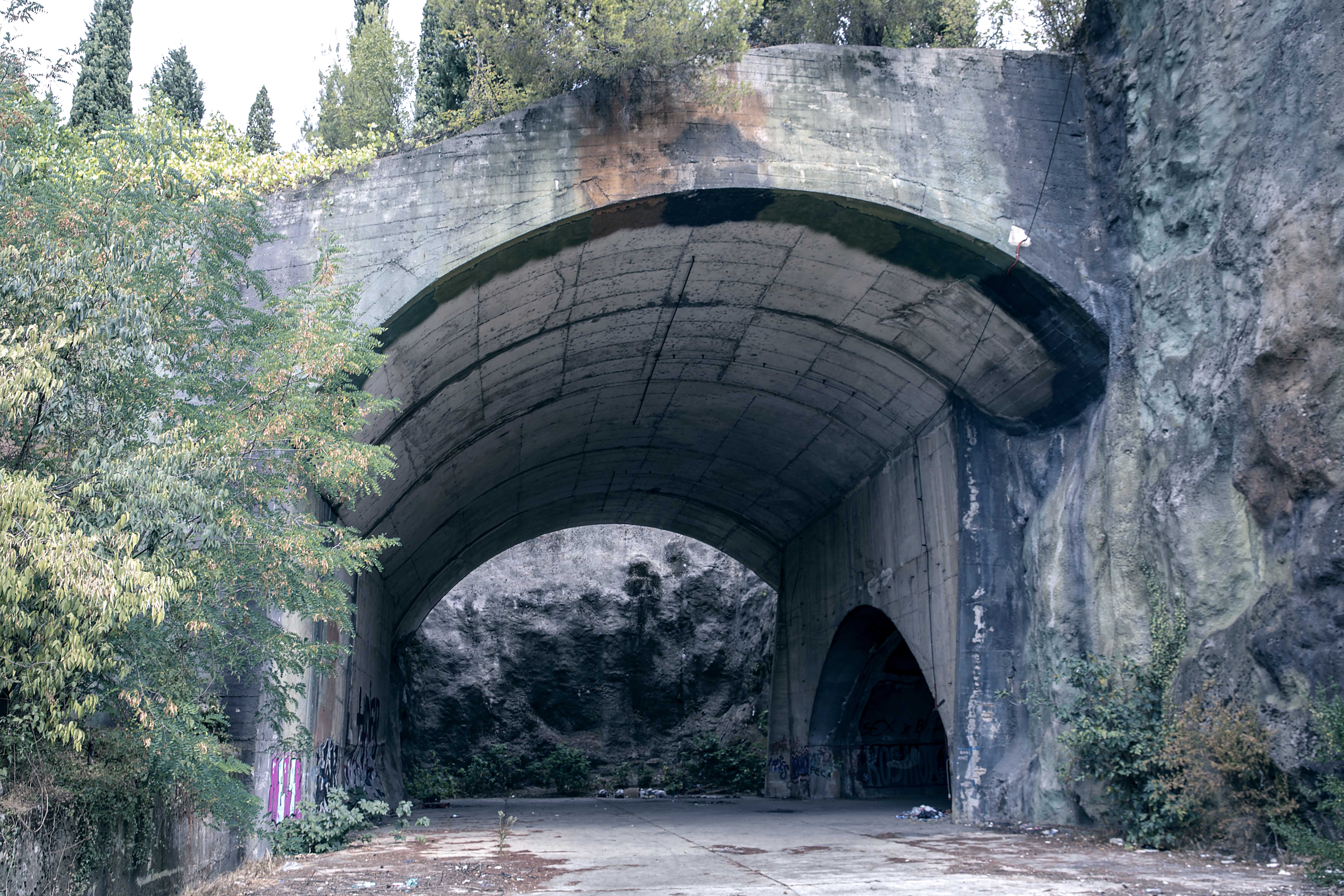
Bosnia and Herzegovina was part of Yugoslavia until the 1990s, and scattered across the country are lesser-known sites that were once kept hidden from the public. Many of these places were built during the era of Josip Broz Tito and were intended to remain secret until the state itself dissolved.
One such place is an abandoned aircraft hangar near Mostar, called Objekt Buna (Gnojnice), not far from the local airport. It is believed to have once served as a top-secret military facility during the Tito era. Today, it stands completely deserted. With no security or maintenance, the site has sadly deteriorated into an illegal dumping ground, a quiet reminder of a past that was once carefully concealed.
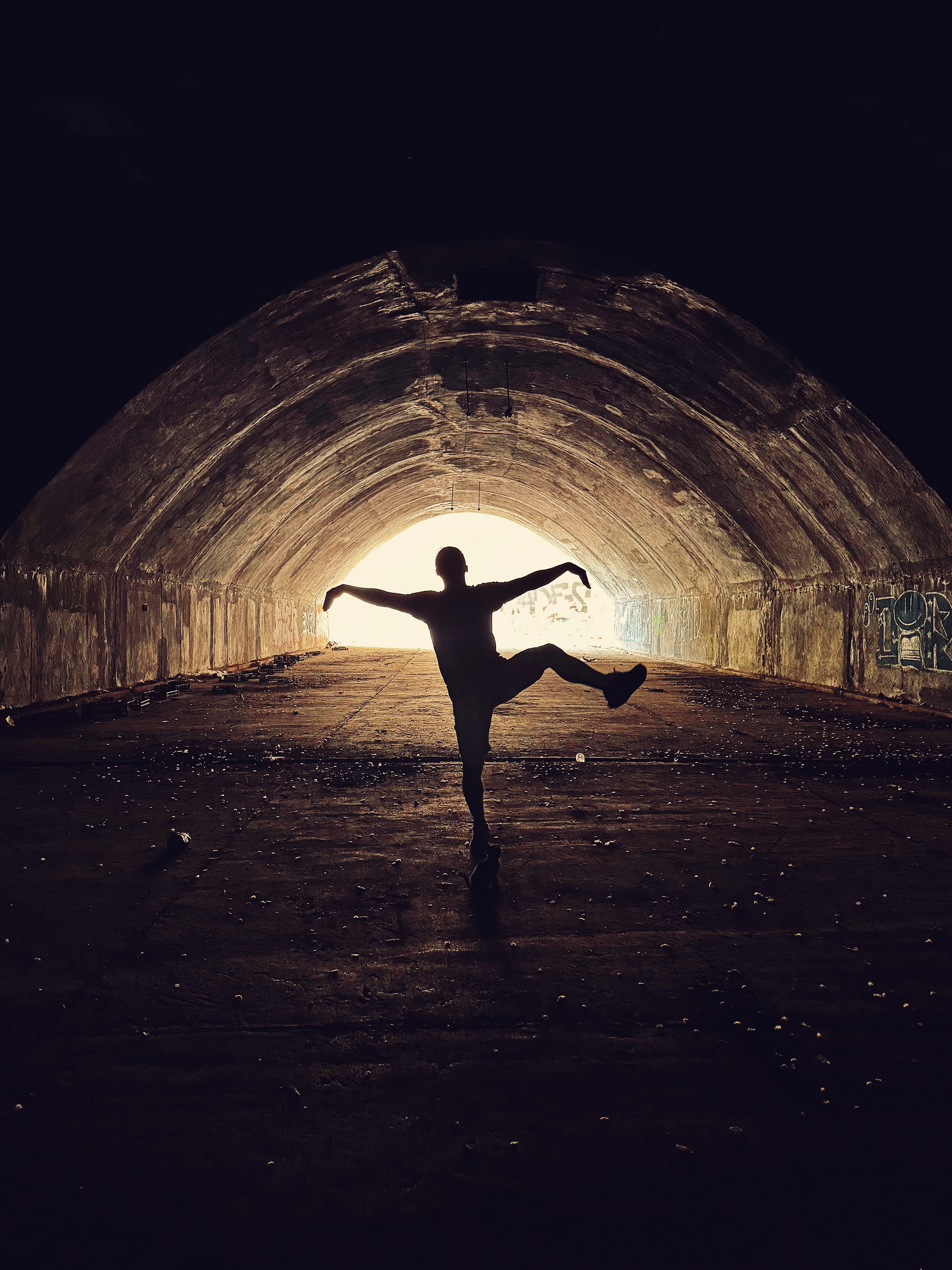
It was possible to enter and explore the hangars. As you walk through the long tunnels, you come across a series of rooms that appear to have once been used by military personnel to coordinate and manage the connected hangars and equipment. Bring a flashlight though since it is completely dark inside.
Inside one of the tunnels, we were surprised by the sound of a small kitten meowing and following us. It seemed to be alone and possibly orphaned, which made the moment unexpectedly emotional. Before leaving, we made sure to leave some food and water for it, hoping it would help the little one survive a bit longer in such an abandoned place.
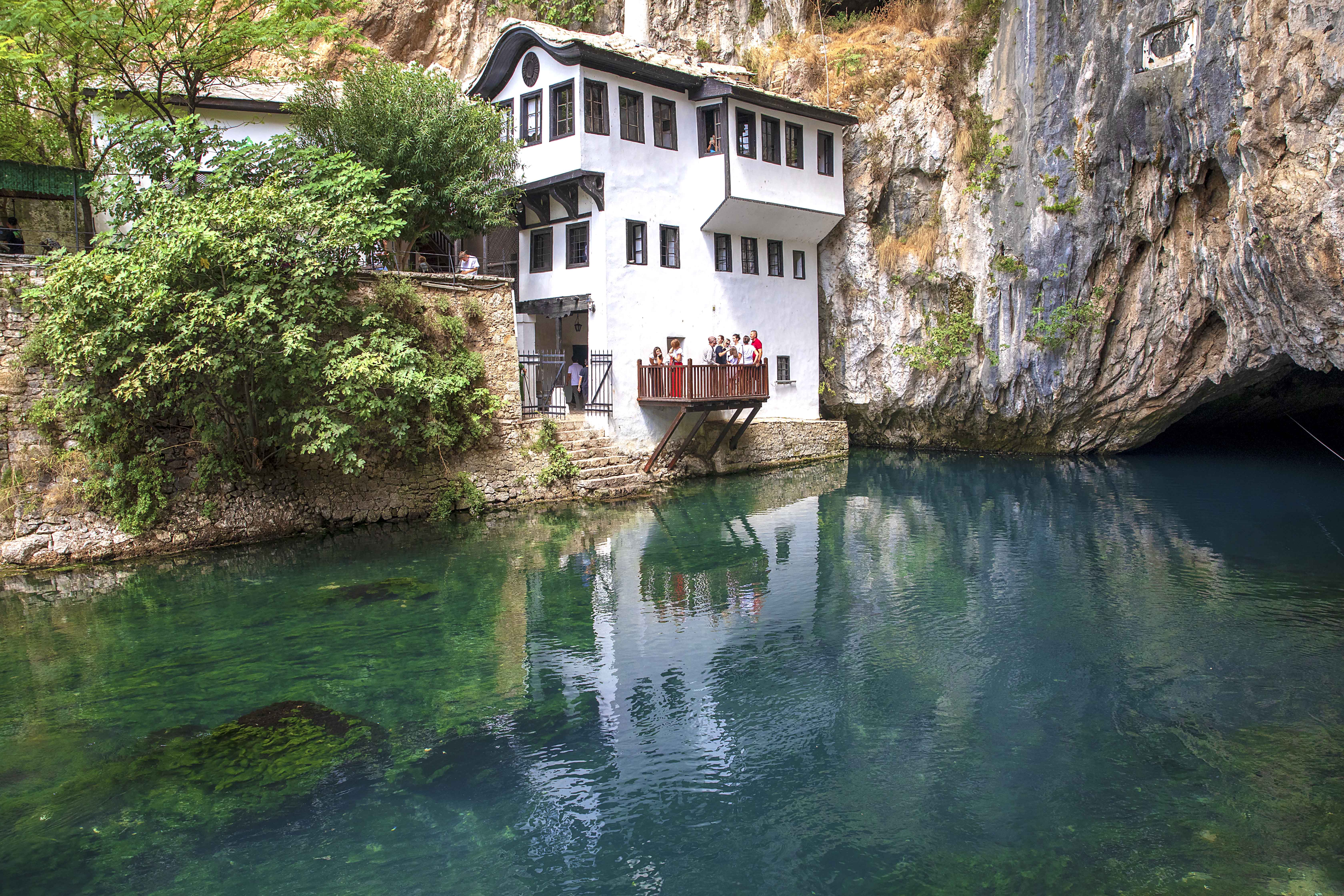
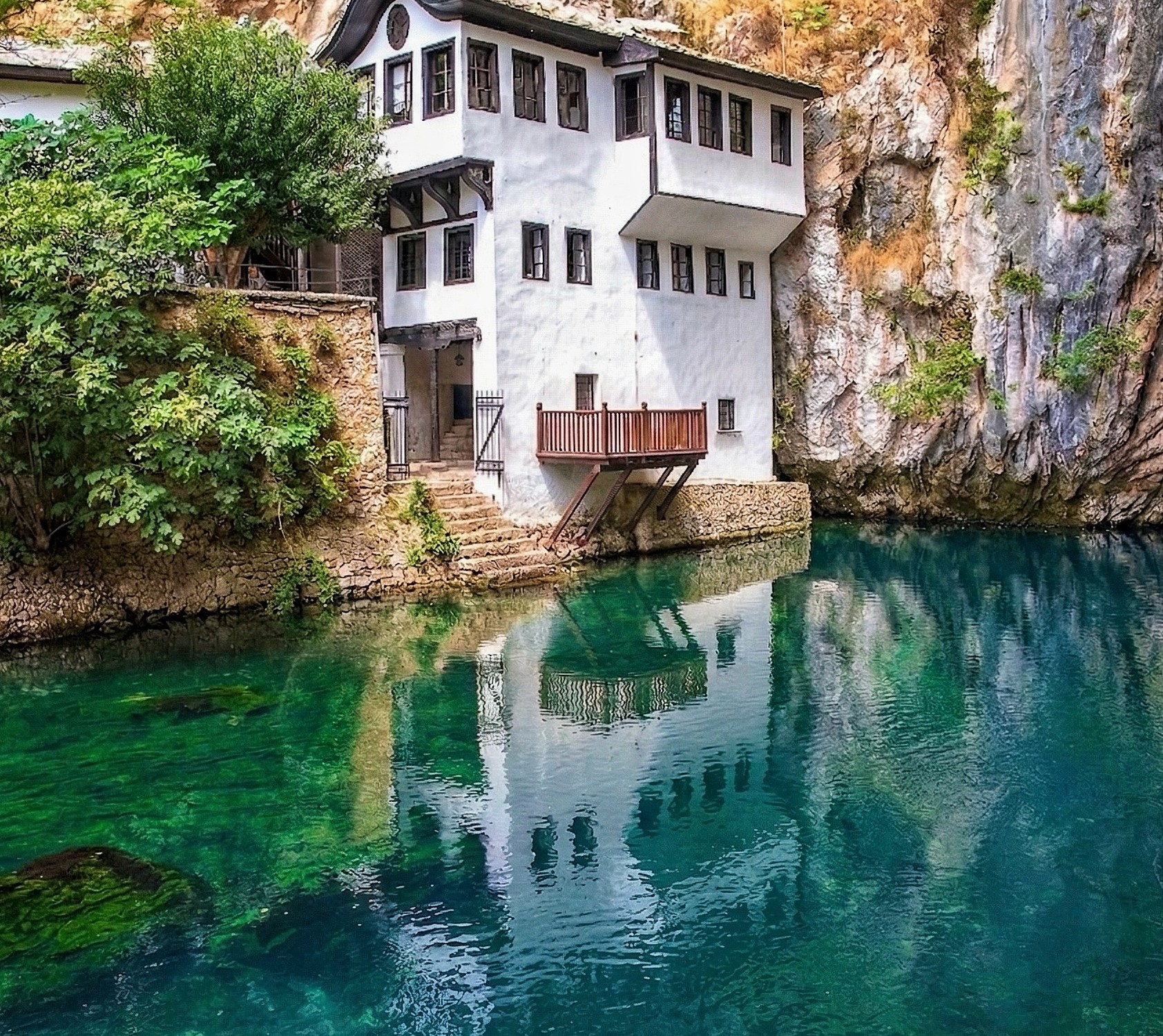
As I mentioned, Mostar reflects a lot about the Ottoman Empire. About a 20-minute ride from the city, you will arrive in one of the most soothing places. A 16th-century Dervish monastery situated at the base of a 200-meter cliff… It was built by Sufi Dervishes, a mystical branch of Islam, focused on the inner, spiritual dimension of the faith.
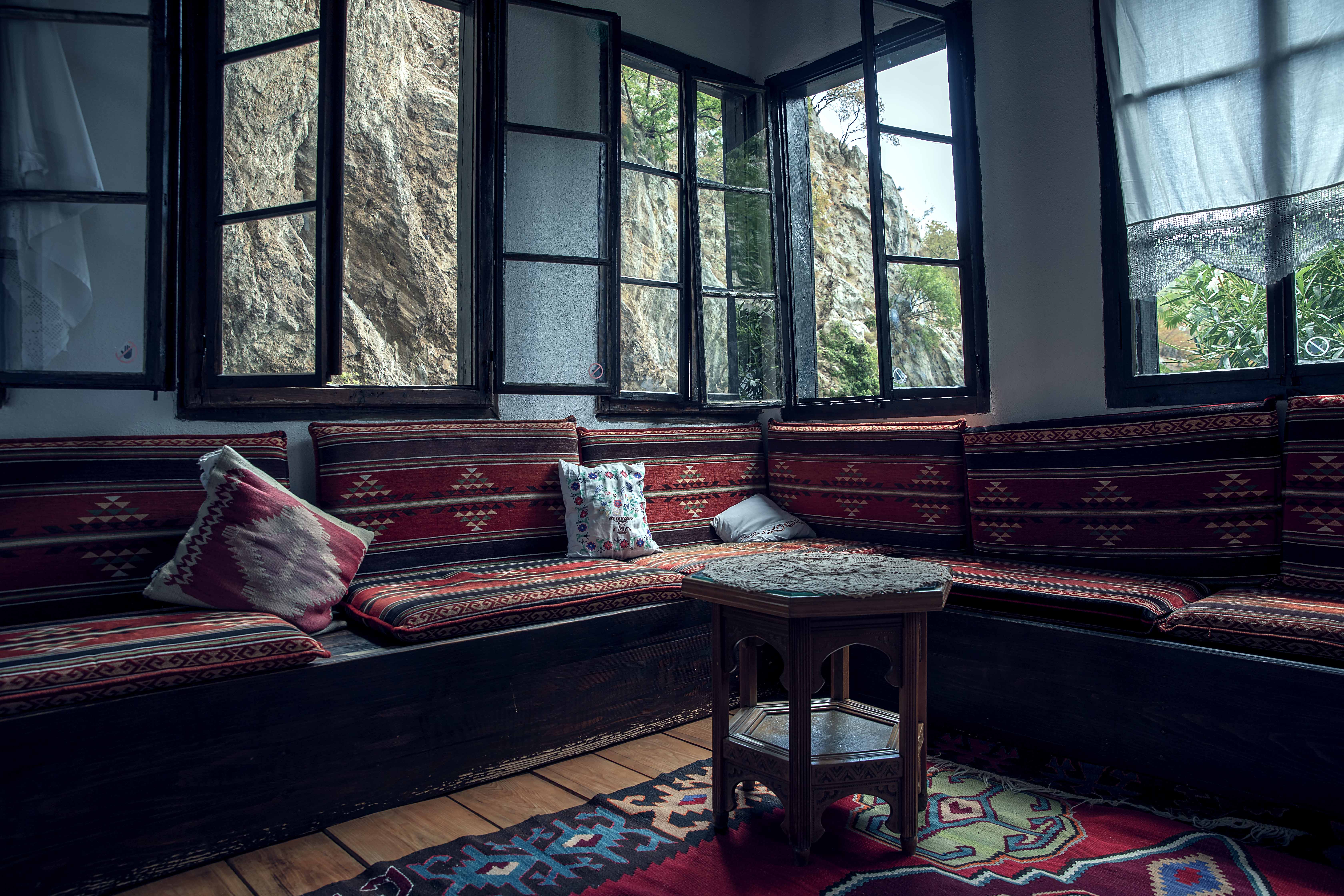
You can walk along the river, enjoy a drink or a meal, and also visit the nearby Blagaj Tekke, a historic dervish monastery set dramatically at the base of a cliff beside the spring. In the summer months, the area can get quite busy, especially with visitors from Türkiye, but it remains a must-visit experience when you are in the Mostar region.
If you are driving to Blagaj, parking can be a bit challenging. You may need to leave your car near the cemetery and continue on foot through narrow streets lined with small shops and food stalls. It is not uncommon to end up parking in someone’s backyard, as locals often offer informal parking spots for a reasonable fee. We even came across freshly squeezed pomegranate juice being sold nearby, which was a nice touch. Overall, prices felt fair and the atmosphere was welcoming, with no sense of being aggressively overcharged.
I had heard that there is still a visible divide along Bulevar Street, where West Mostar is predominantly Croat and East Mostar is predominantly Bosniak. People often describe two parallel systems within the same city, including separate bus stations, postal services, electricity providers, and even fire departments.
About 30 years ago, as a child, I remember watching the destruction of the Old Bridge and the city unfold on television, right in the heart of Europe. The war undeniably took a heavy toll on Mostar’s soul, and its scars are still visible throughout the city. Buildings still carry bullet holes, and cemeteries hold the memories of those who were lost in the violence. During our visit, we even met people who had fought in the war and lost close friends.
Yet three decades later, while I understand that some divisions still exist, there is also a sense of renewal. It is encouraging to see this beautiful Bosnian Ottoman city coming back to life, with visitors from all over the world walking its streets and experiencing its history. It feels like a quiet sign of hope for more peaceful and prosperous days ahead. I truly enjoyed Mostar and hope to return one day. On a day when the Bosnian national team wins games at the World Cup, and people would watch fireworks erupt across both West and East Mostar at the same time, lighting up the night sky and bringing the whole city together in a shared celebration.
Lastly, good luck to Bosnia and Herzegovina national football team for the FIFA World Cup 2026.
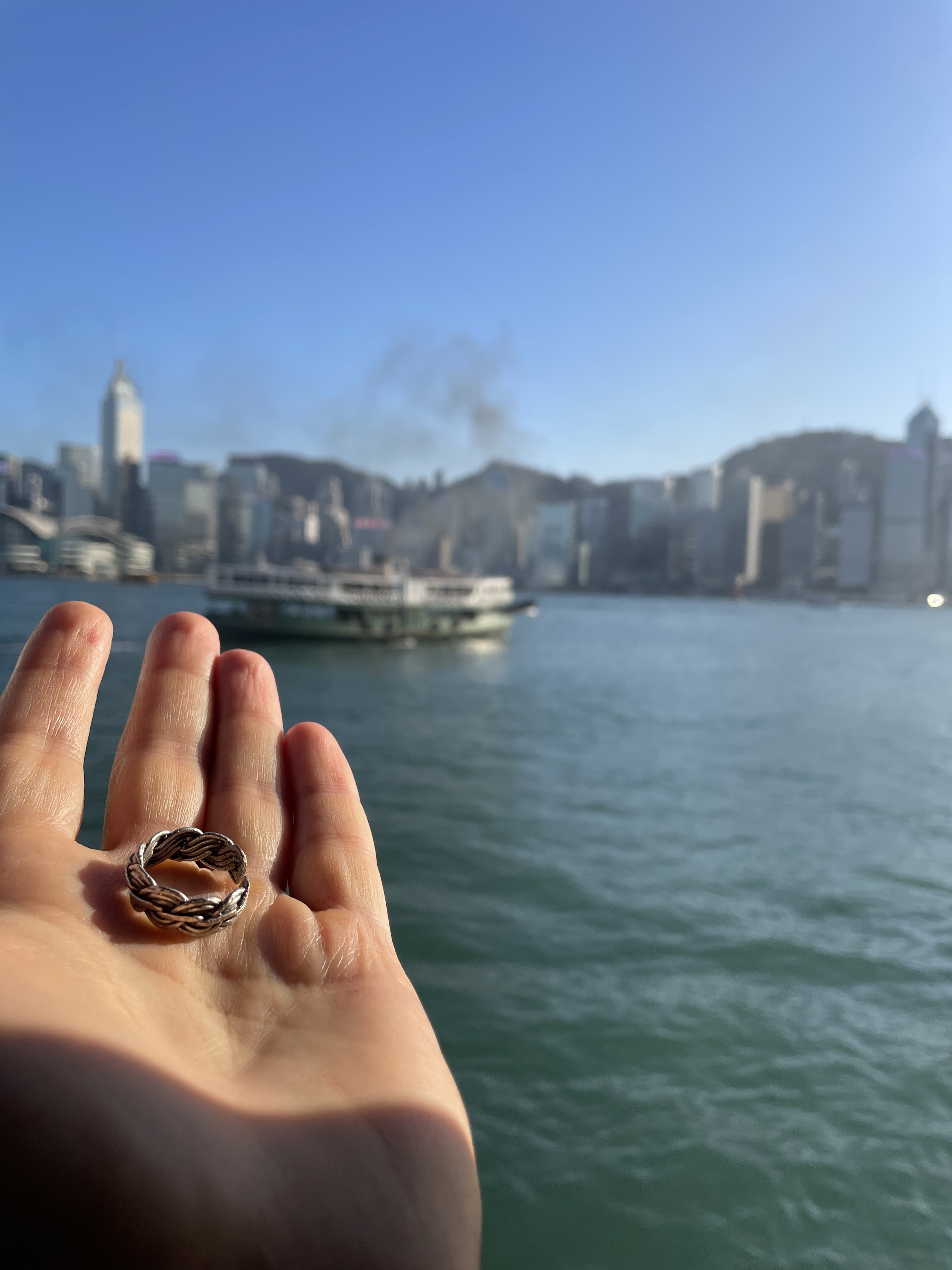
Oh, one small note: while casually walking across the bridge, we came across a ring. Since then, I have become its keeper and have carried it with me across numerous countries.

