One thing that quietly pushes me forward in life is the awareness of how precious time truly is. There is so much to see, feel, live, and experience. So many places to discover and stories waiting to unfold. Yet the time we have to turn these possibilities into memories is so limited. That realization alone urges me to do more, to go farther, and to stay curious.
I often tell my friends that the way I travel can be both challenging and deeply rewarding. Yes, it means waking up as early as possible to stretch the day and fit as much life into it as you can. It means returning to your accommodation mostly to shower and sleep before the next morning begins. Sometimes your body protests. You feel pain, exhaustion, or even sickness. There are moments when you are so tired that you question the journey itself.
But even in those moments, one thought remains constant in my mind.
How can I explore more?
How can I learn more about this place?
How can I feel it not just with my eyes, but deep in my bones?
And if there is one thing I know for certain, it is this. No matter how worn out I feel at the end of a trip, the sense of fulfillment it leaves behind is immeasurable.
This time, our journey began at Florence’s airport. After catching COVID in Florence for the first time ever, which kept me in bed for two days, it was finally time to return to Rome after picking up the rental car. Even during those days with a high fever, we still stepped outside and experienced the city as much as we could. Still, I had not fully recovered. While the world outside was sunny and warm, I sat there feeling cold, wrapped in the lingering weakness of illness.
Our original plan had been ambitious. Pick up the car early in the morning from the airport, drive about two and a half to three hours to San Marino, spend the day wandering through its old town, and then continue the four and a half hour journey back to Rome, and return fly back home the next day. Because of the unexpected sickness, we picked up the car later than planned, around 11 – 11:30 in the morning.
I remember sitting in the driver’s seat, hands on the wheel, quietly debating with myself for about five minutes. Seven or eight hours of driving in a single day, followed by hours of walking through a hilltop city, while still recovering, did not sound particularly wise. Then another thought appeared. When in the future will you get the chance to discover a place like this. A small and often overlooked country sitting quietly on a mountain.
So I made the decision.
Let’s just do it. Let’s hit the gas and discover San Marino, even if it is only for a few hours. Let’s still make the most of it. There will always be time to rest.
And so we set off. After about three hours of driving through the rolling landscapes of Tuscany, we arrived in this tiny country perched above the hills, considered one of the oldest republics in the world. Time is limited. So we begin to explore San Marino.
According to various sources, more than 400 micronations have been documented around the world since the idea began gaining popularity in the 1970s. Most of these self-declared states are relatively new, little known, and not recognized internationally. But there is one remarkable exception. San Marino is often mentioned in the same conversations about tiny nations, yet its story stretches back far beyond modern micronations. According to tradition, it was founded on September 3, 301 AD by a stonemason named Saint Marinus. Marinus had fled the island of Rab (in modern day Croatia) to escape the religious persecutions of the Roman emperor Diocletian.
Legend says that before his death, he left his followers with a powerful final message: “Relinquo vos liberos ab utroque homine.” “I leave you free from both men.” It is a phrase often interpreted as freedom from both imperial and ecclesiastical authority. Perhaps because of this origin story, San Marino is widely regarded as the oldest surviving republic in the world.
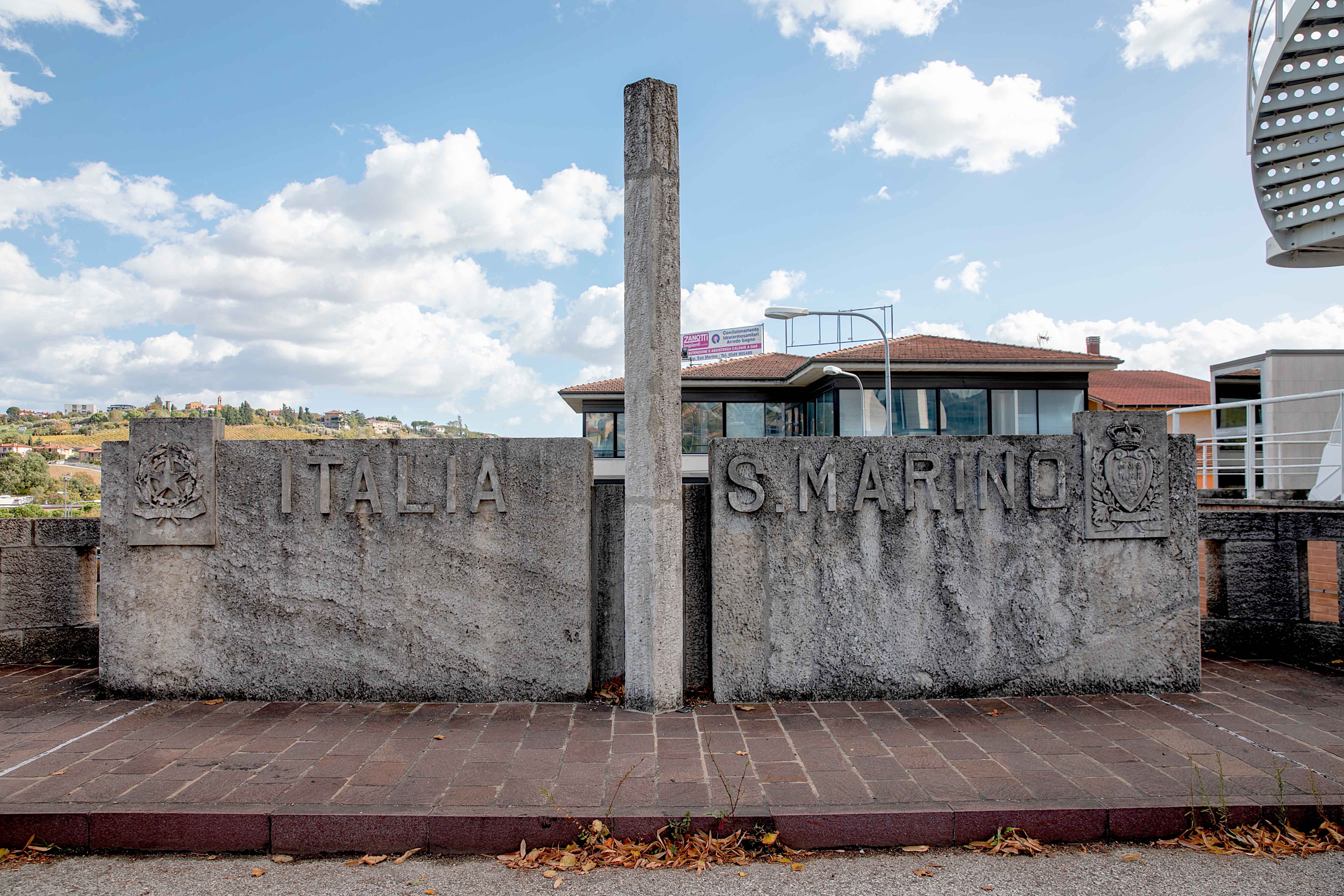
If you plan to enter San Marino by car, one scenic approach is from the west side through the Italian city of Rimini. Along this route you will encounter a charming border crossing known as Ponte di Confine. You can park nearby at Parcheggio Piazza Tini, which is free (IIRC, up to an hour or so), and take a short walk to explore the bridge and the crossing point. Just keep an eye on the traffic while you are there, since cars continue to pass through the border road.
Our original plan was to park at Parcheggio Scuola Elementare (which has free parking) and take the lift, Funivia – Borgo Maggiore, up toward the historic center. However, when we arrived at the gondola station, we learned that it would be closed for several days due to maintenance.
To save some time, we decided to drive further up the mountain and park as close as possible to the old city. A convenient option is Parcheggio P8, which sits just a short walk from the narrow streets of San Marino’s historic center. From there, you can take the stairs up toward Il Cantone – Punto Panoramico San Marino, enjoying breathtaking views over the Tuscan sceneries along the way.
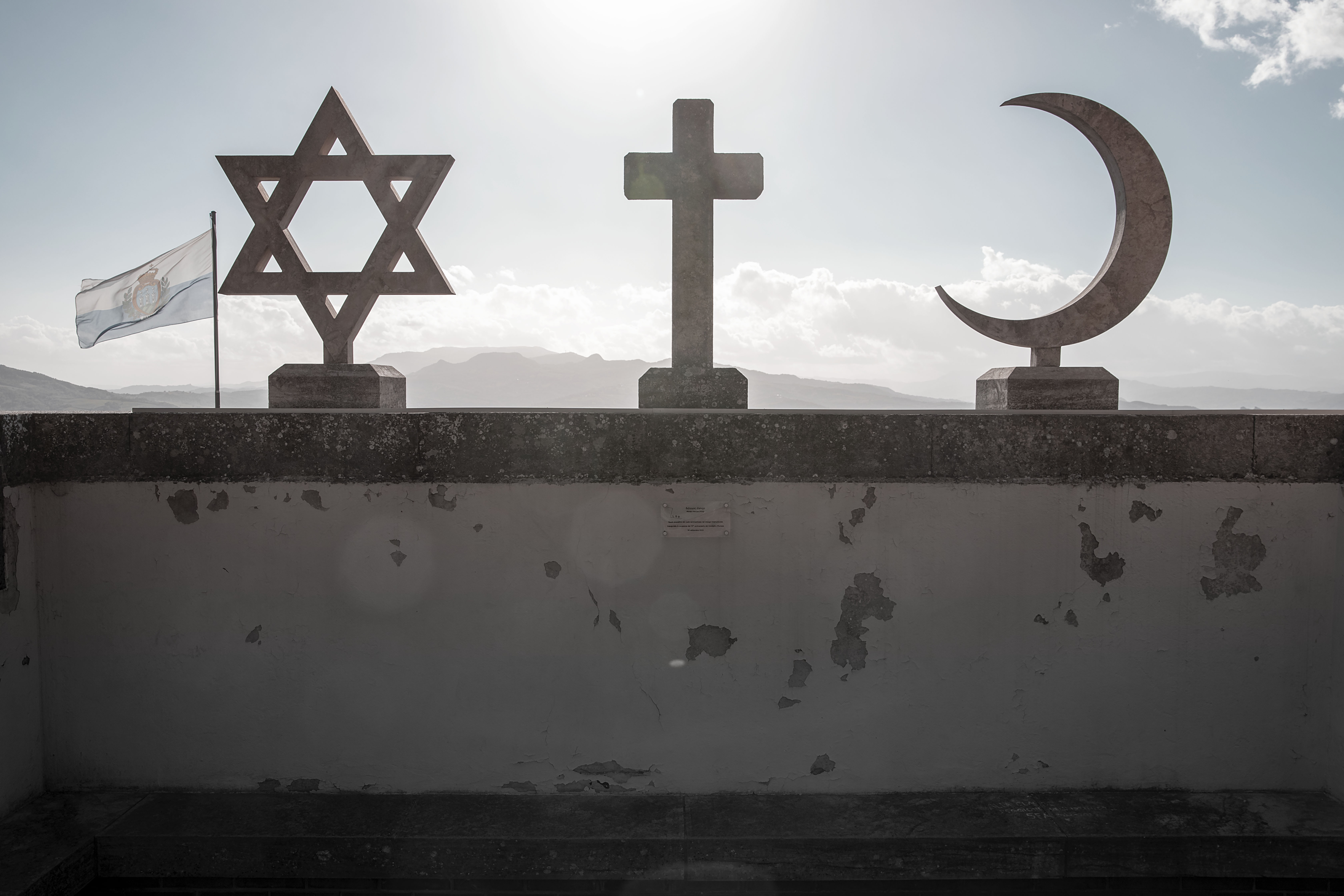
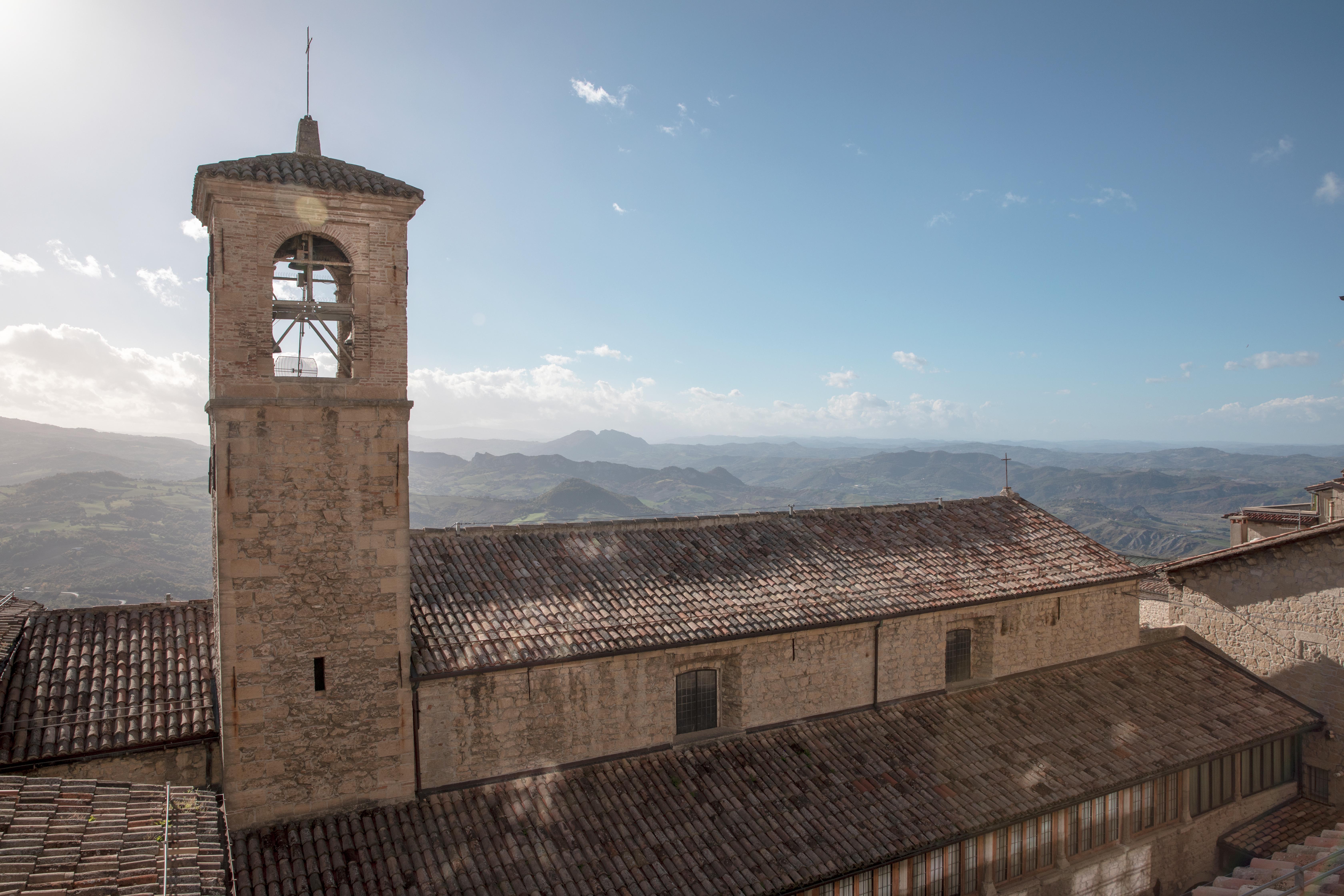
In the calm atmosphere of San Marino’s old streets, this small monument feels like a gentle statement about tolerance that connects different faiths across centuries. The symbols of the three monotheistic religions, the Cross, the Star of David, and the Crescent Moon, stand side by side in front of Cappella Nuova.
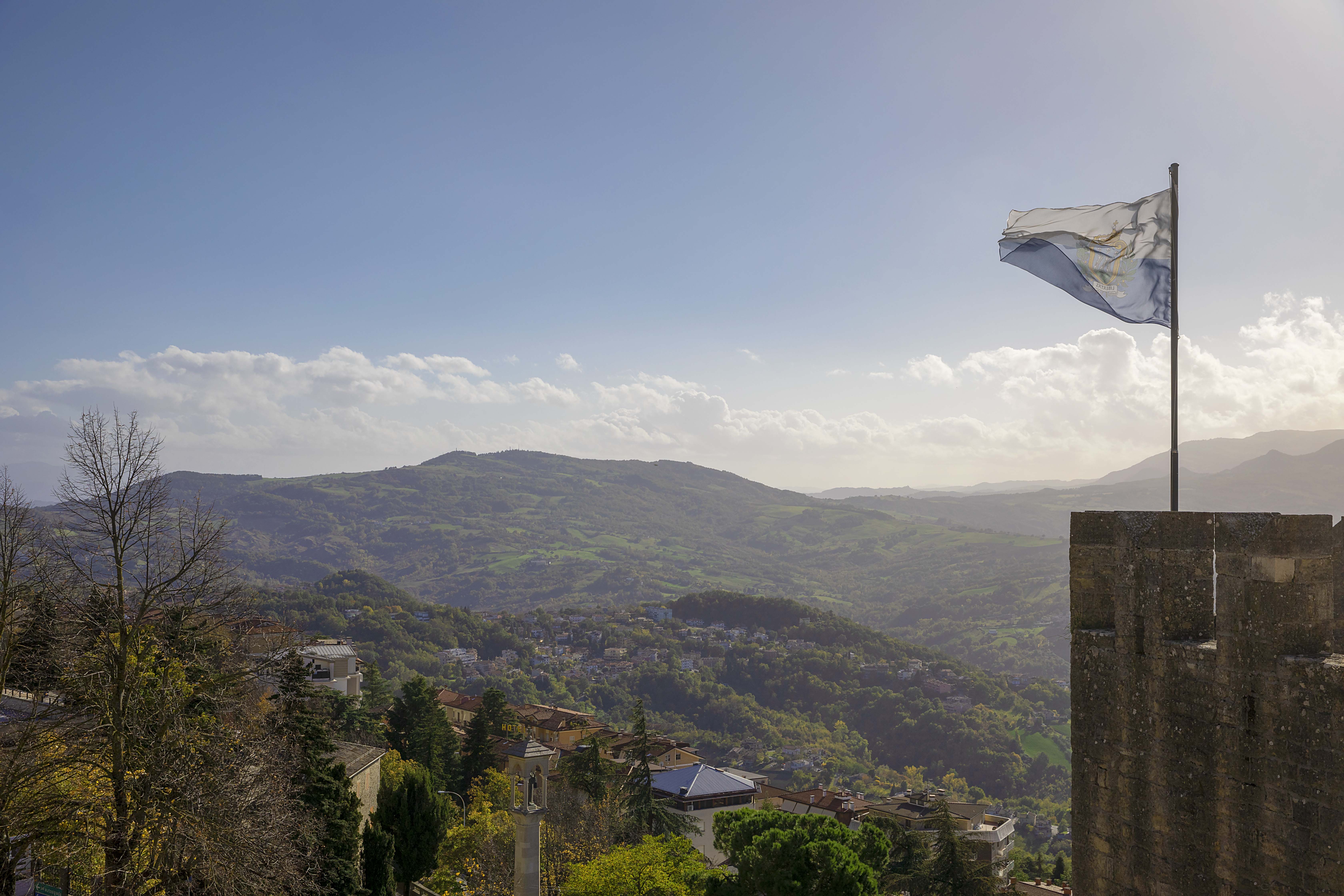
San Marino is not a member of the European Union, nor is it part of the Schengen Area. Yet, this tiny landlocked enclave, completely surrounded by Italy, maintains an open border, uses the euro as its official currency through a special agreement, and participates in a customs union with the EU. Covering just 61 km², it ranks as the fifth smallest country in the world. Despite its size, with an estimated GDP per capita of around $61,500 – $66,000 in 2025, San Marino stands among the wealthiest nations in terms of income per person.
You might wonder what drives the economy of such a small nation. Tourism, banking, and manufacturing together account for more than half of its GDP. From my own experience, the locals are welcoming and friendly. And a fun fact: soccer is one of the national sports, alongside target crossbow, even though San Marino currently sits at the bottom of the FIFA rankings.
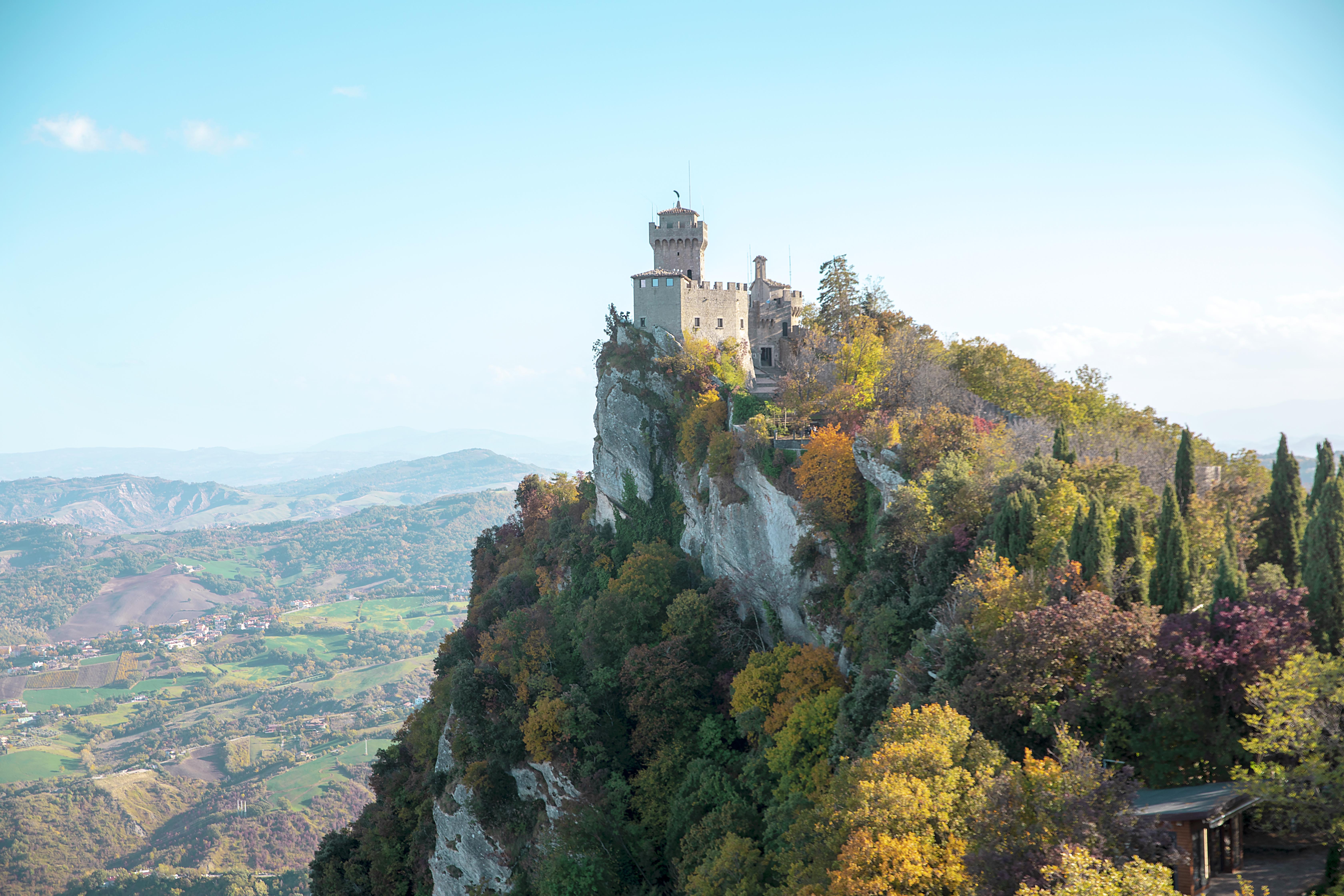
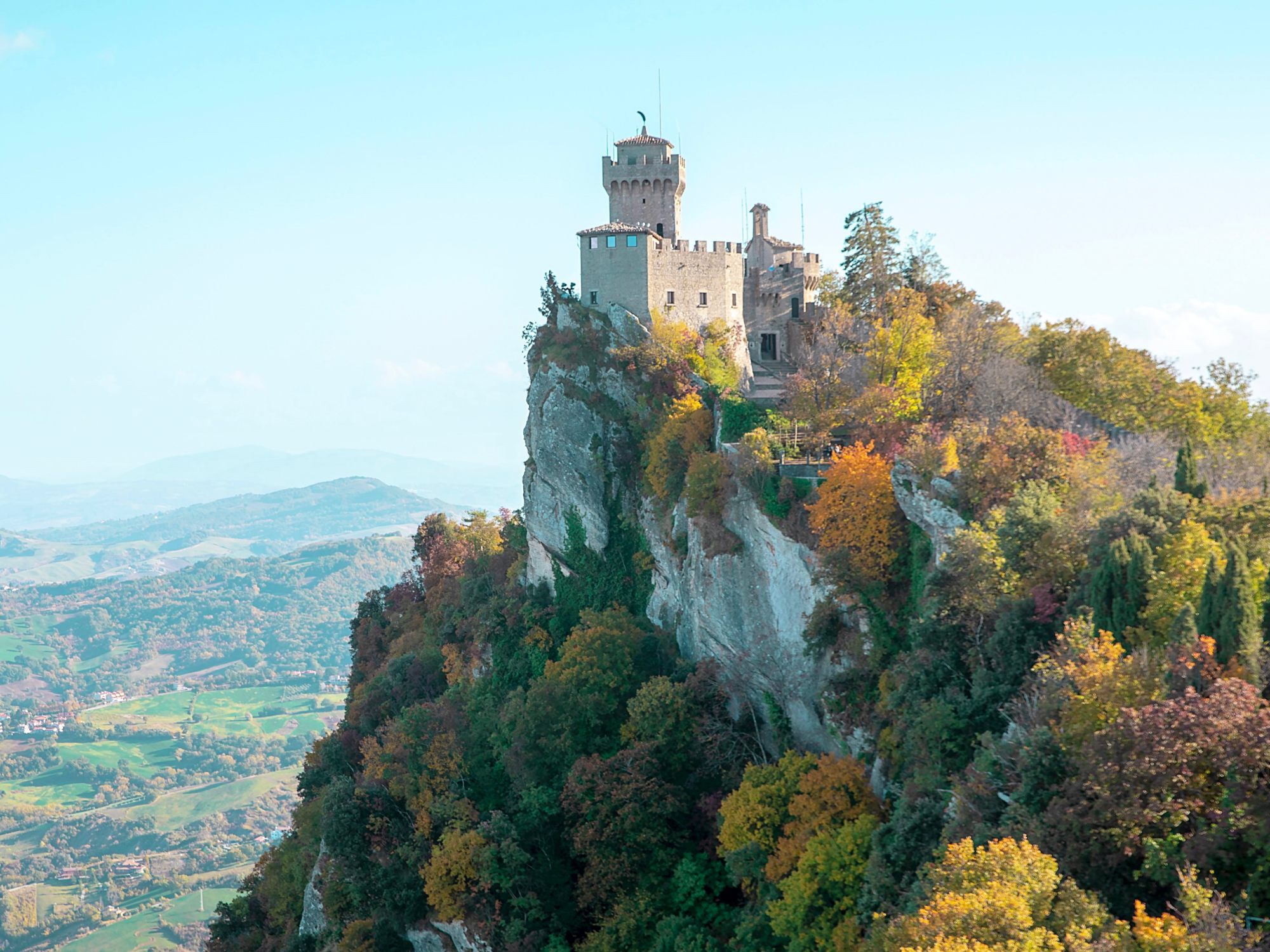
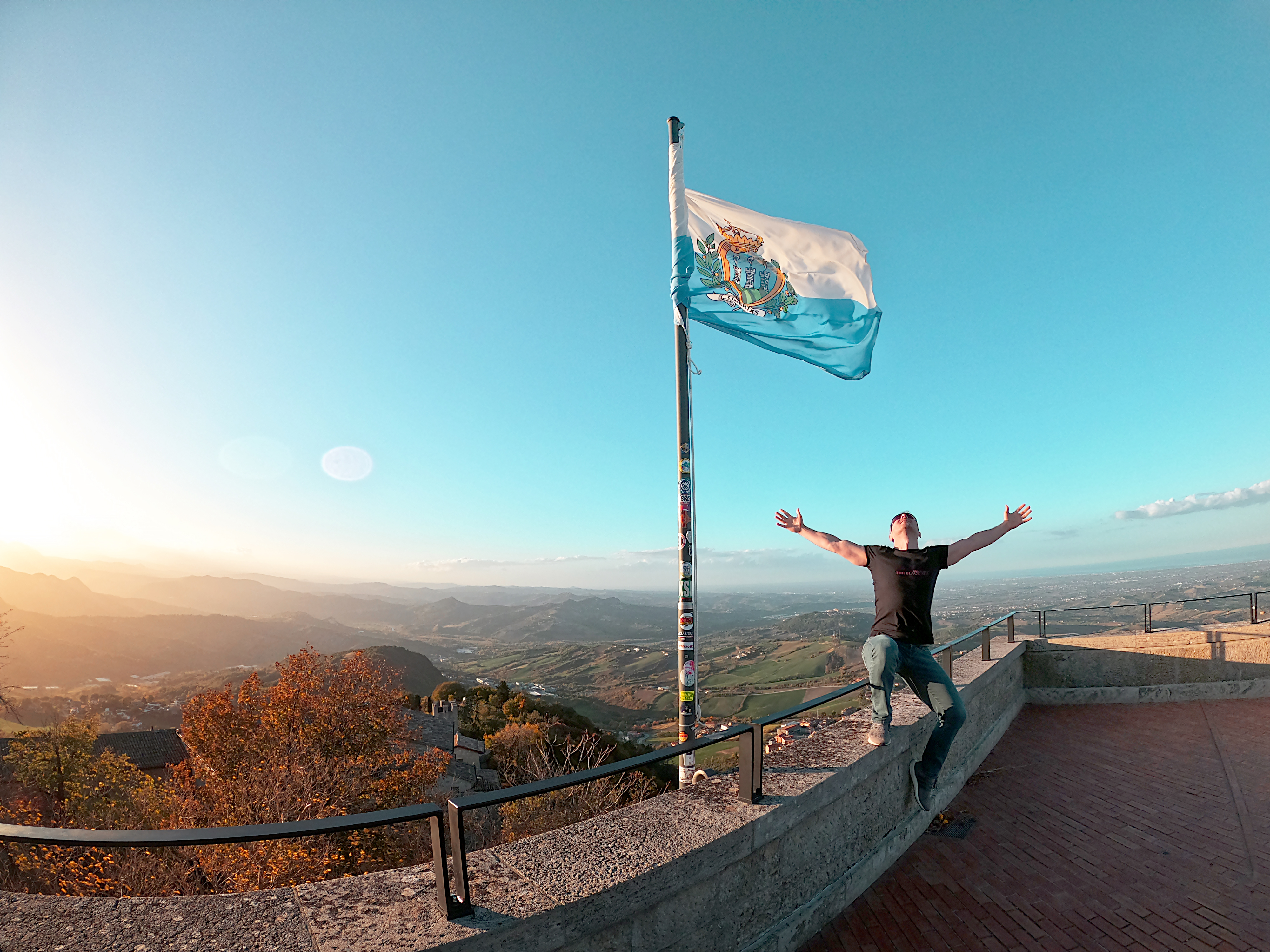
If you’ve ever looked at the flag of San Marino, you might have noticed the three towers rising above its blue and white bands. These towers are the country’s most iconic symbols. Known as the Three Towers of San Marino, they stand proudly on the three peaks of Monte Titano, watching over the surrounding hills and the distant Adriatic Sea.
A small scenic pathway begins near the end of Salita alla Rocca and leads you toward these historic fortresses. The views along the way are mesmerizing. While it is free to walk into the outer yards, entering the first and the second towers themselves requires a ticket. The good news is that a single ticket allows you to visit all.
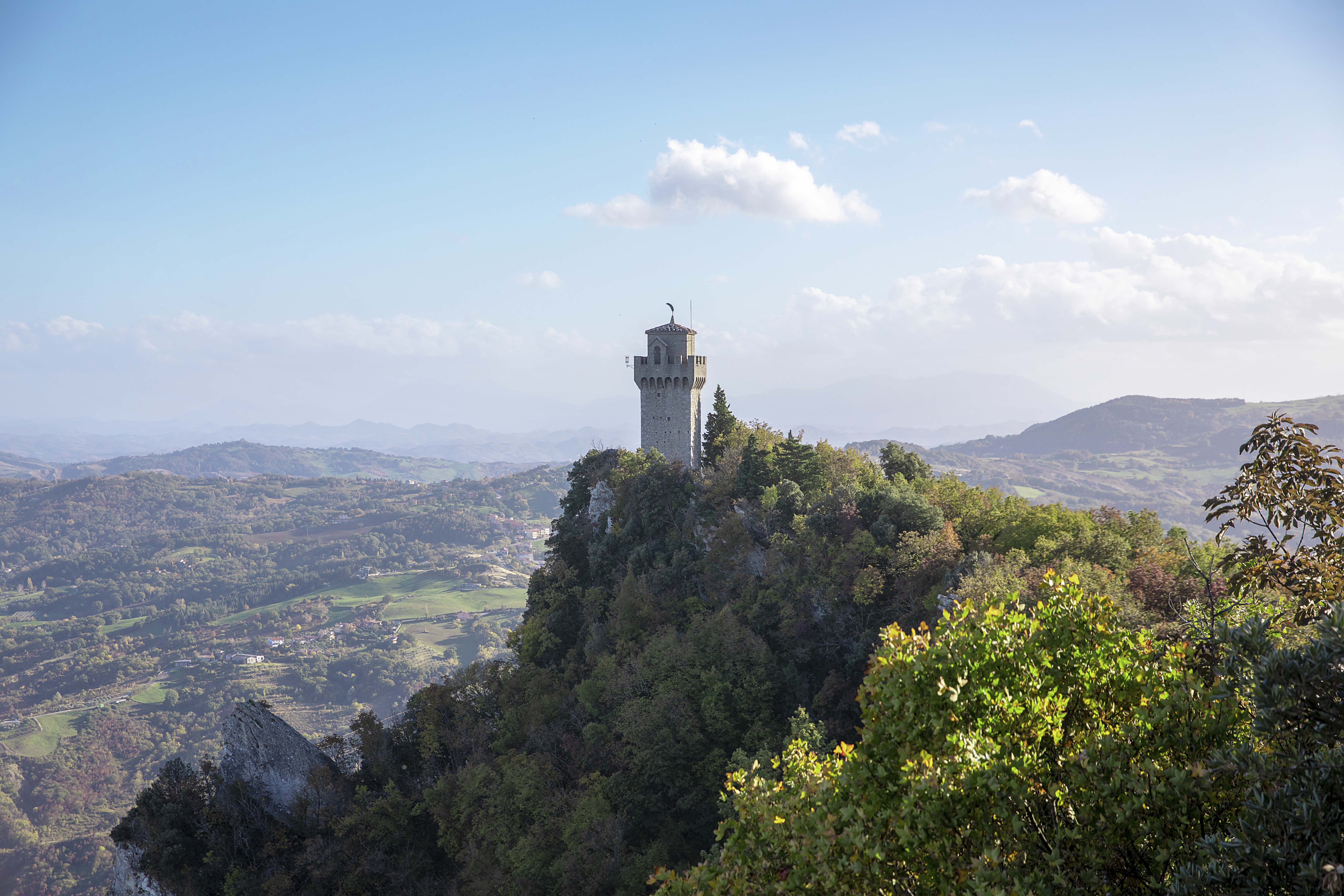
The first tower served as a prison for centuries. The second rises on the foundations of an old Roman fort and today houses the Museum of Ancient Weapons. The third tower feels the most solitary of them all. It was built as a strategic lookout point, guarding the city against approaching enemies.
Together, the towers were once linked by a network of defensive walls and narrow pathways. This “fortress mountain” design played a crucial role in San Marino’s survival. For medieval armies, the challenge was nearly impossible. Climbing steep cliffs while defenders fired down from multiple directions made conquering the city an extremely difficult task.
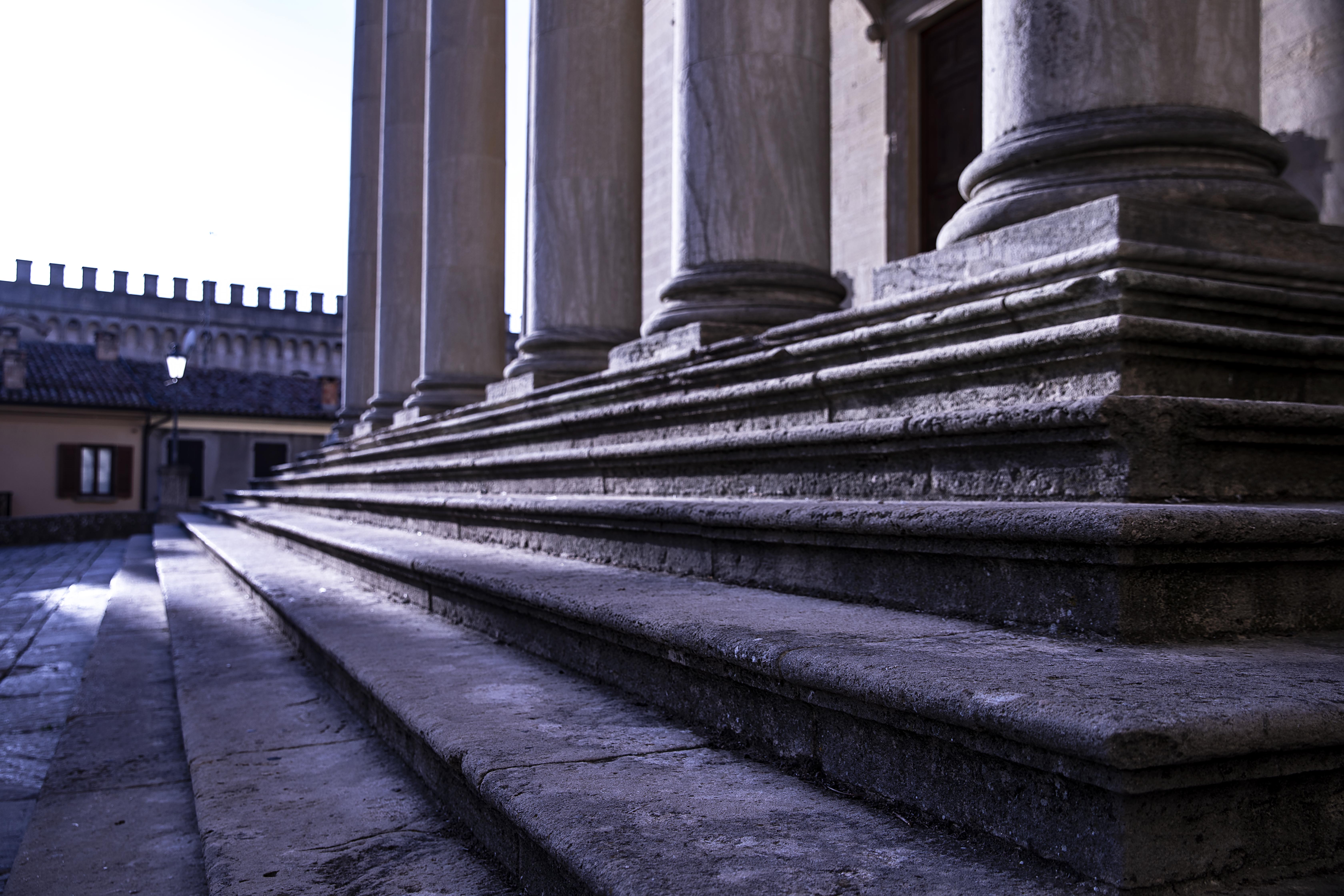
Here are a few practical tips for the trip. If you’re renting a car for the day, there’s no need to pay extra for a toll device. Italian toll roads have booths where you can pay by credit card or cash. Just be careful of speed cameras, as some are placed along the highways.
If you’re coming from Florence, you’ll likely take the A1 to Bologna and then the E45 from Bologna toward San Marino. You won’t pay any tolls until the Rimini exit near the San Marino border, and the total toll cost from Florence is around 20 euros. One full day is plenty to explore San Marino, and during long summer days, starting early gives you plenty of daylight to wander the streets and soak in the views.
On our way back to the car, we stopped at Giulietti Km0 for some huge, delicious burgers. The double-patty option takes a while to finish, but it’s worth it. If you want to fully enjoy the stunning Tuscan landscape on your drive back, consider leaving a little earlier so you can take it all in.
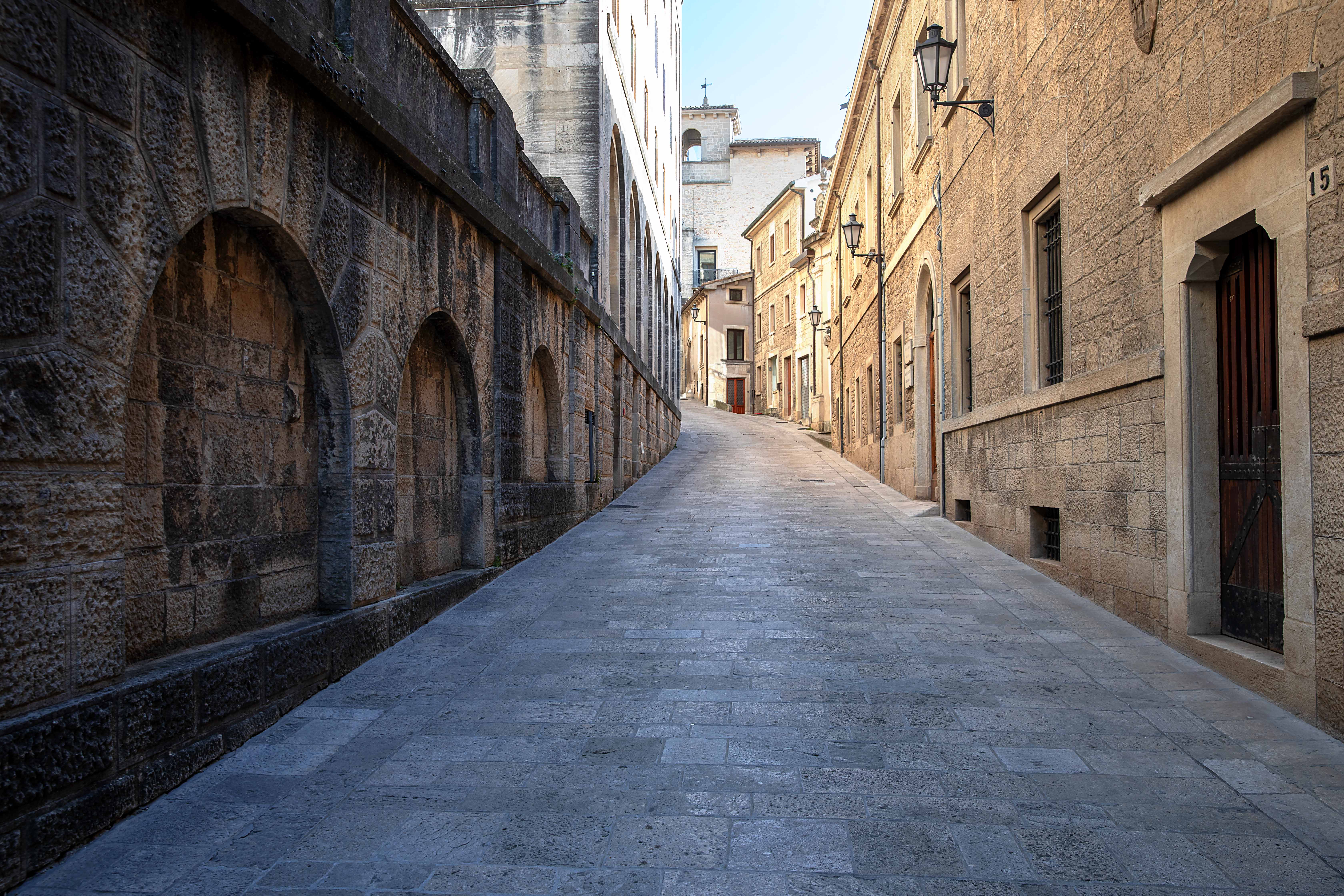
One thing I would truly recommend is simply wandering the streets of the old town without any particular plan. When we were there, the city felt both quiet and alive, as if every cobblestone and corner were eager to share the stories it had held for centuries.
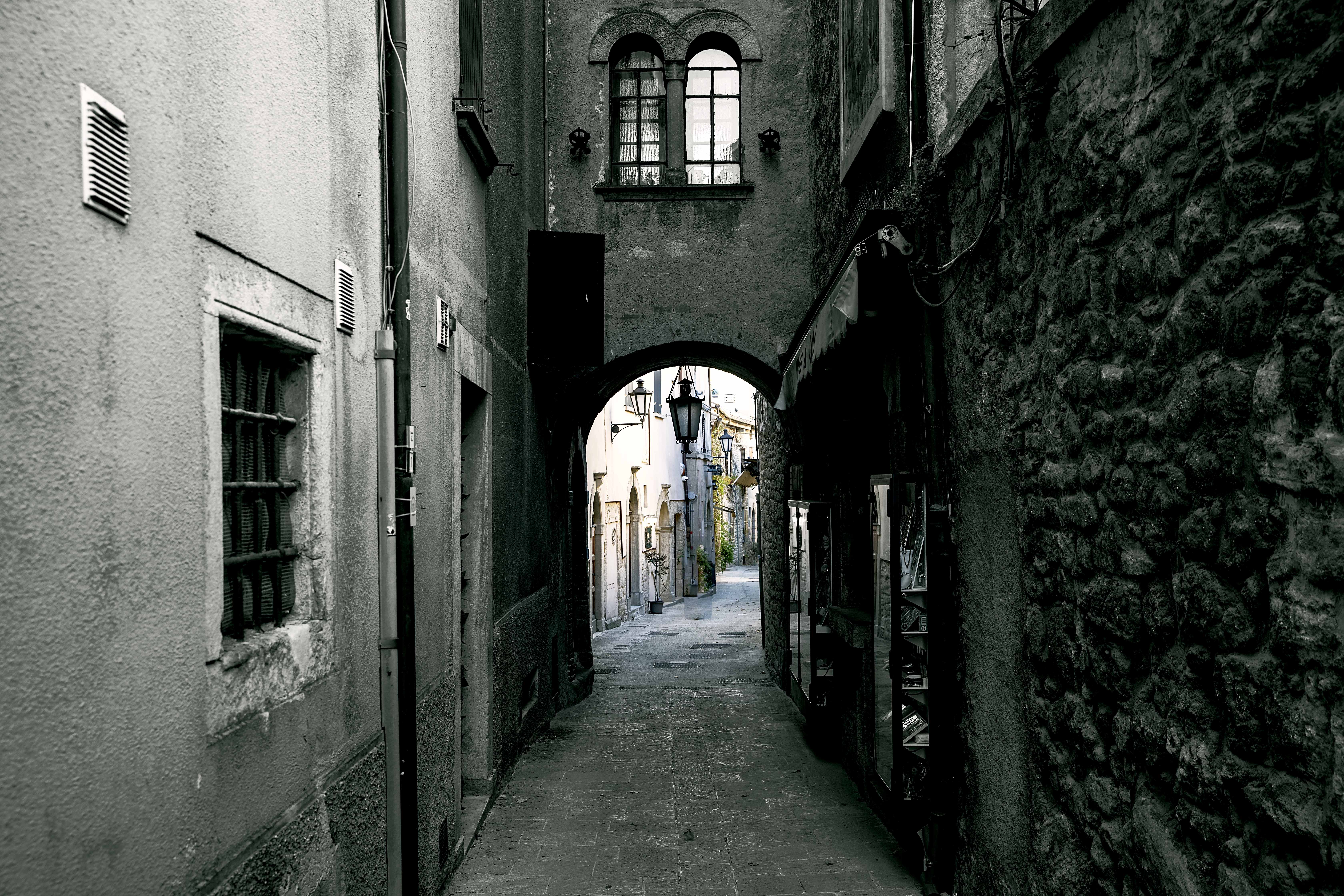
As Abraham Lincoln once wrote to the Sammarinese (the people of San Marino) when they granted him honorary citizenship, “Although your dominion is small, your State is nevertheless one of the most honored in all history.”
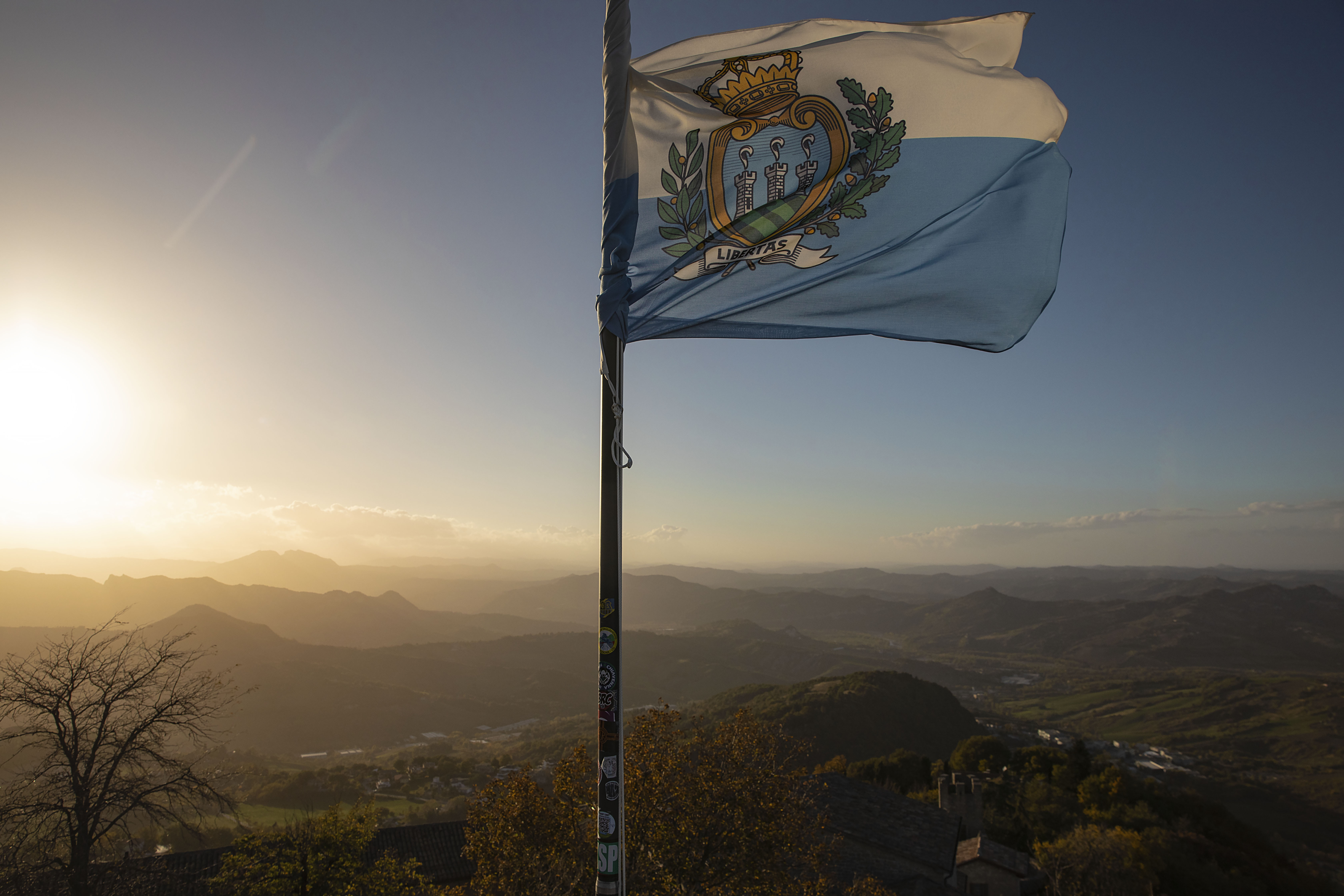
And there we were, at Il Cantone viewpoint, bidding farewell to San Marino as the sun dipped slowly toward the horizon, casting its golden glow over some of the most breathtaking landscapes in Europe. It felt like the land itself was giving one last gentle kiss to the day. I couldn’t help but think back to that moment at Amerigo Vespucci Airport in Florence, sitting in the car, wondering if I could manage eight hours of driving and still explore a city while feeling weak and unwell.
And yet, every ounce of doubt vanished the moment we arrived. The joy of discovering San Marino, savoring each second of its winding streets, its towers, and its timeless views, made every bit of fatigue fade into the background. Small as it may be, often overlooked by many travelers, San Marino is a treasure that deserves to be felt, even if only for a single day. I don’t know if our paths will cross again, but I will carry it with me, a tiny land of bliss, forever etched in my heart.
 Huseyin Karadeniz | Travel & Photography Journal