It was a chilly October evening in Florence, the capital of the Renaissance. After a long day immersed in Europe’s medieval wonders, I lay on my bed with a cup of warm tea, listening to rain fall heavily against the ancient city. Through the window, I watched locals stroll beneath their umbrellas, lingering in the night, quietly enjoying this old corner of Europe as if time itself had slowed for them.
I, on the other hand, remained indoors, tucked into stillness, carefully composing a prompt for an AI assistant. It was a simple question, one that demanded only a single answer.
Imagine you have just one day.
You love medieval history, cobblestoned streets, and untouched Gothic architecture.
You’re drawn to cities with souls… culturally rich, layered with memory.
And, of course, there must be cafés where you can sip coffee while soaking in centuries-old atmospheres. Where would you go: Lucca or Siena?
The answer appeared on my screen without hesitation:
Siena…
There was no time to waste. We booked our tickets for the early morning train from Firenze Santa Maria Novella to Siena without a second thought. As the train moved through Tuscany’s rolling green landscape, time seemed to slow. An hour and a half later, we arrived in Siena, quiet, unpretentious but majestic, waiting to be discovered.
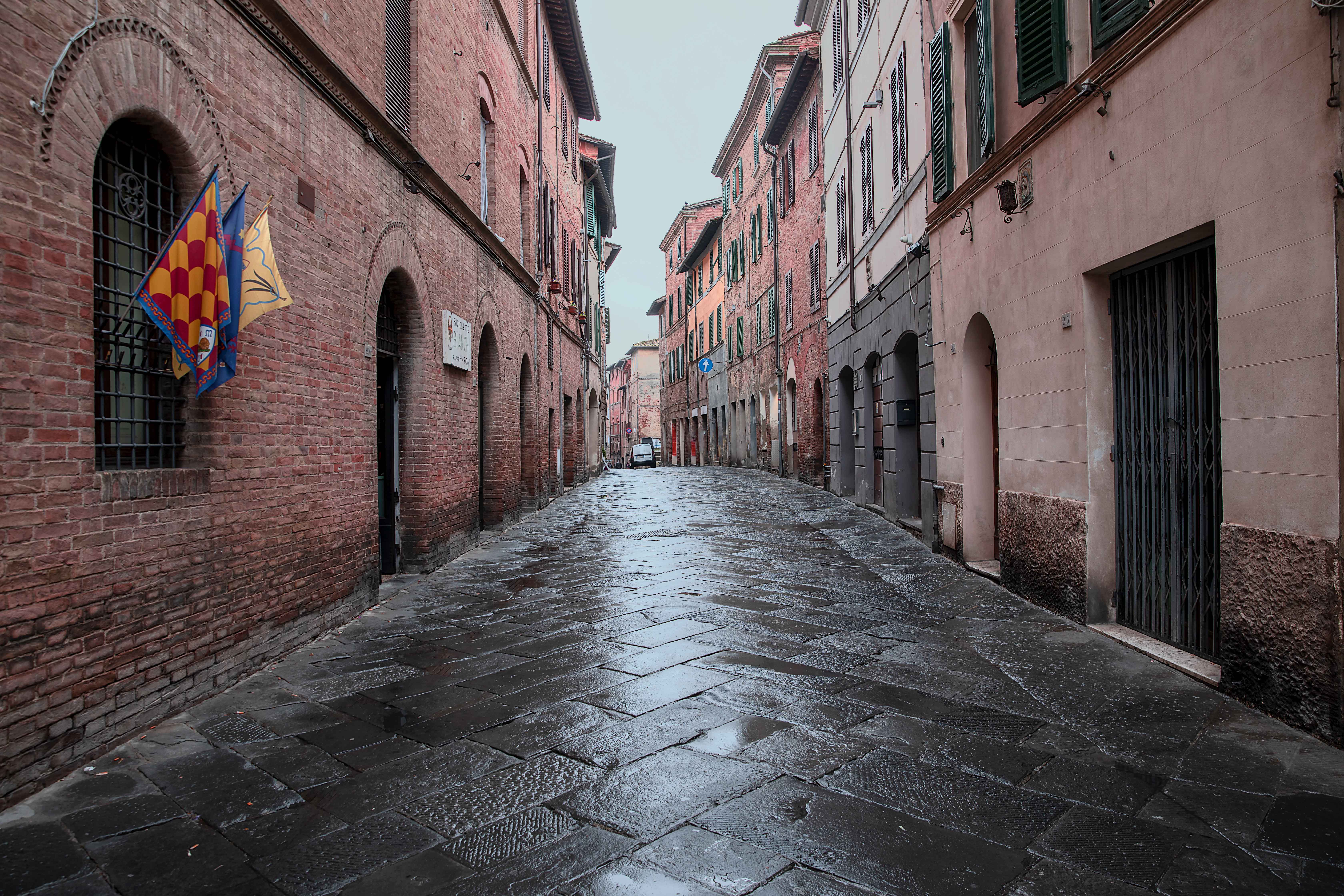
Once you arrive in Siena, the train will drop you off at Siena FS station. I found the station a little tricky to navigate, but remember that the old town of Siena sits atop a hill. You’ll take the escalators up to Viale Camillo Benso di Cavour, then walk about ten minutes toward Porta Camollia, the historic gate to the old town. At the end of that walk, the winding streets of Siena will welcome you along Via Camollia.
Right at the start of the street, we spotted a little grocery shop called L’angolo delle Idee. On a whim, we decided to play the lottery for fun. We bought two scratch cards, which came with exactly zero instructions on how to win, or even what counts as winning. Naturally, we were as clueless as tourists in a gelato shop.
On our way back, we asked the friendly Italian shopkeeper to explain the rules. Turns out, I had won a whole one euro on my card, and the other card was a total dud. Feeling lucky or maybe just stubborn, we bought another card instead of cashing out. I wish I could say I’m a billionaire now and writing this blog post from my private yacht, but, alas, that card didn’t win either. So here I am, still grounded, still writing, and still laughing at my own “luck.”
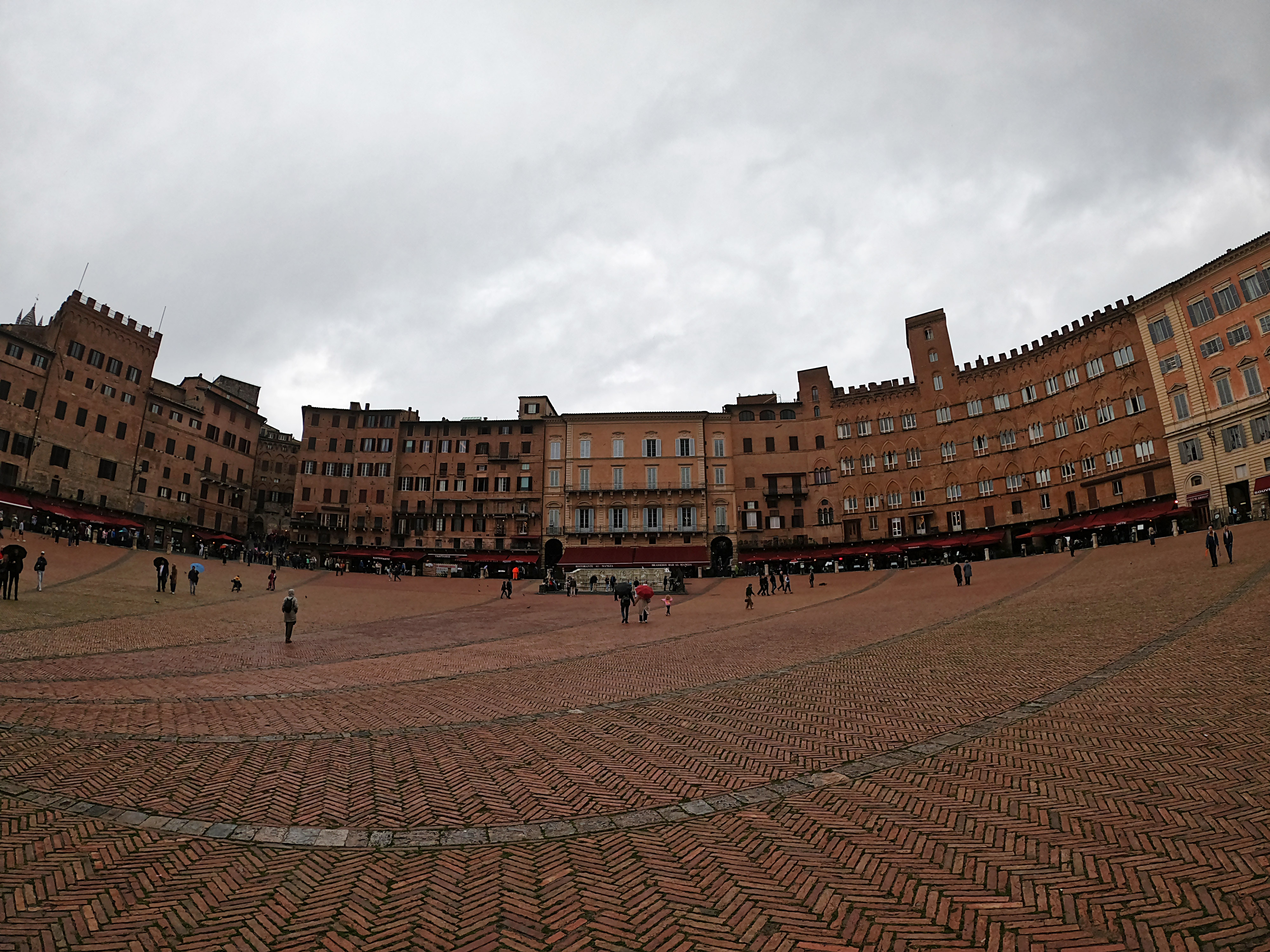
After roughly a fifteen-minute walk from Porta Camollia, you will reach Piazza del Campo, widely regarded as one of Europe’s finest medieval squares. Its distinctive shell shape was cleverly designed to channel both water and people toward the heart of Siena’s civic life.
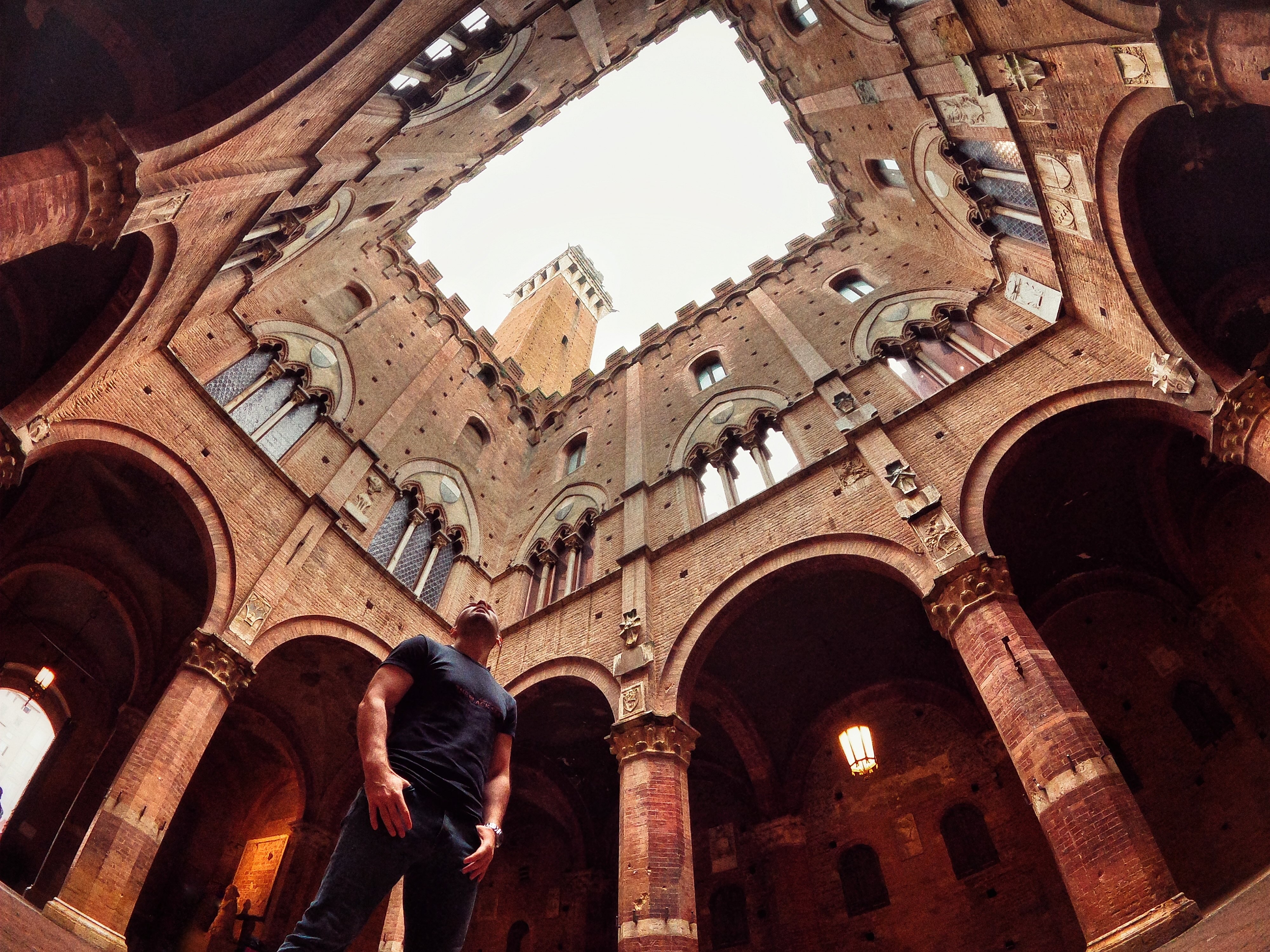
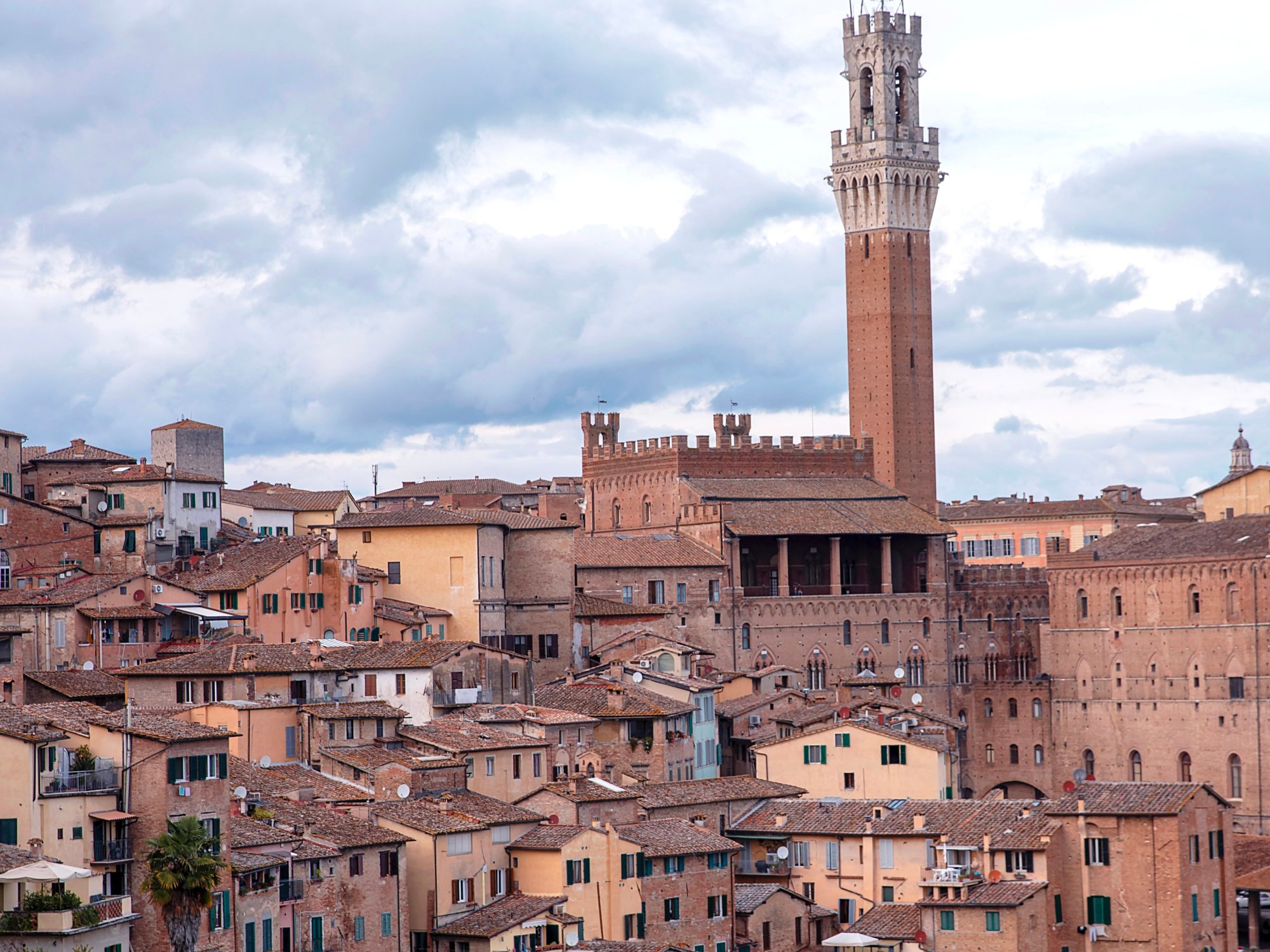
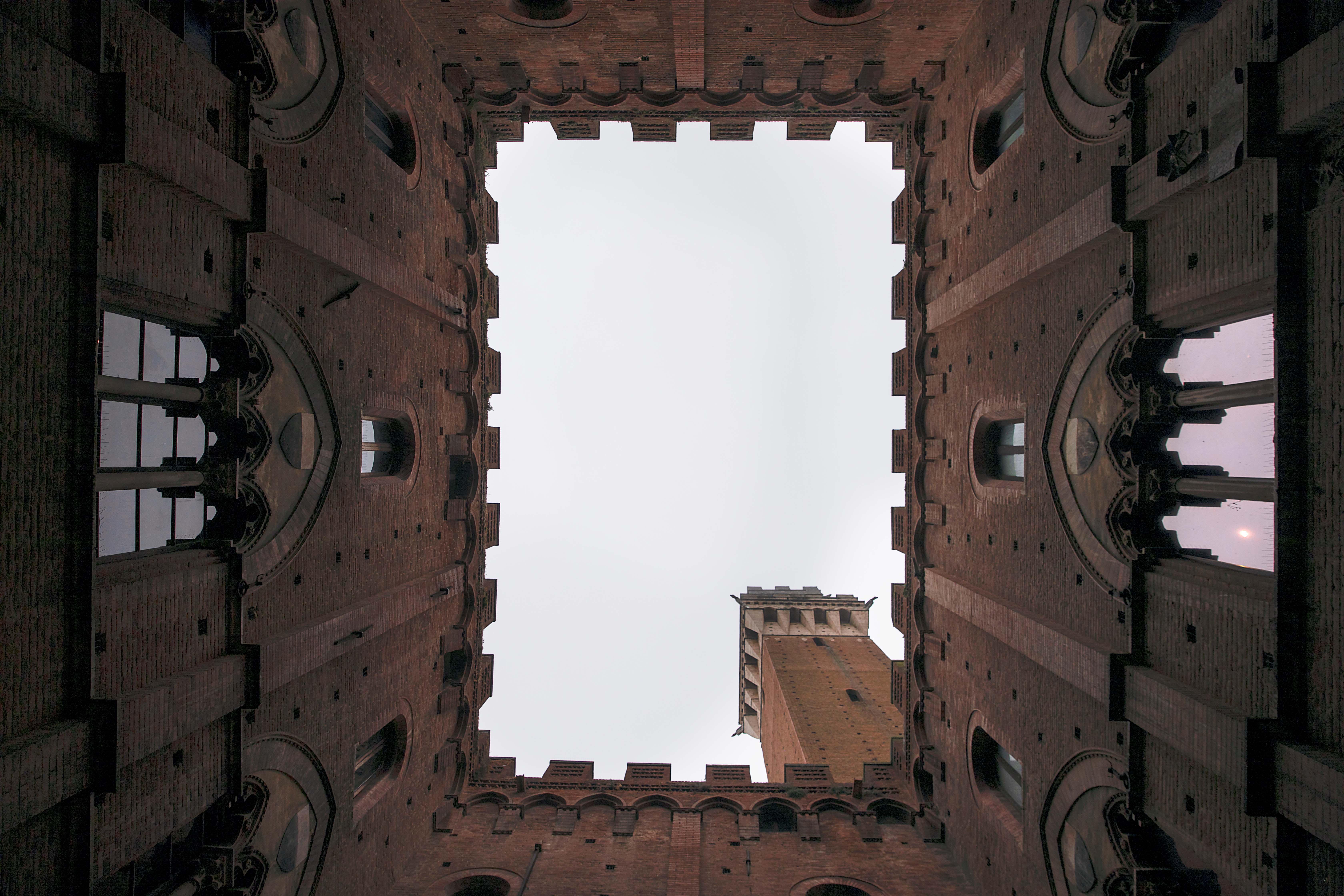
One of the great pleasures of medieval cities is finding a high point, a tower or elevated perch, to take in the view. Siena has several towers, but the most famous is attached to the town hall, Palazzo Pubblico. Unfortunately, rain and low-hanging clouds kept the tower closed that day, so our experience was limited to wandering through the building’s interior courtyard instead. However, don’t sweat it. I’ll show you a fantastic spot where you can admire the old city completely free of charge.
Did you know the world’s oldest functioning bank is in Siena? Established in 1472 to provide ethical loans (designed to protect the vulnerable from predatory lending), Banca Monte dei Paschi di Siena still operates out of the historic Palazzo Salimbeni, making it one of the most enduring financial institutions in history.
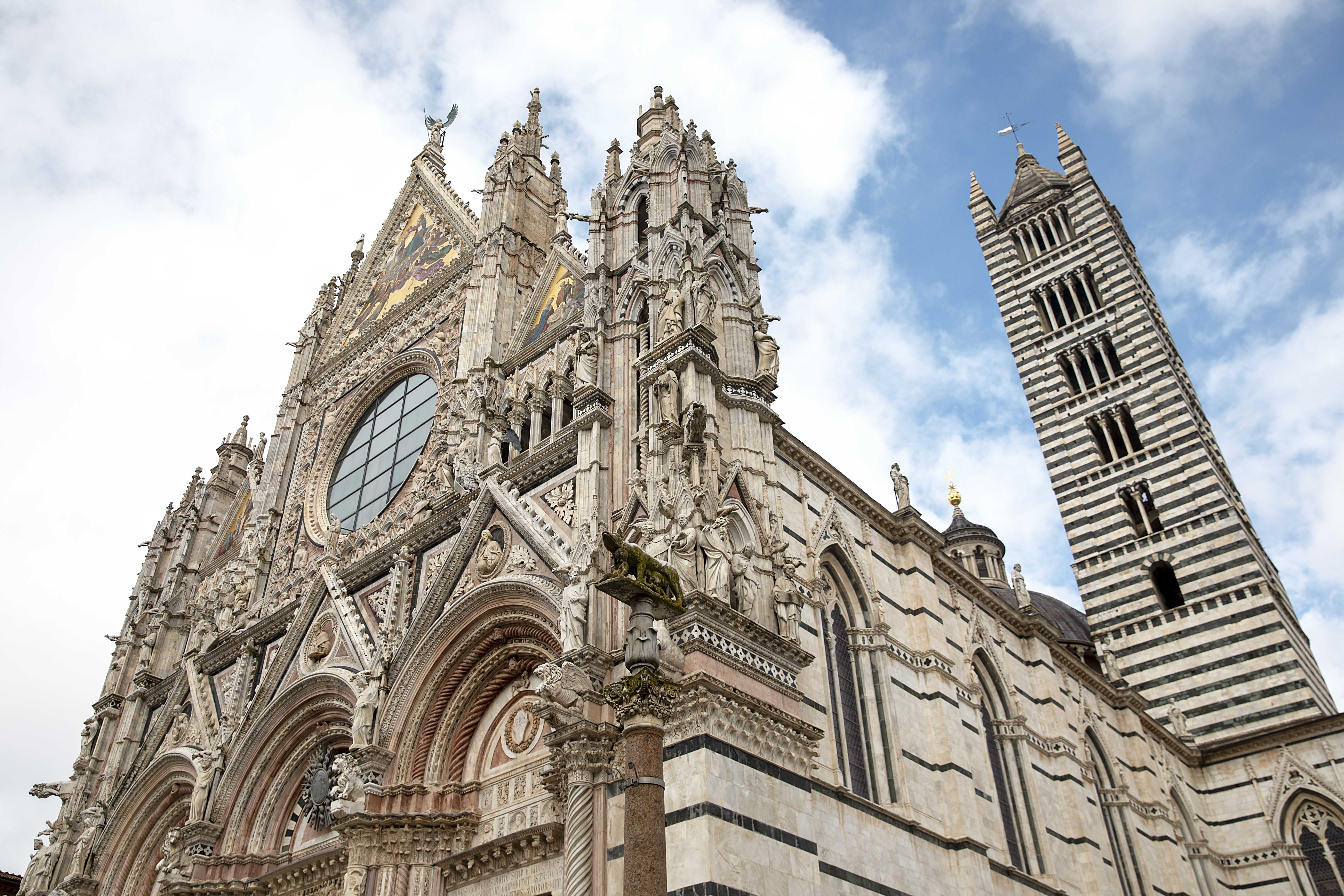
And of course, no medieval city is complete without its cathedral. Siena’s Duomo is a supreme masterpiece of Italian Gothic architecture, often described as a living museum that houses some of the most important works of Western art. We chose not to go inside, as many cathedrals across Europe charge a fairly high admission fee, and after a while, they can begin to blur together.
That said, if you have a deep interest in art or architecture, the Duomo is highly regarded and well worth considering. While standing in Piazza del Duomo, look toward the southern side and you will notice a massive wall known as the Facciatone. It was meant to be part of an ambitious expansion of the cathedral, a project that was abruptly abandoned after the outbreak of the Black Death in 1348.
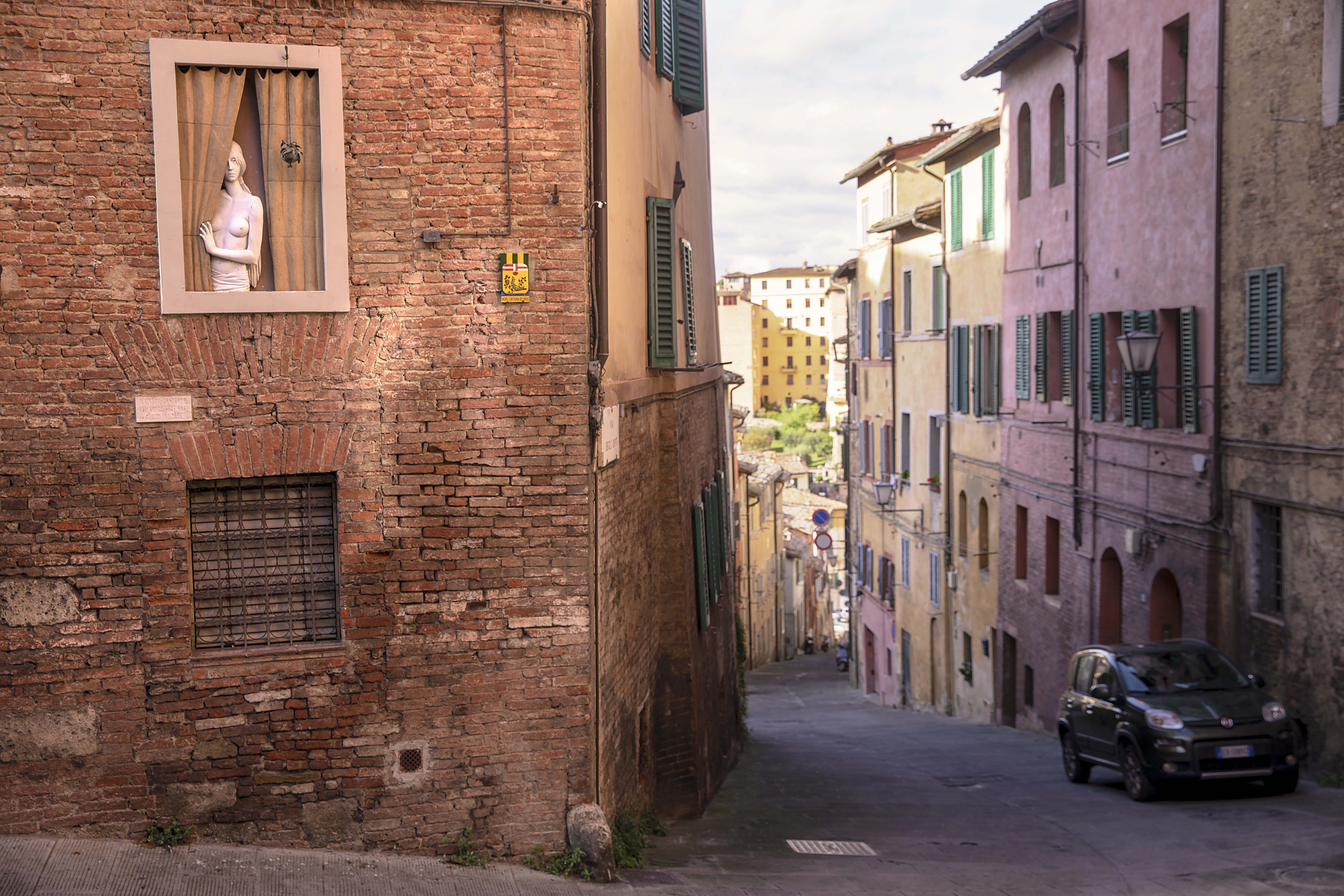
Siena is not only about medieval streets, Gothic architecture, and classical art. As you wander through the Contrada del Bruco, the Caterpillar neighborhood, along Via dei Rossi or Vicolo degli Orbachi, you may stumble upon mysterious, half naked lady, the “Donna alla Finestra,” or Woman at the Window, tucked quietly into the heart of Siena’s old streets. At first glance, it looks like a real window with someone gazing out, but it is actually a cleverly crafted piece of public art.
Just across from the Lady at the Window, don’t forget to say hello to the fish in a small pond known as the Fontanina del Bruco, the Little Fountain of the Caterpillar. For reasons that aren’t entirely clear, the fish appear unwell, possibly due to parasites in the water.
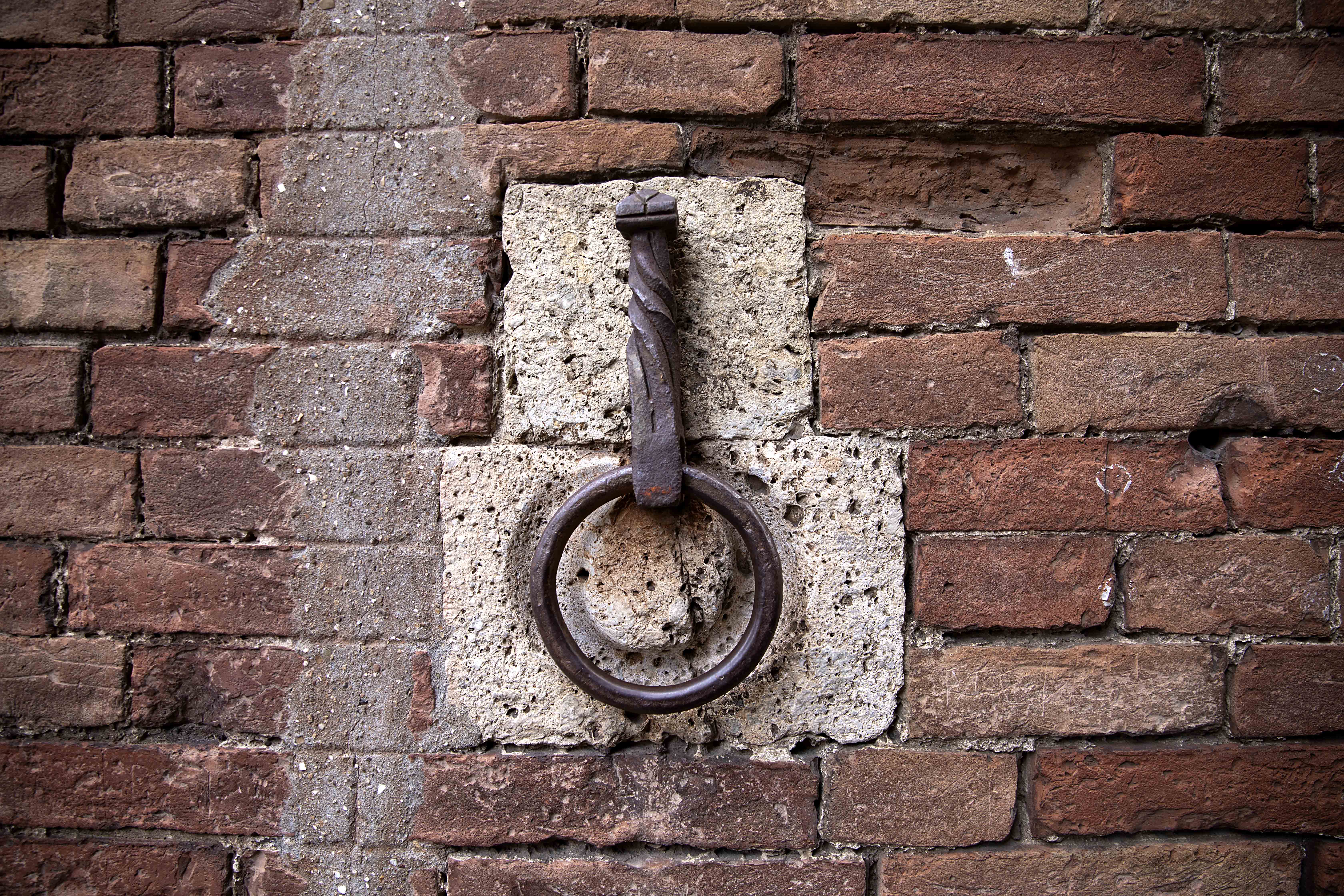
As you wander through Siena, you may notice iron rings embedded in the walls of old buildings. These rings are not unique to Siena; you’ll spot them in Florence and throughout Tuscany as well. After a bit of digging, I learned that they were once used to tether horses. In other words, these iron loops were the medieval version of parking spots, where horses and mules were neatly “parked” while their owners went about their business.
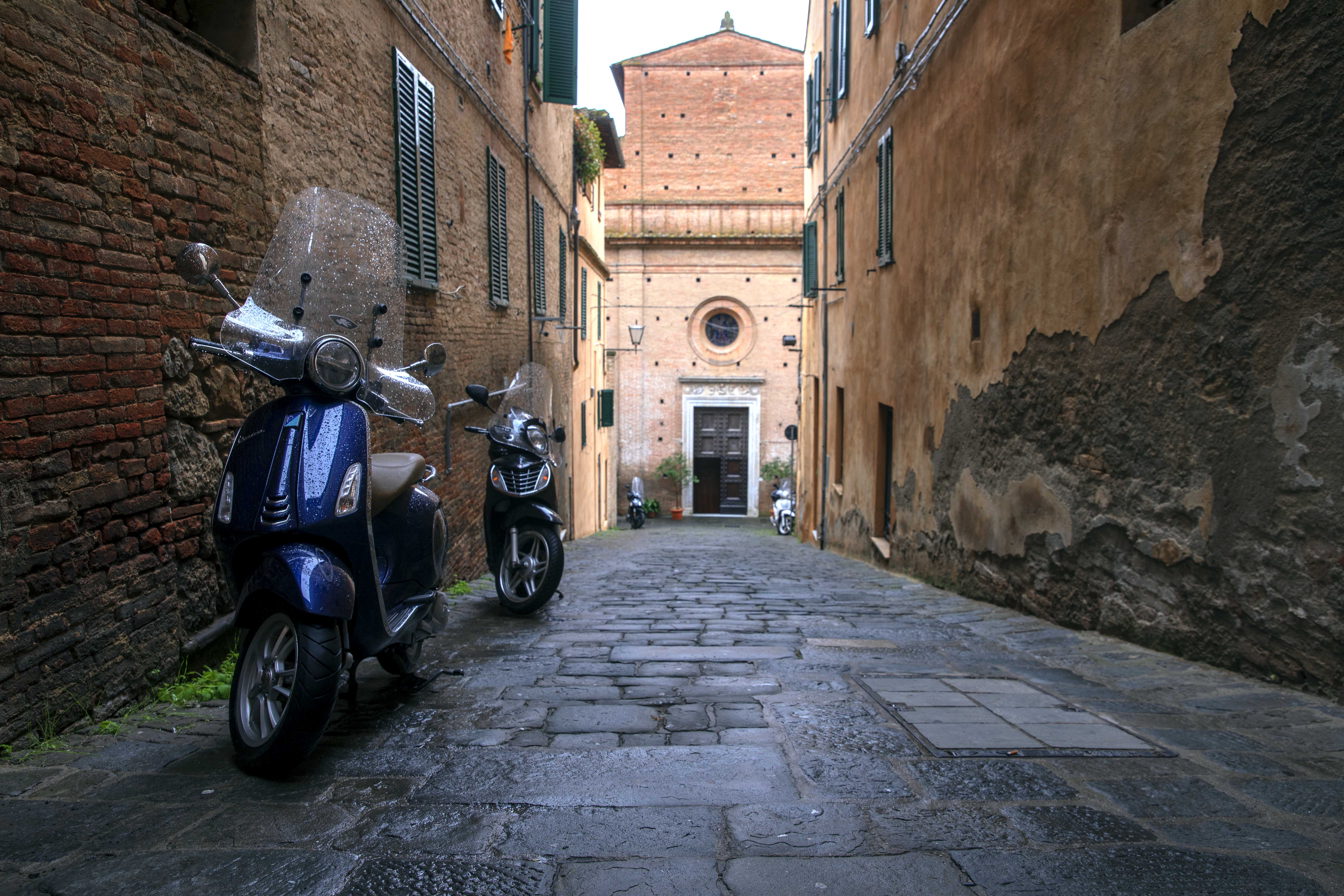
Walking through Siena feels like turning the pages of an old book. The quiet is intentional, as cars are restricted within the historic center, giving the city a calm, intimate rhythm. Instead, you hear footsteps echoing on stone, distant church bells, and the soft murmur of daily life unfolding much as it has for centuries.
Take full advantage of that stillness. Grab a cup of coffee from a local coffee shop and wander the city without a plan, letting yourself drift as though any turn might lead you to an undiscovered treasure.
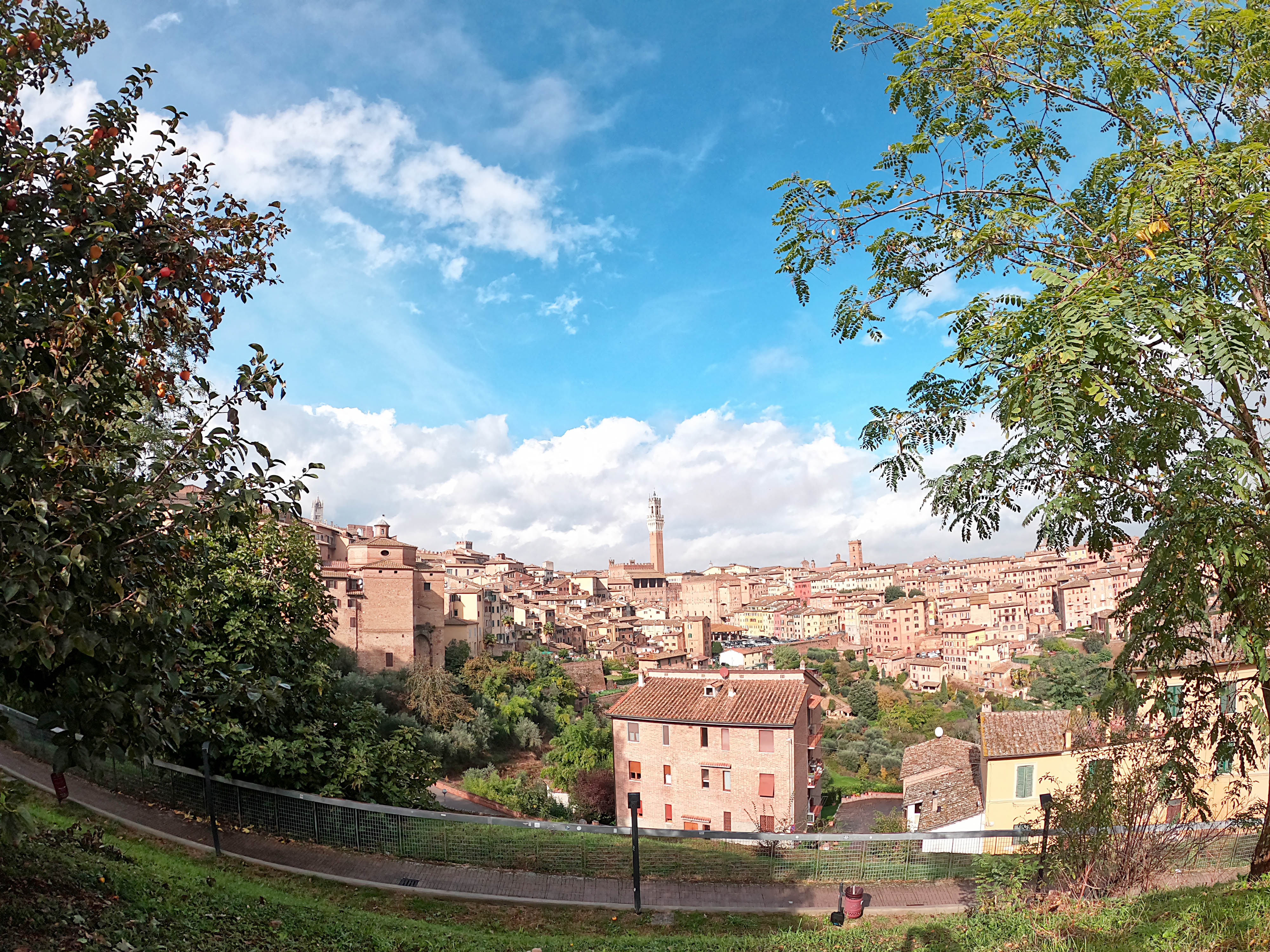
Let me add a few words about the logistics. Siena is quite easy to reach by train, and overall trains in Italy feel reliable. They are fast, safe, and generally punctual. Our original plan was to rent a car in Rome and travel through Florence, Siena, Venice, Cinque Terre, and San Marino. In practice, though, parking and navigating small historic cities can be more trouble than it’s worth, not to mention traffic and high tolls.
You can certainly drive from Florence to Siena, but the travel time is roughly the same as taking the train. The train simply saves you the hassle of tolls, traffic, and parking. We took a Trenitalia train from Florence’s main station, Santa Maria Novella, and found it straightforward.
One small tip: we booked our tickets through a third-party site, Trainline, and I would not recommend doing that. It requires downloading the app and going through several frustrating steps just to access your tickets. Booking directly through Trenitalia is much simpler, and prices are usually similar. With dynamic pricing, a one-way ticket costs around 10 euros as of October 2025, which is quite reasonable.
A full day is generally enough to experience Siena, especially since Italy offers many cities with a similar medieval charm. And before you leave, don’t forget to slow down for a moment. Grab a cup of coffee and relax at Torrefazione Fiorella on Via di Città, just a short walk from Piazza del Campo.
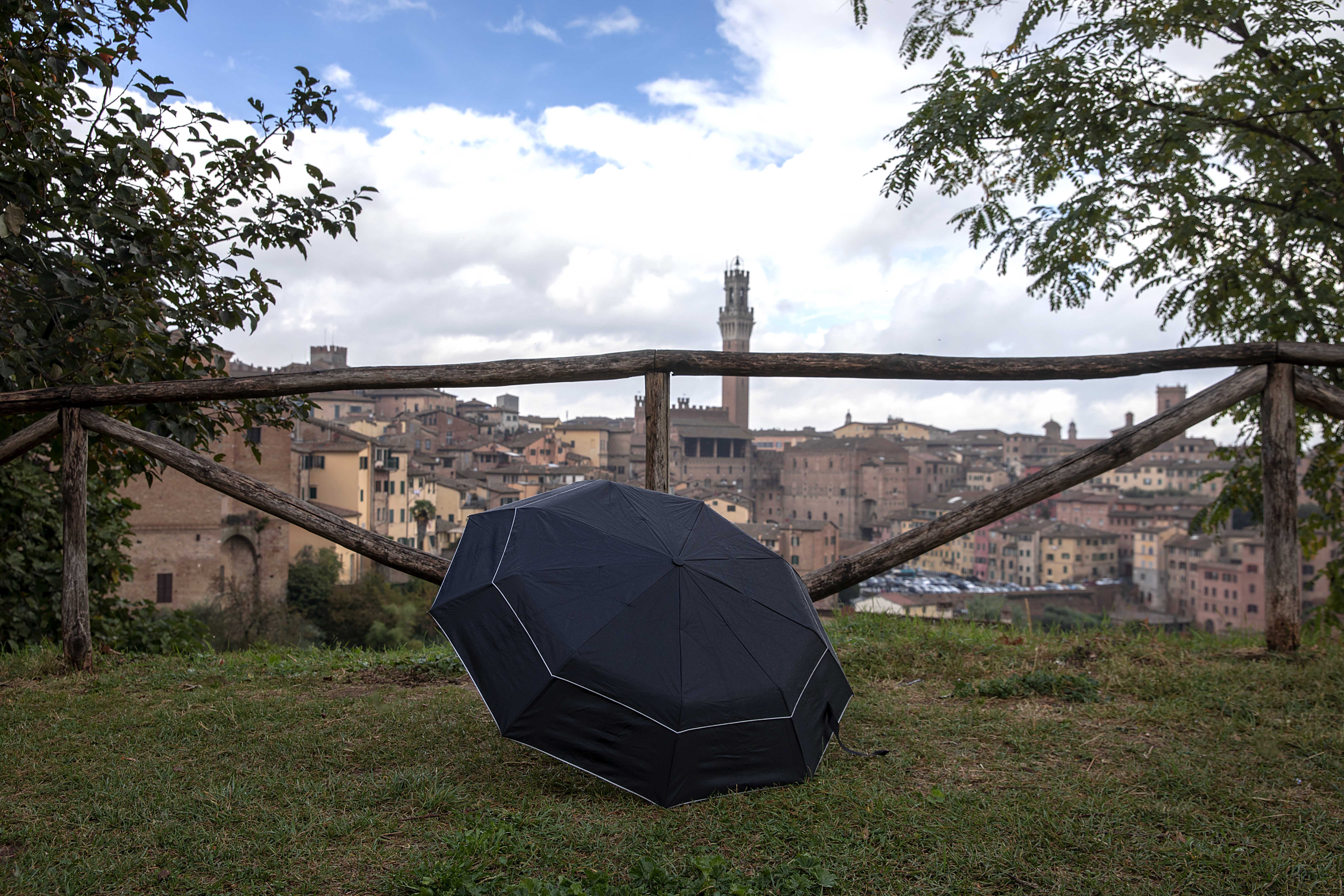
And of course, I didn’t forget our little secret, a beautiful viewpoint where you can admire the city completely free of charge. I’ll share the coordinates here: 43°18’52.4″N 11°19’59.0″E. The spot is located just behind the Chiesa di Sant’Agostino.
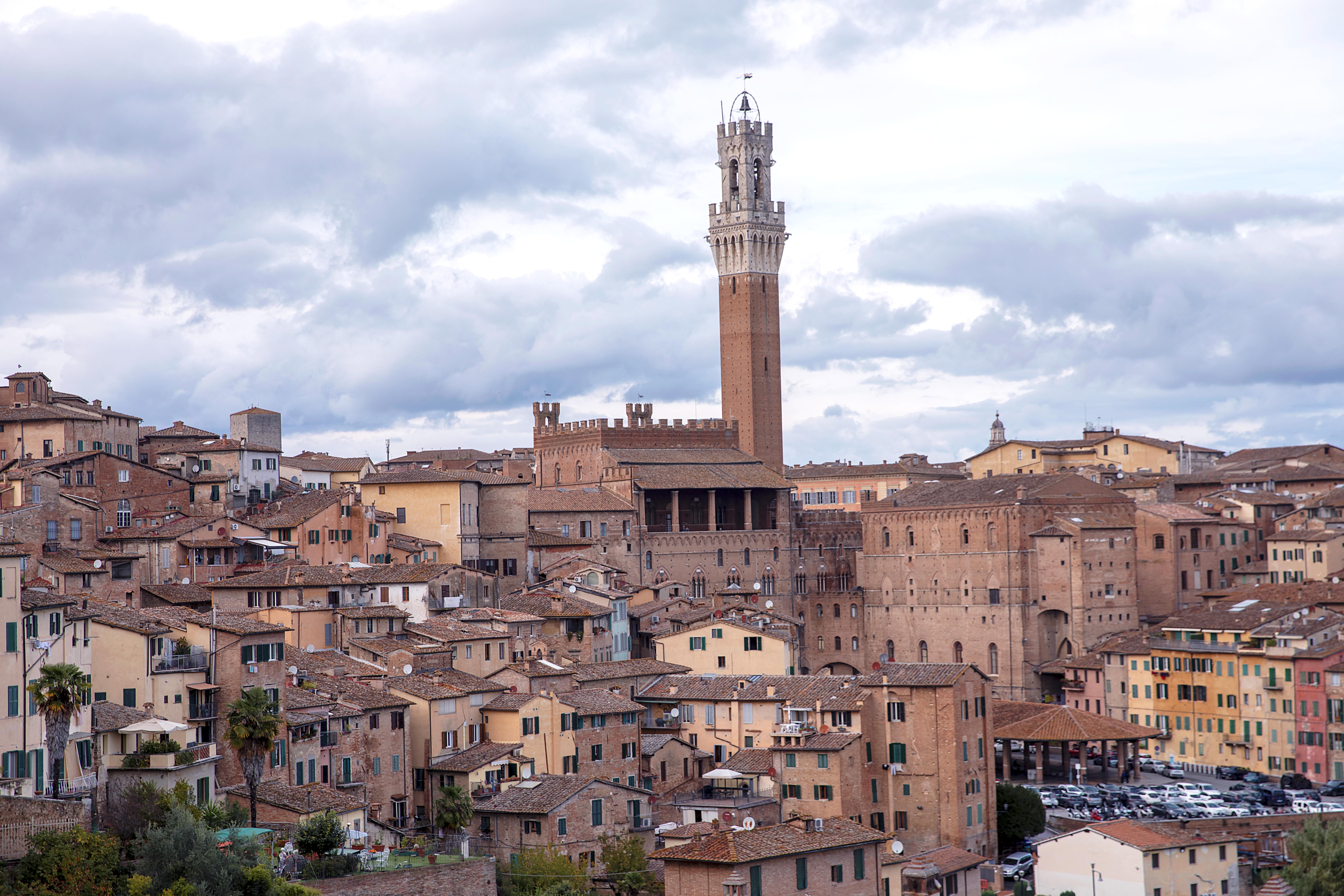
To get there, take Via Sant’Agata until you reach a small parking area at the intersection of Via di Fontanella and Via Sant’Agata. It almost feels like private property, but keep going. Walk for another three to five minutes, and the path will lead you to this spectacular viewpoint overlooking Siena.
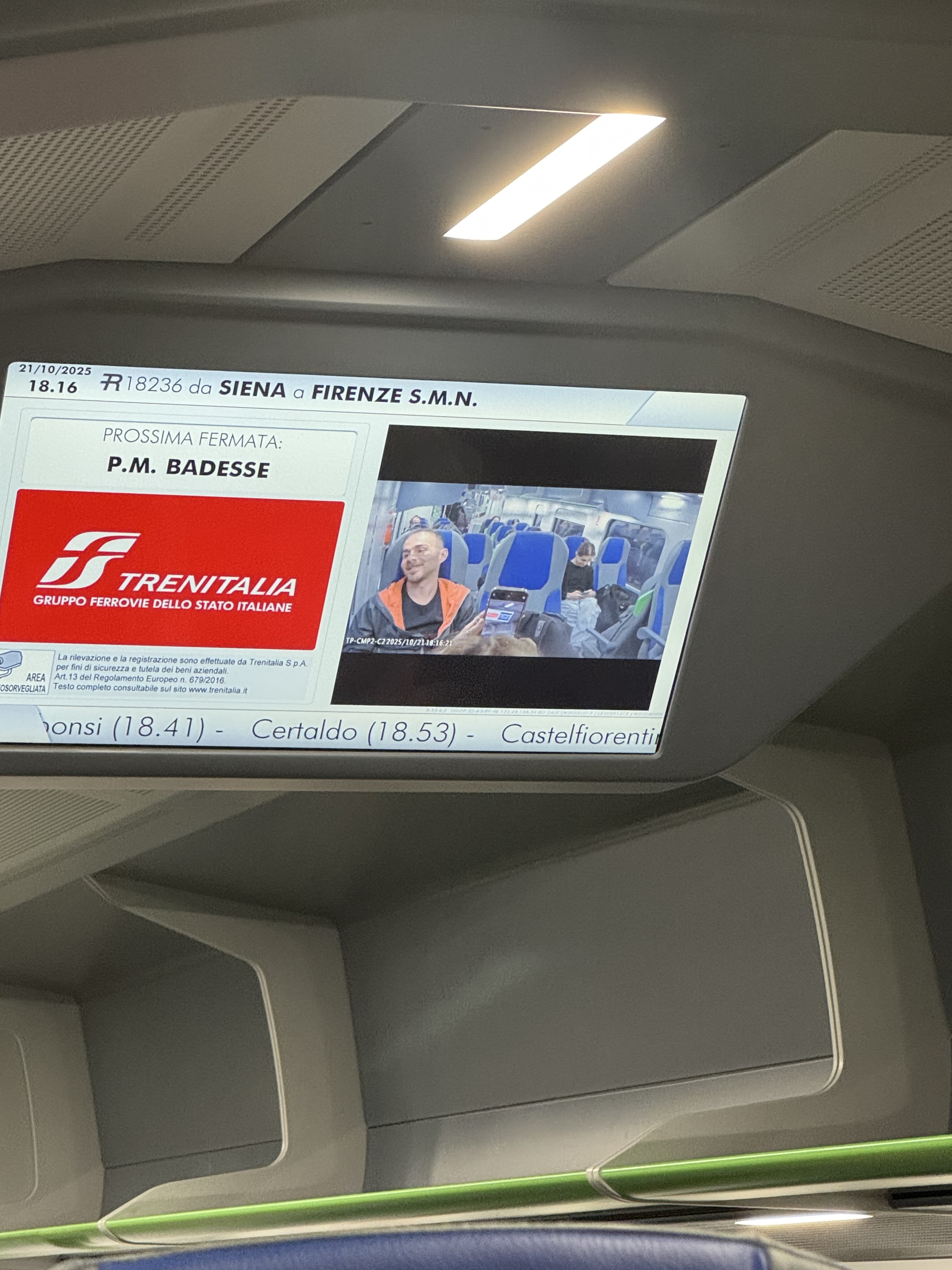
I suppose it was time to catch our evening train back to Florence. Truth be told, I can never quite get enough of medieval cities and Siena was no exception. Maybe it’s because they gently unplug you from contemporary life, lifting you out of the present and placing you somewhere else in history. Without realizing it, your mind begins to set the scene.
You imagine villagers guiding mules laden with goods, nobles riding on horseback toward the town hall. You continue walking along the cobblestoned streets, hearing the ring of hammers as blacksmiths shape steel, watching merchants and drapers measure silks and linens by hand. The air feels richer, scented with dried herbs and imported spices from a apothecary nearby. You brush past livestock on their way to market and taste a bite of freshly fried dough from a street vendor. Every sense feels awake, as if the city itself is breathing through you.
Then a church bell rings, signaling that night is about to cloak the day. You blink, and suddenly you are back on a train in Tuscany, gliding through the dark toward your next destination, carrying the echo of another century with you.
 Huseyin Karadeniz | Travel & Photography Journal