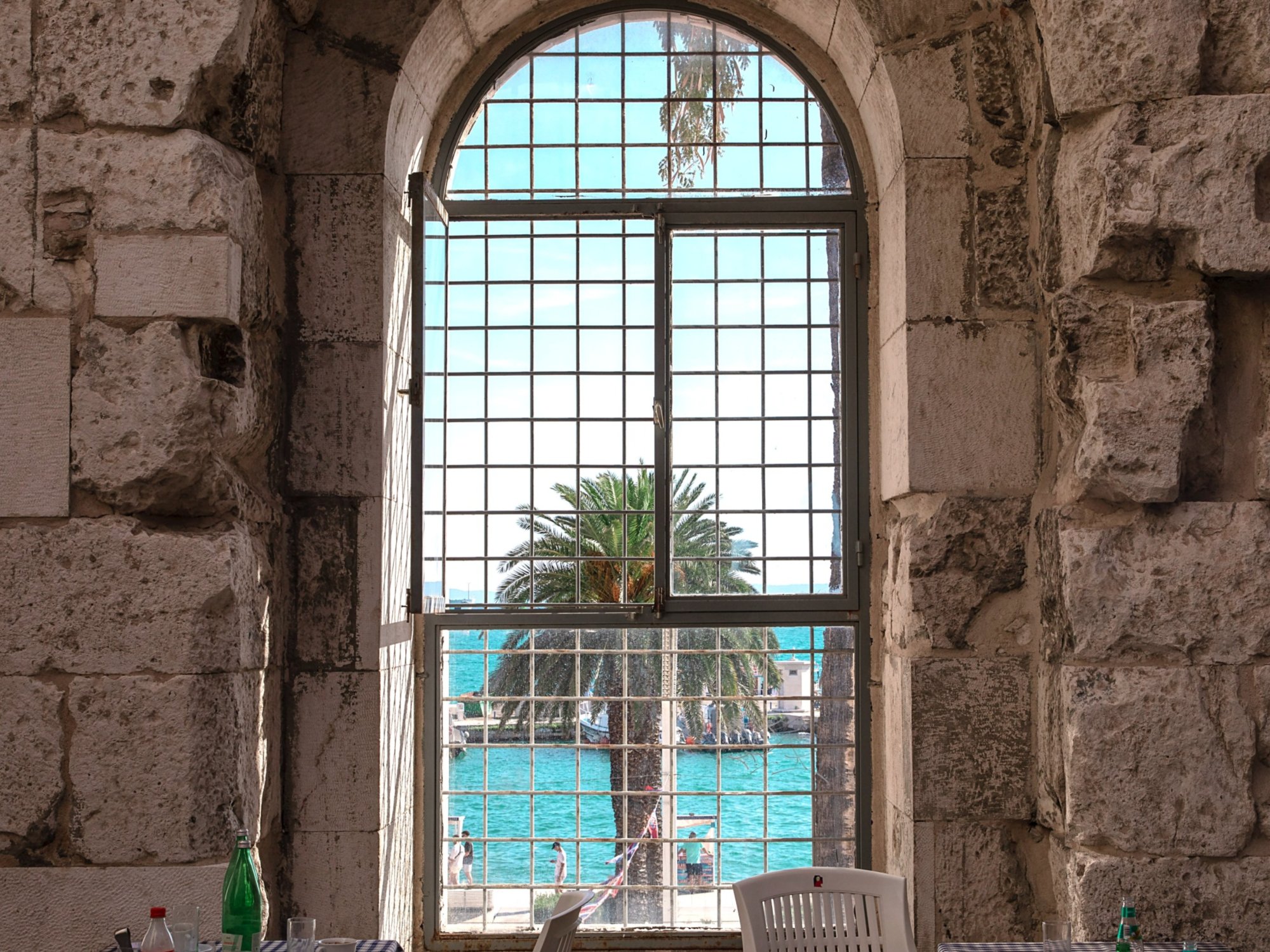
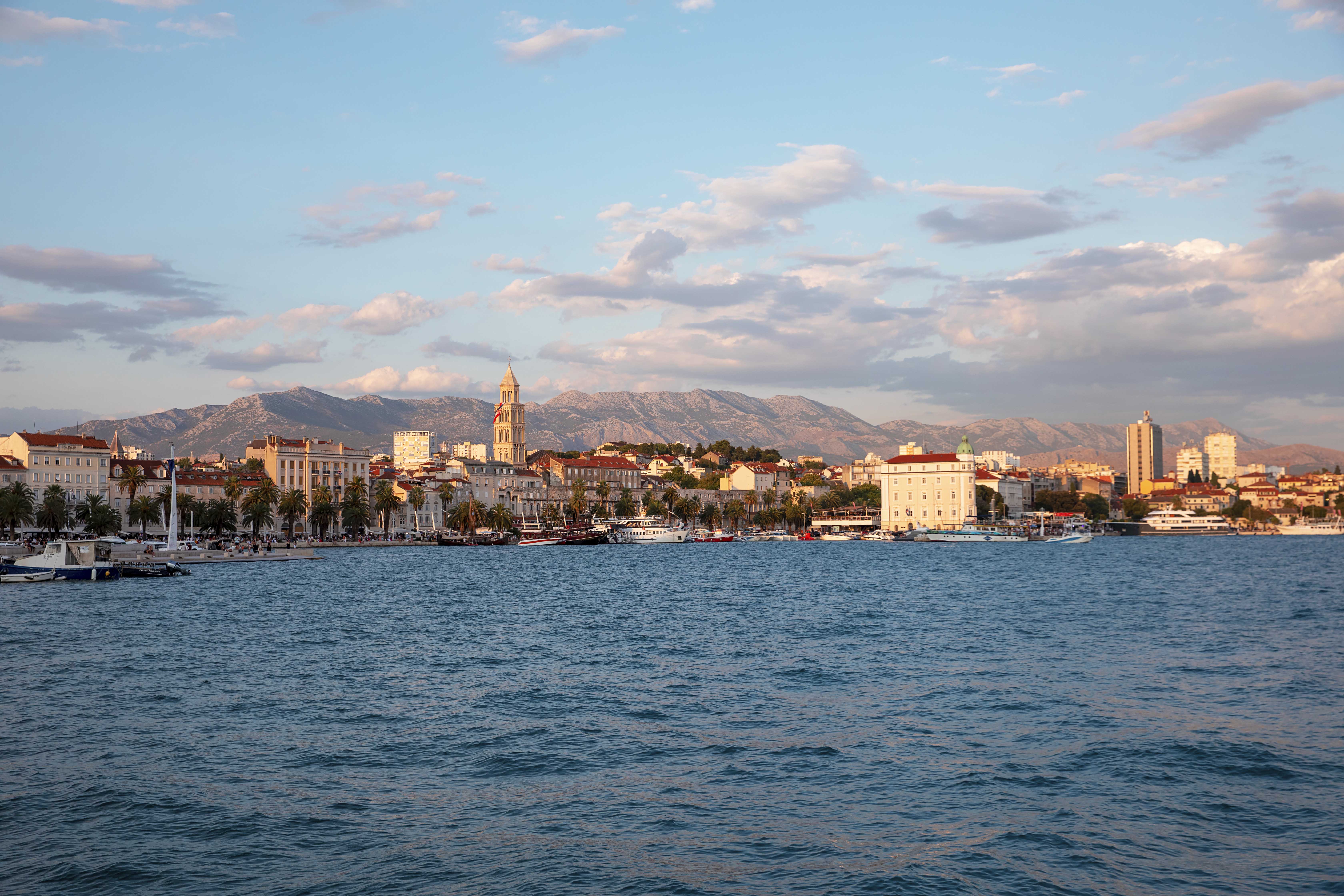
After likely catching a glimpse of the Dubrovnik story on my blog, I’m sure many of you (a hopeful assumption) have wondered, “How could anyone visit Dubrovnik without making a stop in Split, the Mediterranean flower?” Worry not! A trip to the Dalmatian coast simply wouldn’t be complete without basking in the sun of its largest city. So, without further ado, let’s dive into the vibrant cultural, economic, and administrative heart of the Dalmatian region!
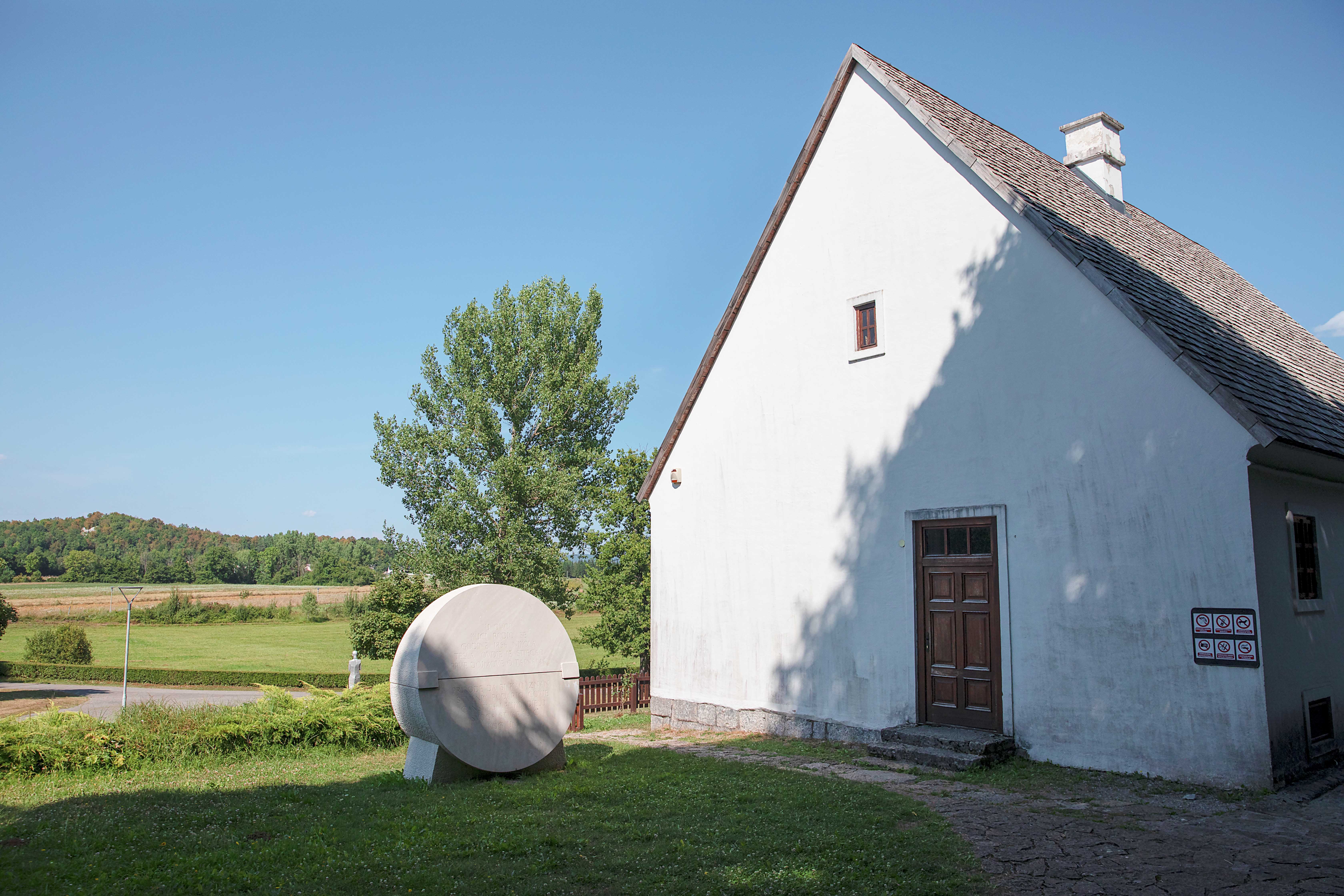
Ah, before we dive in, I am positive that many of you have heard of Tesla. No, not the renowned car brand, but one of the most influential scientists and inventors of the century… Nikola Tesla. While he is widely recognized as a Serbian-American, Tesla was actually born in a small village called Smiljan, located in modern-day Croatia.
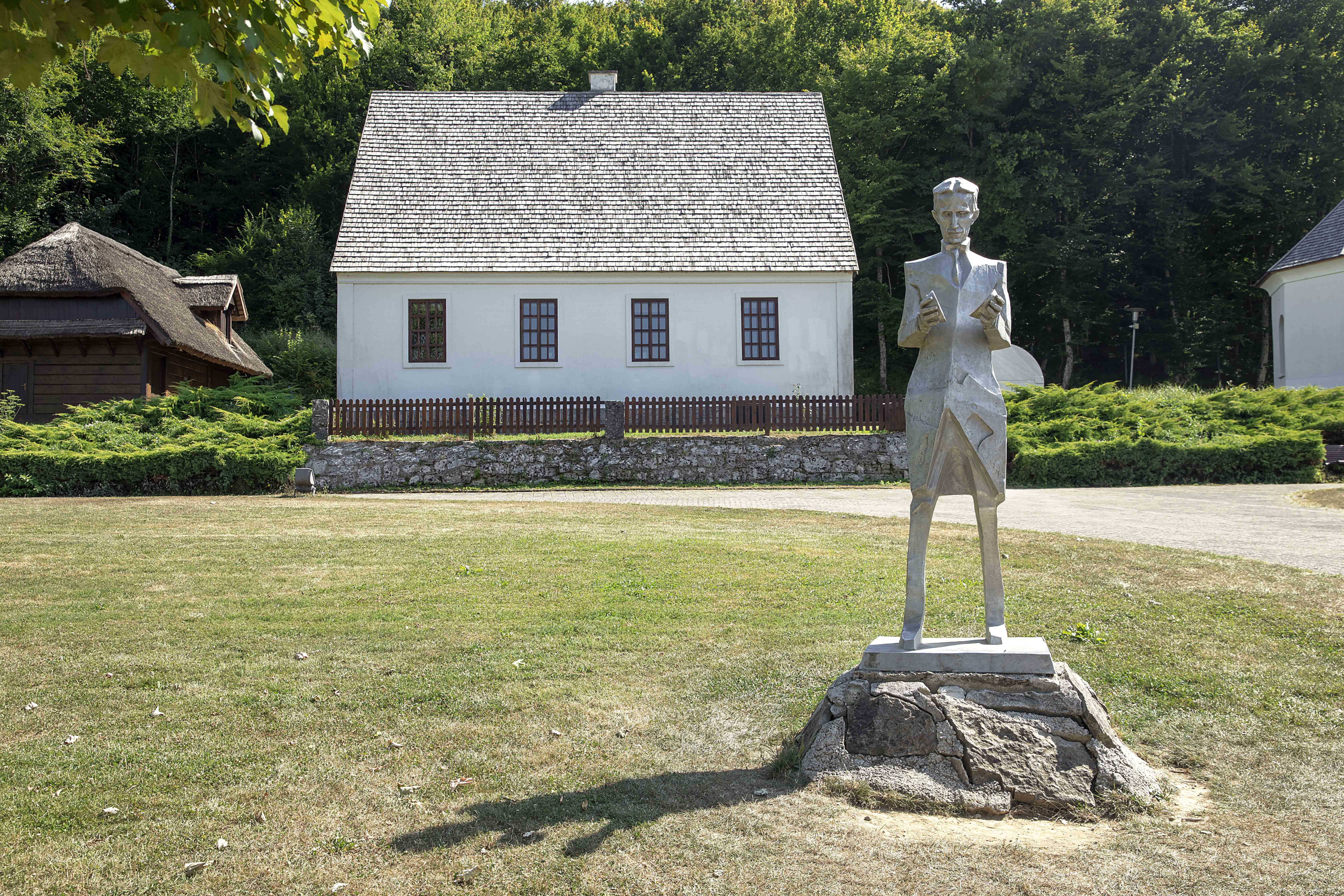
The house where he was born and spent his childhood now serves as a museum. It features a permanent exhibition showcasing details of his life through artifacts, documents, photographs, and audiovisual materials. Next to his house, there is also a beautiful church built by his father, though it is off-limits to visitors. If you’re driving from Zagreb to Split, it takes about two and a half hours to reach this spot. I truly believe it’s one of the must-see locations in Croatia. I was deeply moved to visit the birthplace of one of the world’s greatest engineers. Even though we arrived about 15 minutes after closing time, the kind lady in charge of the memorial graciously allowed us to enter and explore the grounds of Nikola Tesla’s childhood home.
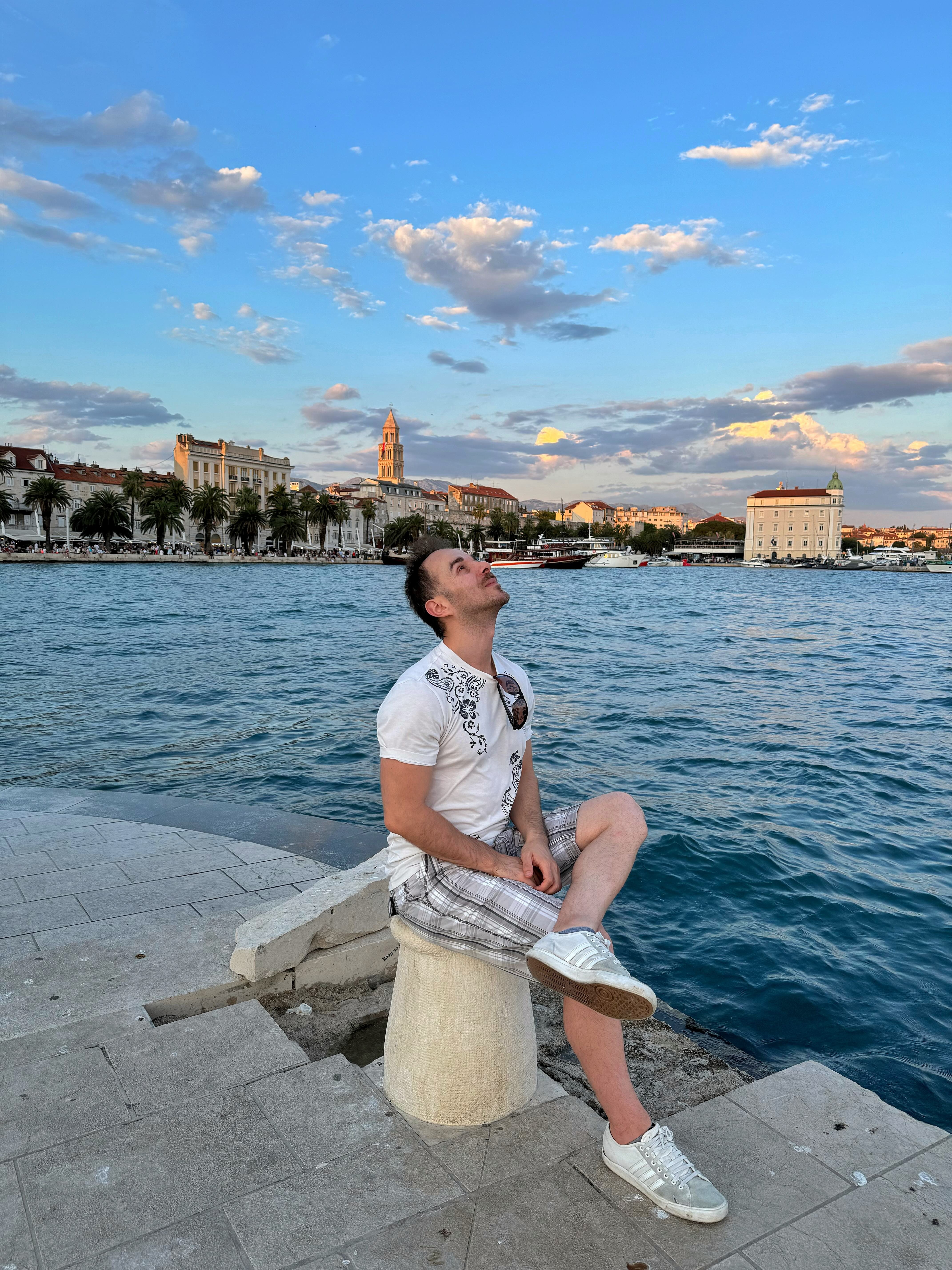
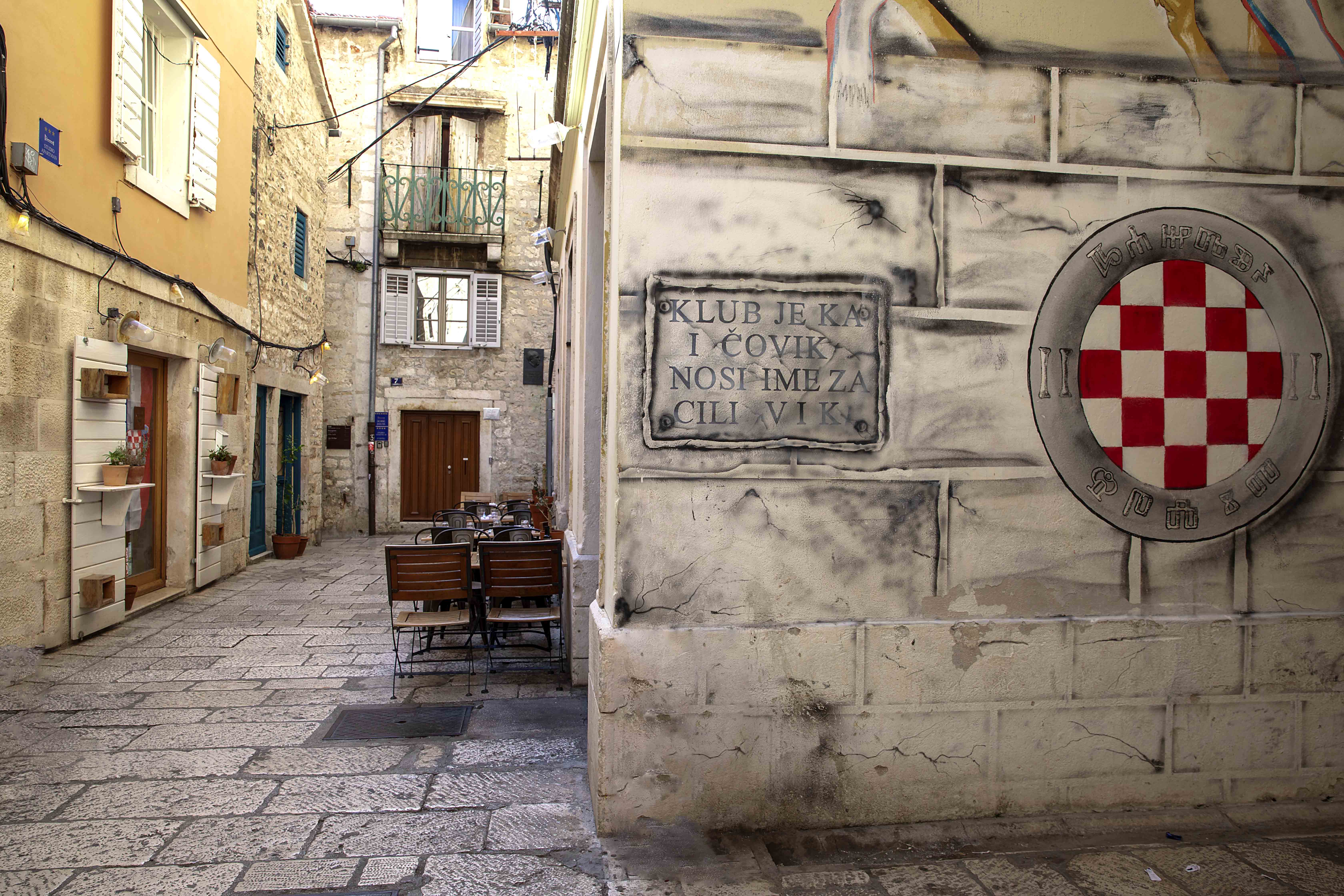
After another two and a half hours on the road, on a warm August evening, we greeted by the charm of Split. But before you reach the heart of the city, you’ll be welcomed by a sea of murals and paintings underscoring the love of Hajduk Split. I soon learned that football (the European kind) is almost a religion here. So, it’s best to avoid offending any Hajduk fans, and definitely don’t even think about wearing a Dinamo Zagreb jersey! However, it’s a must to savor the beautiful summer evening by the Adriatic, with the historic cityscape just behind you.
One downside of visiting Europe in the summer is the excessive heat and overcrowded streets. This is particularly true for old towns in Southern and Central Europe, where stone architecture can cause temperatures to soar up to 40°C average. To avoid the extreme heat and heavy crowds, I’d recommend visiting Split in early fall or late spring.
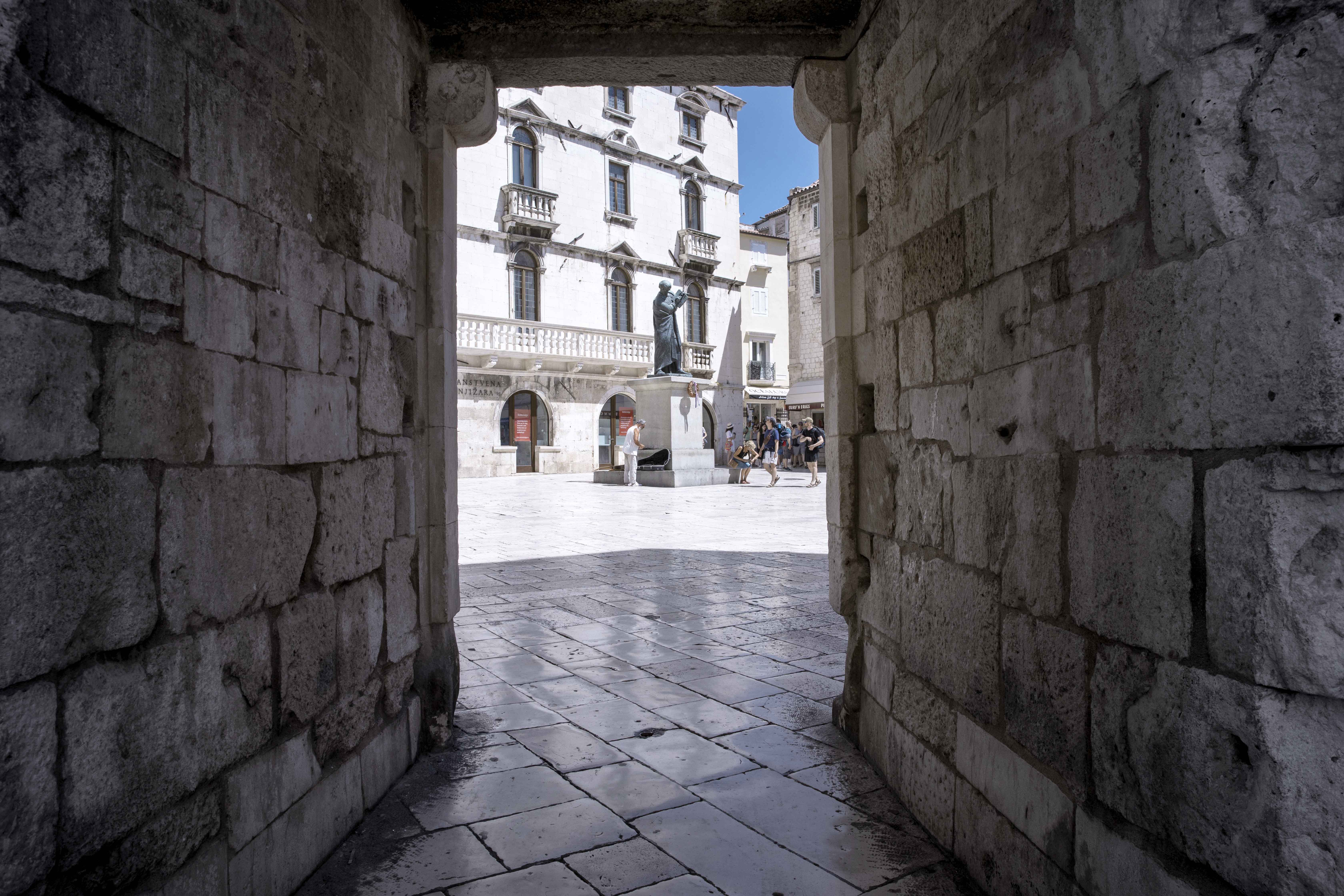
Nevertheless, the city of Split continues to amaze, even in the summertime (just be sure to stay hydrated!). As you pass through the stone gate toward Radić Brothers Square, the centuries-old walls that once protected the city transport you back to medieval times.
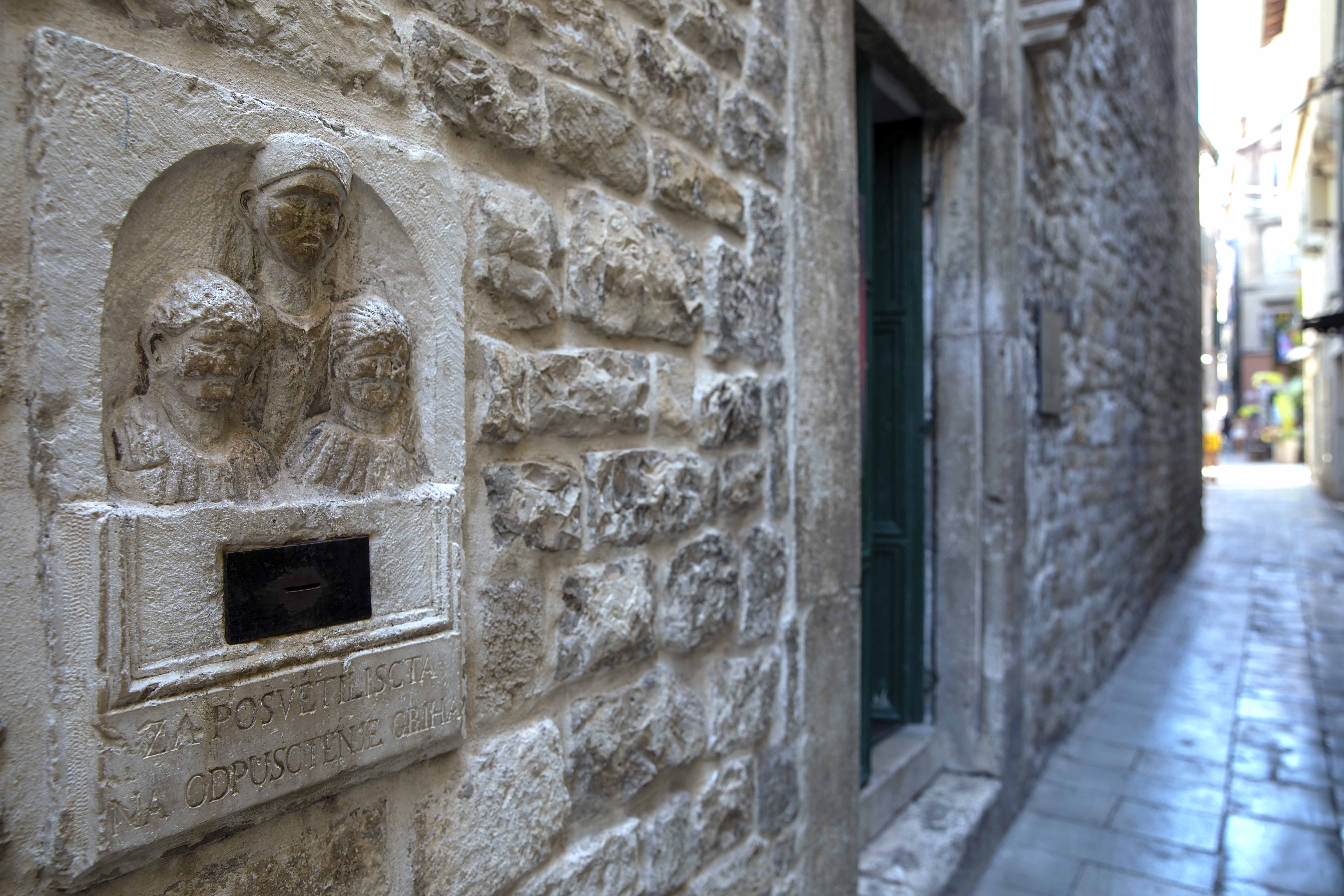
The narrow, cobblestoned streets of Split offer a magical opportunity to explore the city on foot, each turn revealing hidden gems, historic corners, and the timeless charm of its ancient past. The old city is graced with charming small churches. Be sure to explore a few of them.
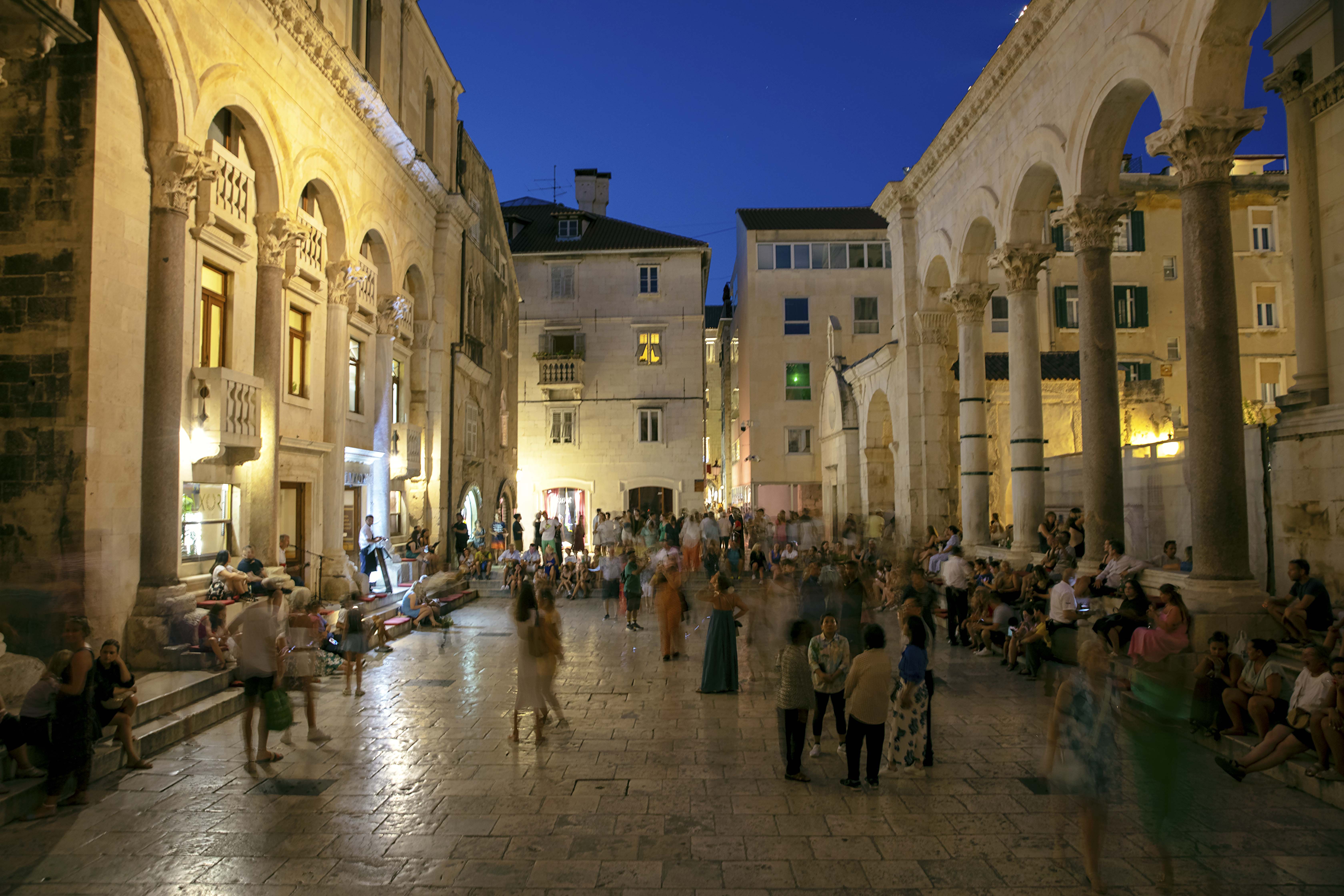
As the sun sets, the city comes alive with people dining, strolling, and exploring its enchanting streets. If you’re looking to pause and unwind, there’s no better spot than the steps of Diocletian’s Palace. Here, you can sip a refreshing drink, enjoy live music, and soak in the atmosphere alongside visitors, locals, and even men dressed as Roman soldiers, complete with spears and shields.
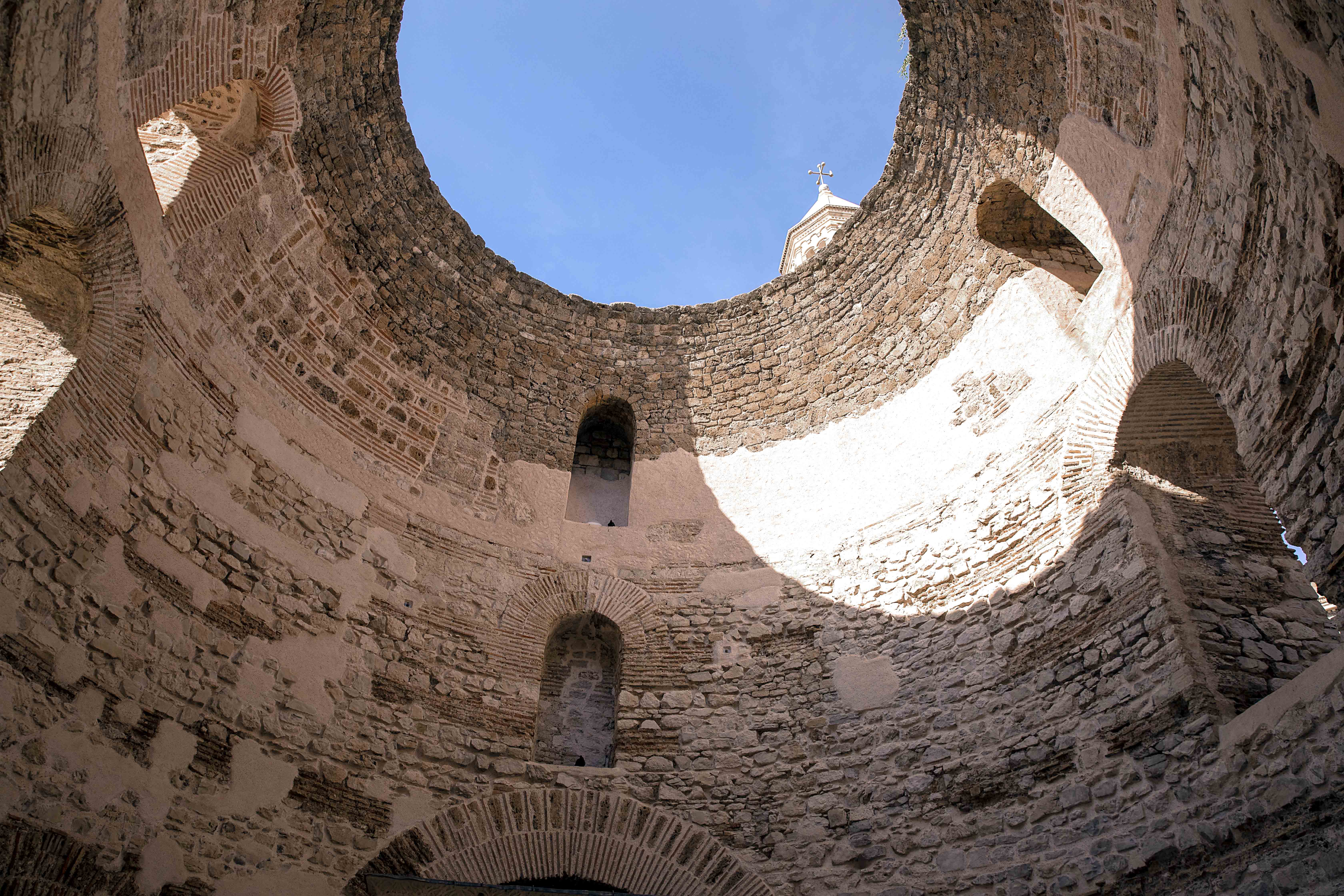
Whenever I visit a city and have some free time, I enjoy joining free walking tours. So, on the last day of our two-day stay, we decided to take part in one to delve deeper into the city’s history and uncover some of its hidden gems.
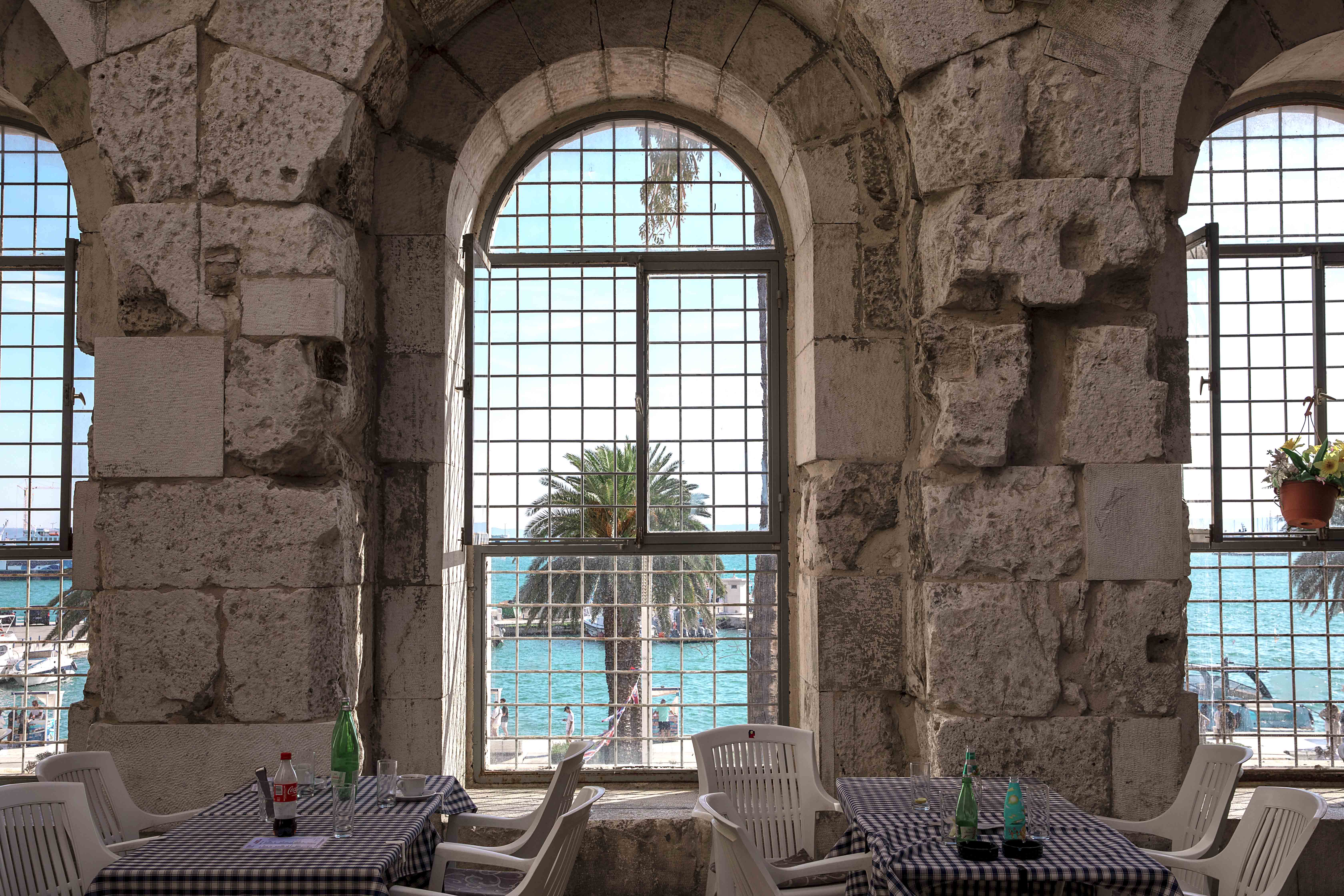
Split’s history dates back to the 4th century AD, when the Roman Emperor Diocletian chose this site to build a grand palace where he would retire after abdicating the throne. Following his abdication in 305 AD, Diocletian spent around six years in his impressive palace, savoring a rare moment of retirement from political life, until his death in 311 AD. The place is one of the best-preserved Roman monuments in the world and it is a UNESCO World Heritage Site along the historic center of Split.
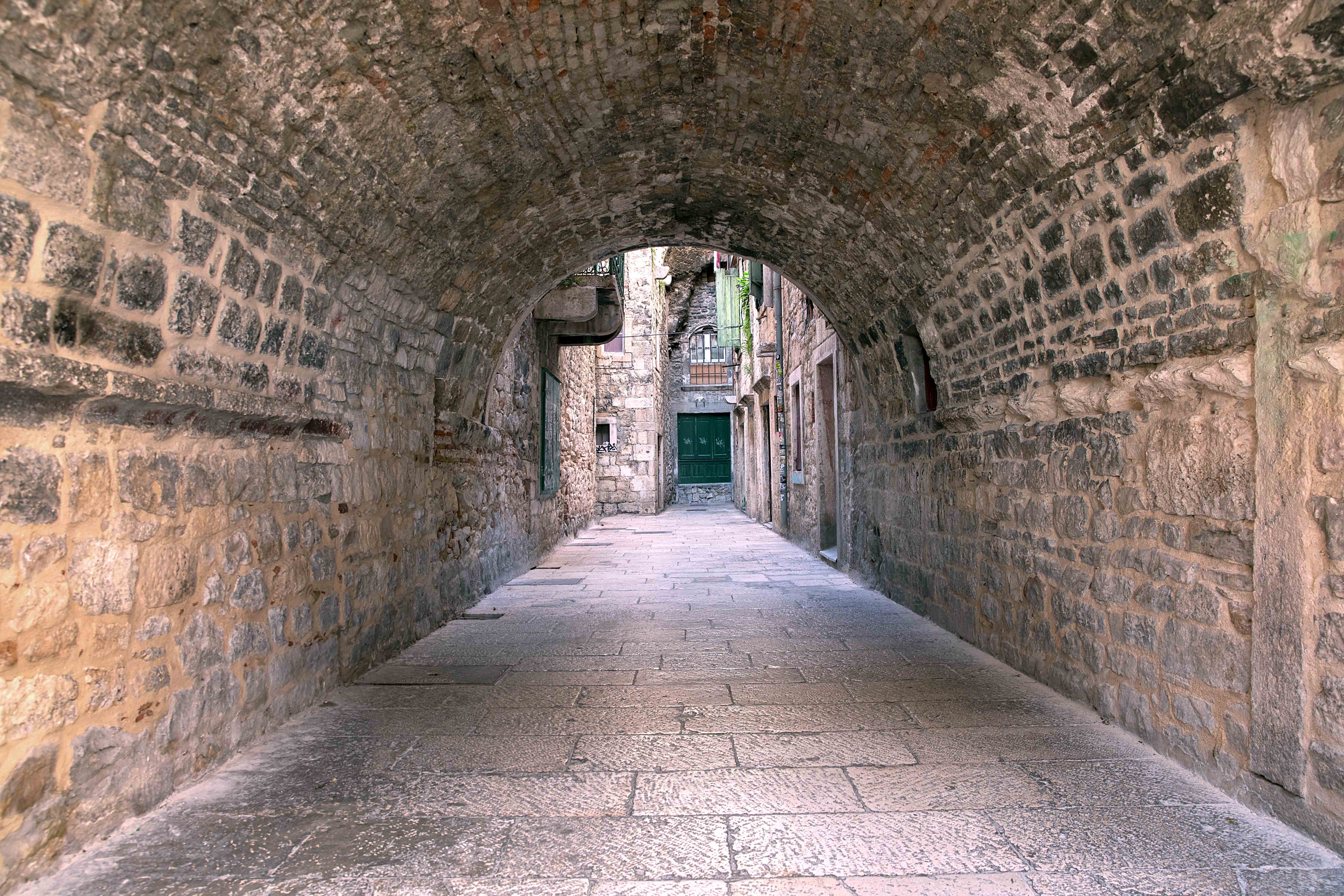
After the Western Roman Empire fell in the 5th century, the palace started to decay but was never abandoned. During early medieval invasions, people took shelter within its strong walls. Gradually, the palace transformed into a lively town, with homes, markets, and churches growing inside and around the ancient Roman structure, eventually forming the foundation of modern Split.
During the Yugoslav era, living within the city walls was somewhat discouraged and frowned upon. In fact, properties inside the walls were very cheap due to poor living conditions, lack of space and the difficulty of getting around. However, after the collapse of Yugoslavia and the end of the war, tourism in Split began to flourish. And guess what? The most sought-after places for tourists to stay in the city are, of course, within the ancient walls. Especially after Croatia joined the EU in 2013, owning property within the walls has become a financially rewarding investment, with many renting their spaces to visitors.
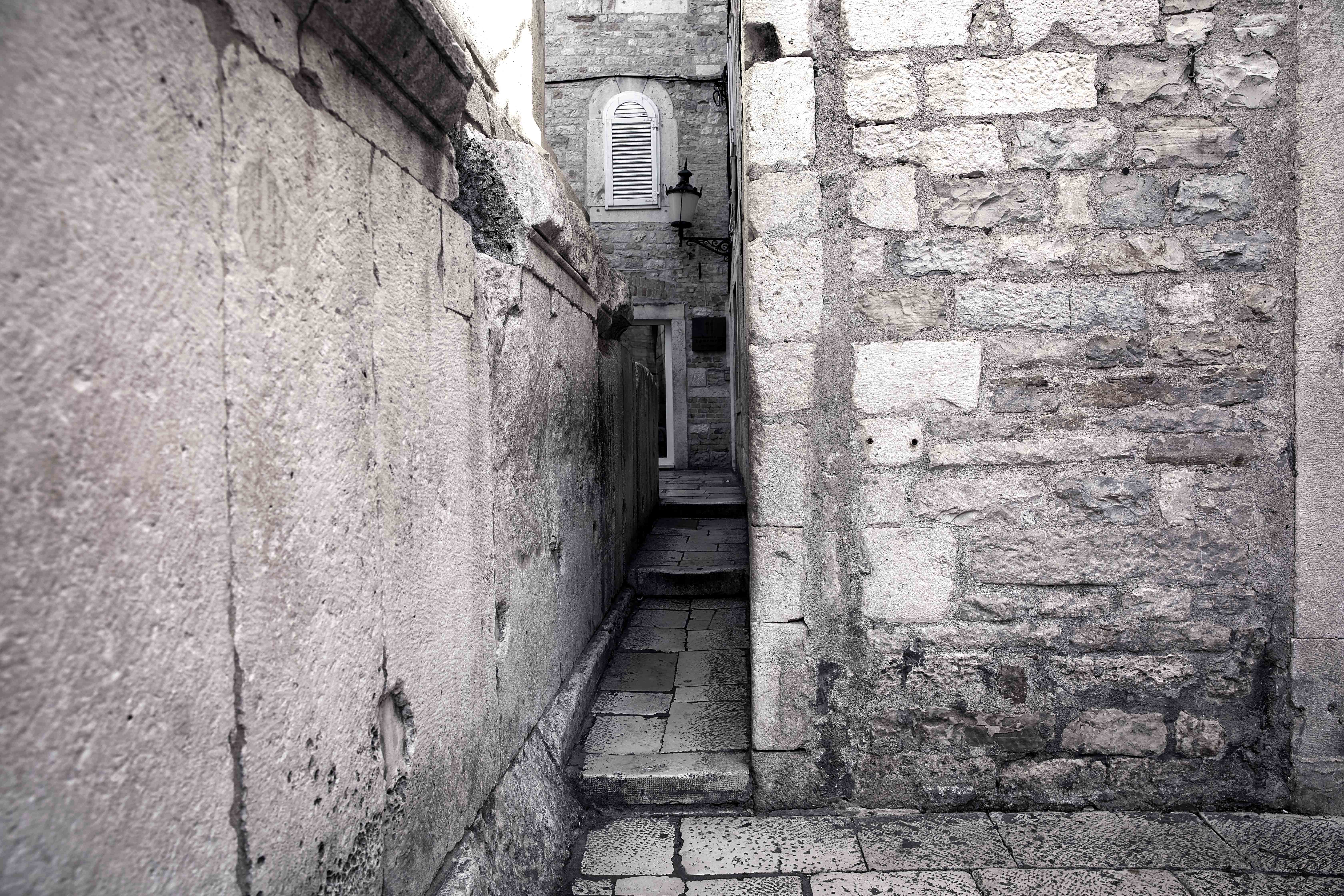
The narrow street called “Let Me Pass,” where you often have to wait for people to pass during the busy hours of the day.
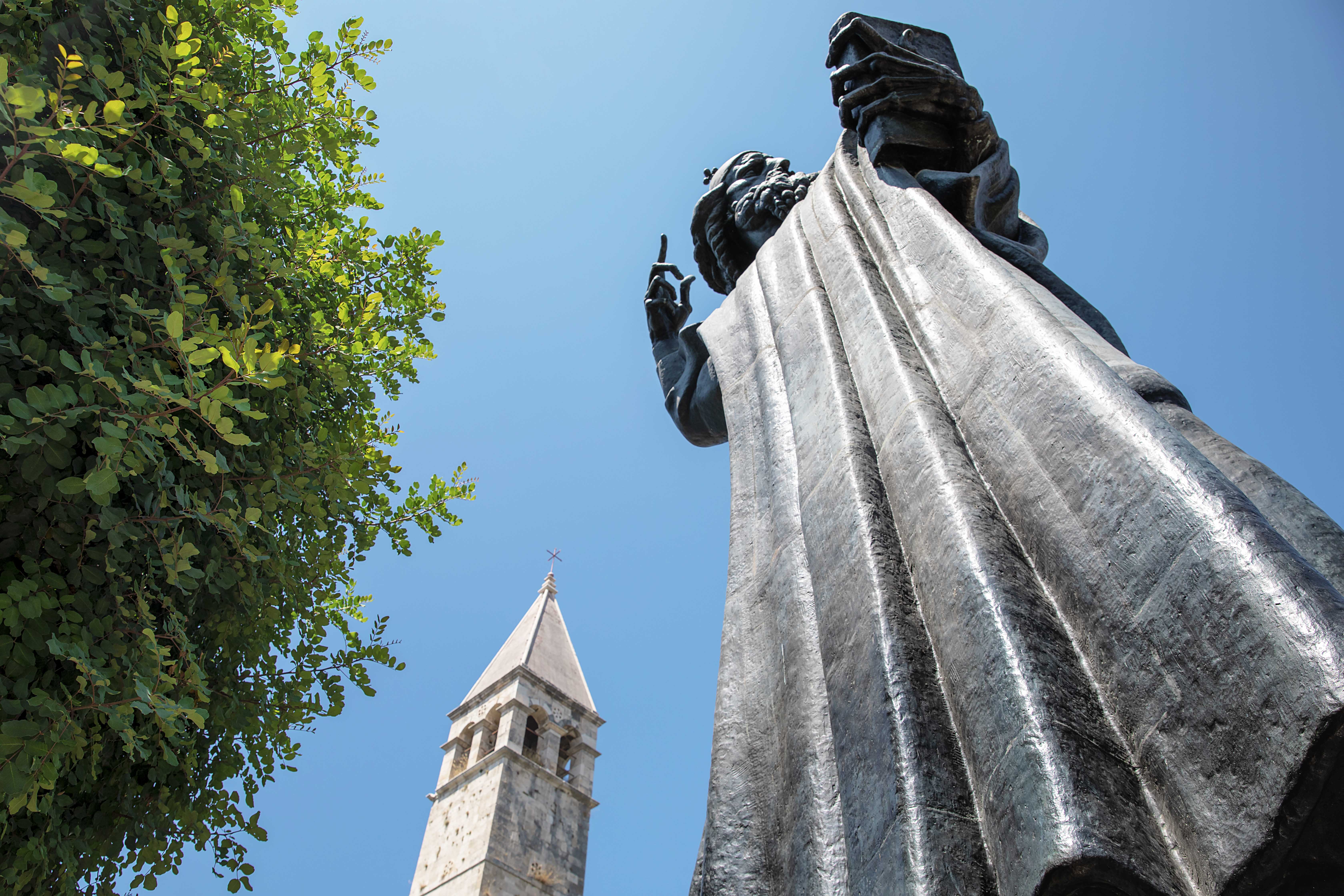
Around 79% of people in Croatia are Catholic, and this is partly due to Gregory of Nin, a 10th-century bishop who played a key role in the country’s Christian history. He is famous for pushing to have religious services in the Croatian language instead of Latin, and for promoting the Glagolitic script, a Slavic alphabet around 926 AD. His work helped Croatia become more culturally and religiously independent.
Today, Gregory of Nin is honored with a statue in Split, created by sculptor Ivan Meštrović. The statue, near Diocletian’s Palace right in front of the Golden Gate, is a symbol of Croatian pride, and locals believe rubbing its toe brings good luck.
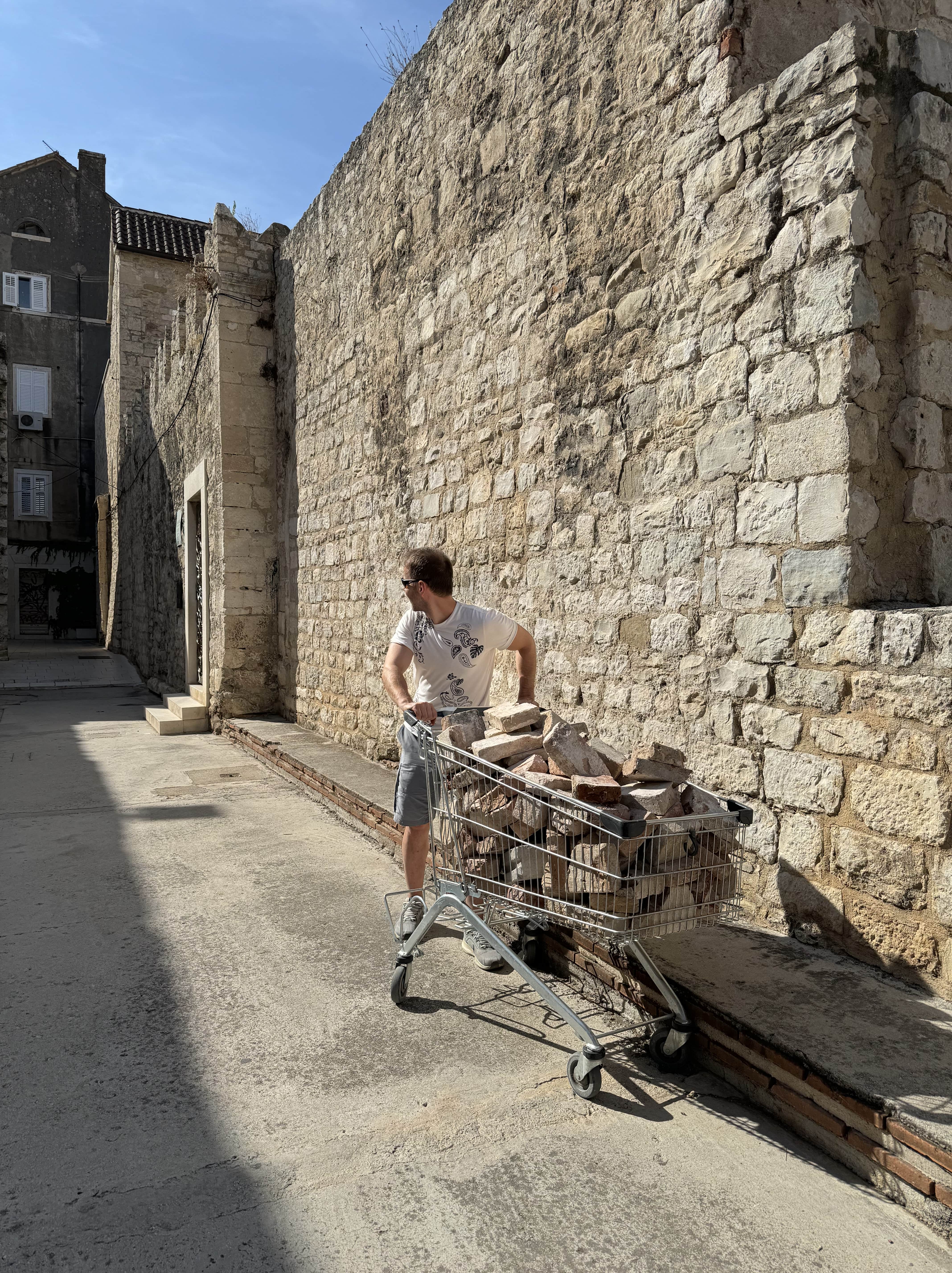
One of my favorite hobbies is buying magnets and keychains wherever I go. In fact, my magnet collection has gotten so out of hand that I may consider buying a second fridge just to place them on. But wait… Split had a special treat for me: the chance to take home medieval bricks from Diocletian’s Palace walls! Obviously, I couldn’t pass up that offer. Just make sure nobody is watching – LOL.
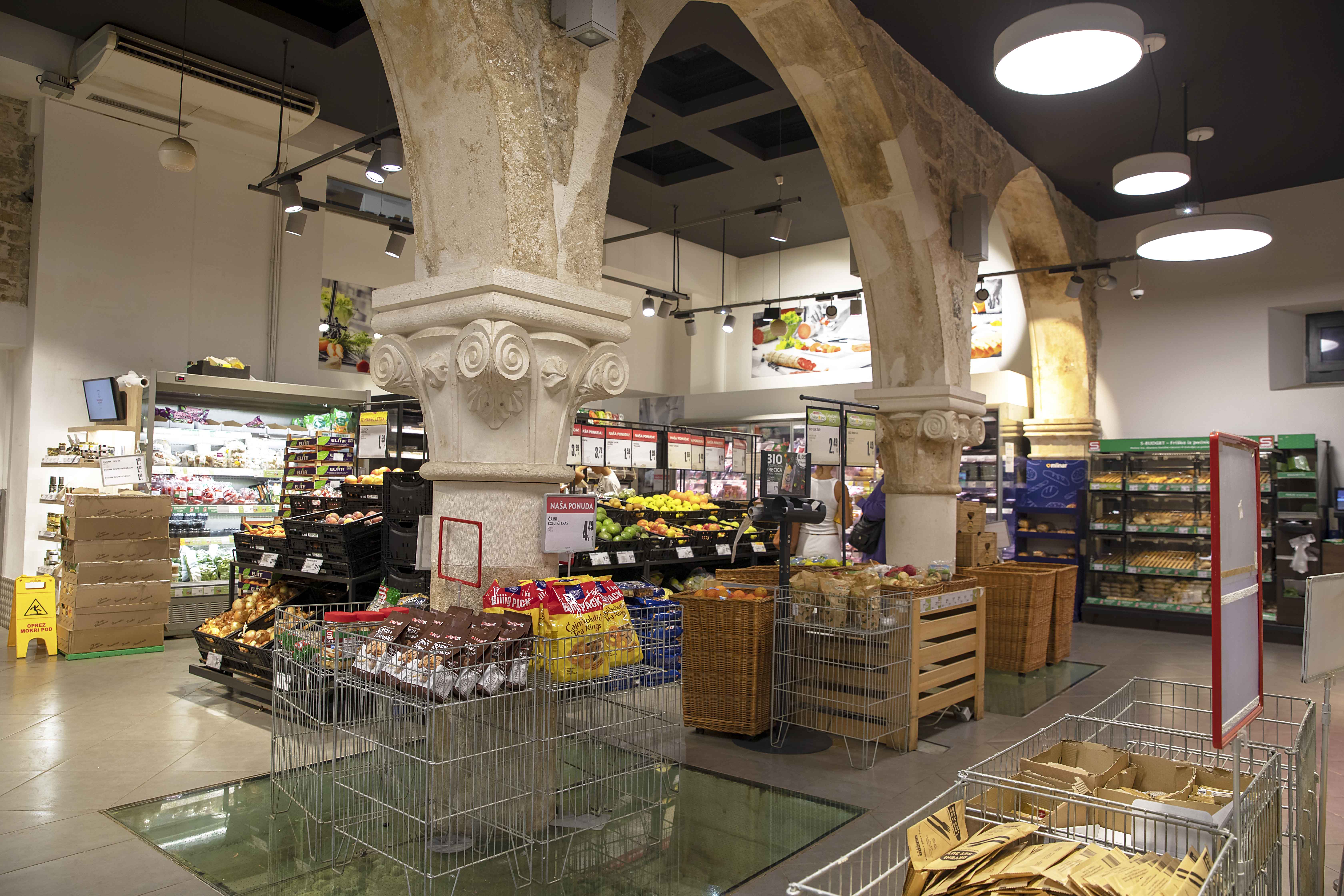
How often do you add a grocery store to your must-visit list? Well, if you’re in Split, this isn’t a joke. The Spar Supermarket here actually has UNESCO status because it’s located within Diocletian’s Palace. If you’re escaping the summer heat, it’s a great spot to grab some cold drinks and see what a UNESCO-protected grocery store looks like!
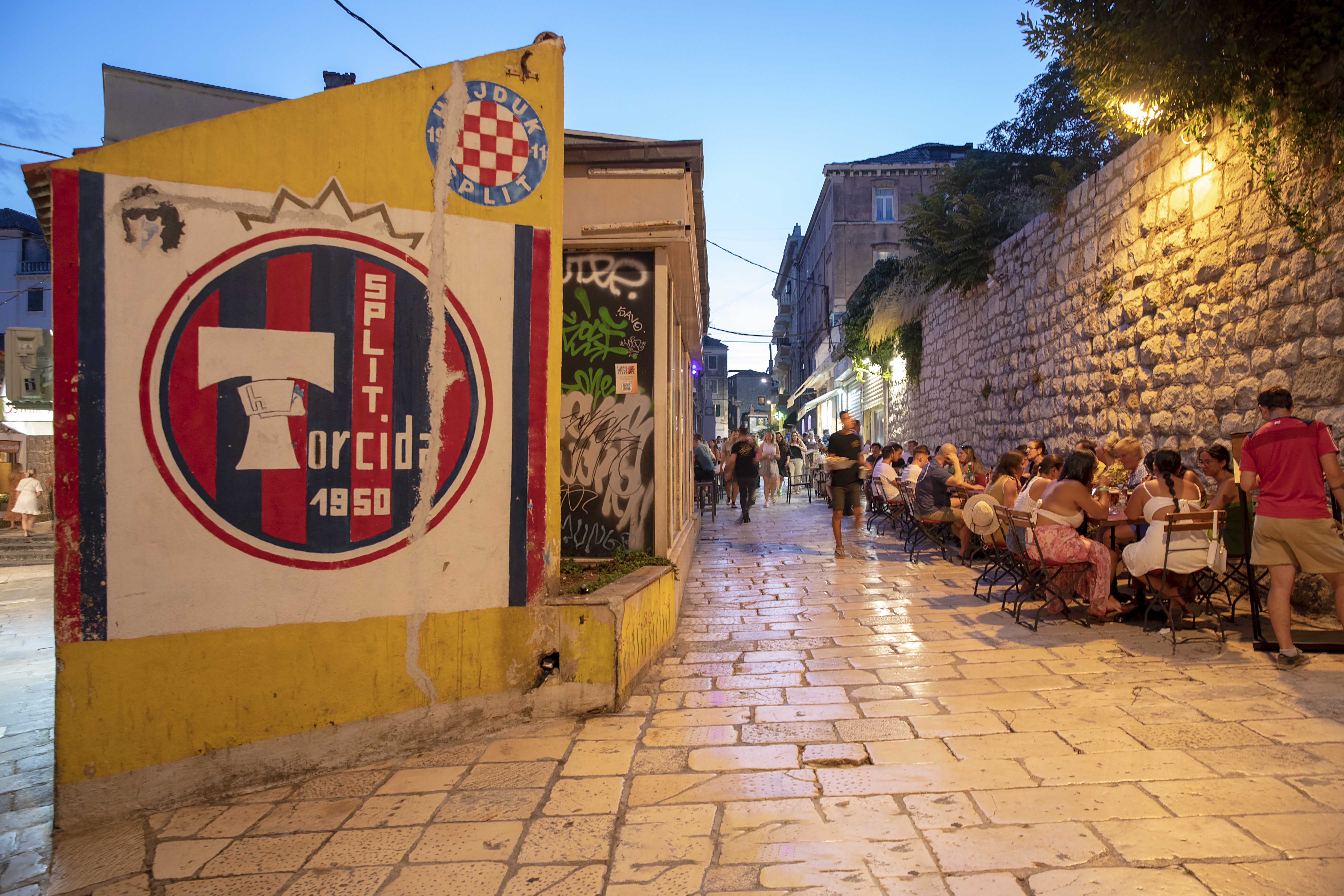
The lively, historic streets of Split come alive in the evening… It seems some Hajduk Split fans couldn’t resist the chance to paint their team’s logo on the walls of the old town.
By the way, the old town of Split is home to a number of gelato shops. There’s a rumor that if you pass by 10 gelato spots while strolling, you absolutely have to stop and indulge in at least one!
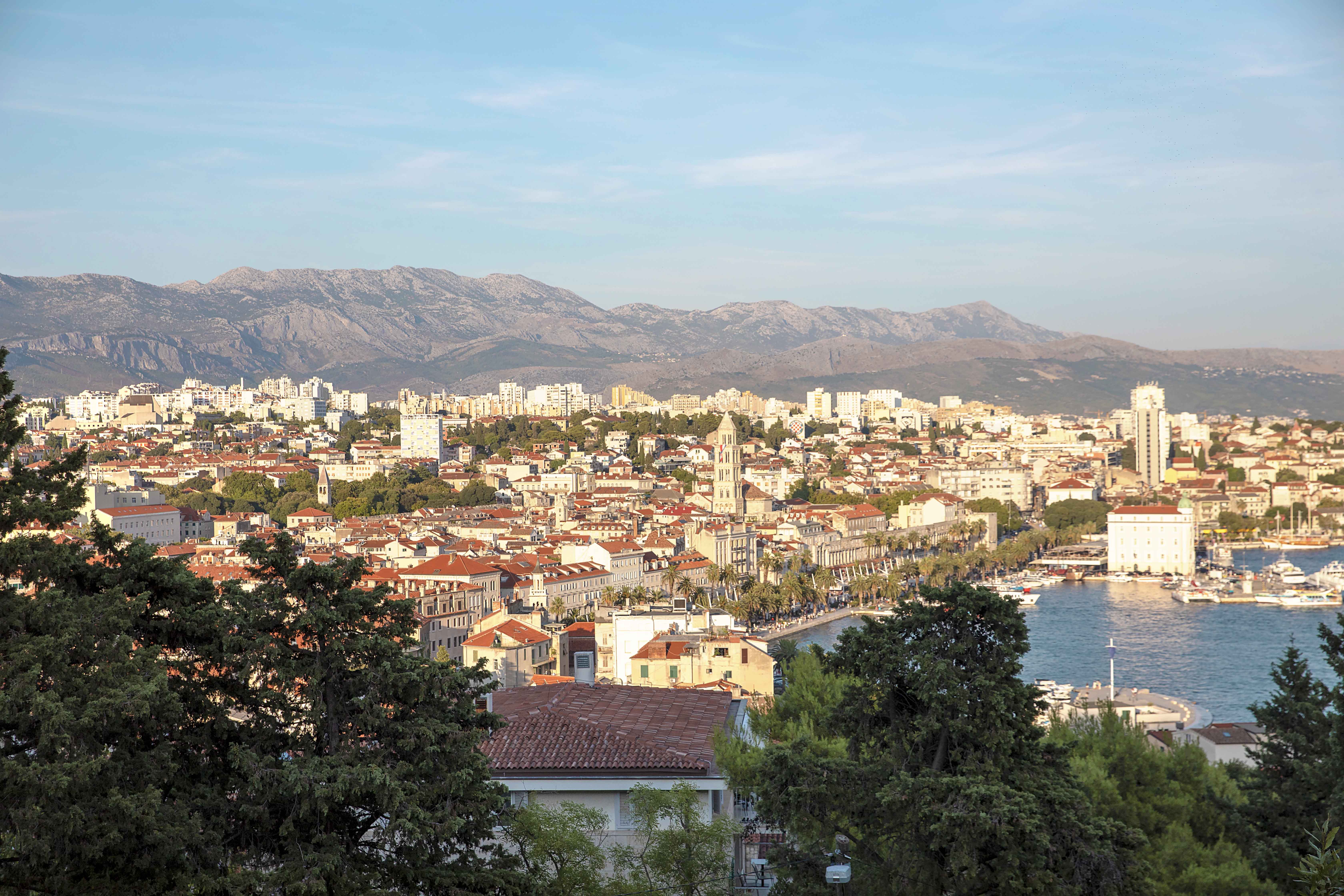
Whether you’re wandering through ancient Roman ruins, lounging on the beach next to Adriatic Sea, or savoring delicious local dishes, Split offers an never-to-be-forgotten experience. Sadly, we didn’t have time to explore nearby islands like Hvar, Brač, and Vis, but I’m hoping to return in the future to discover more of this historic region.
 Huseyin Karadeniz | Travel & Photography Journal