
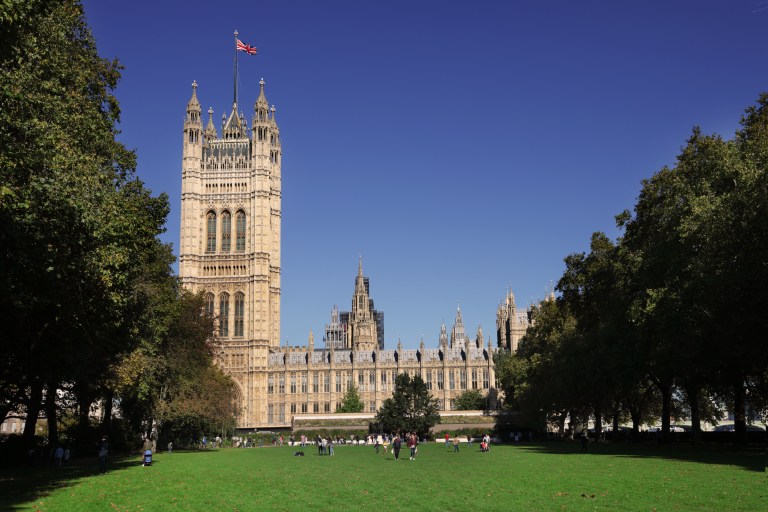
Palace of Westminster
The Palace of Westminster is the meeting place of the House of Commons and the House of Lords, the two houses of the Parliament of the United Kingdom. Commonly known as the Houses of Parliament after its occupants, the Palace lies on the north bank of the River Thames in the City of Westminster, in central London, England.

The Mall
The Mall is a road in the City of Westminster, central London, between Buckingham Palace at its western end and Trafalgar Square via Admiralty Arch to the east. Near the east end at Trafalgar Square/Whitehall it is met by Horse Guards Road and Spring Gardens where the Metropolitan Board of Works and London County Council were once based. It is closed to traffic on Sundays, public holidays and on ceremonial occasions.

St. Paul's Churchyard
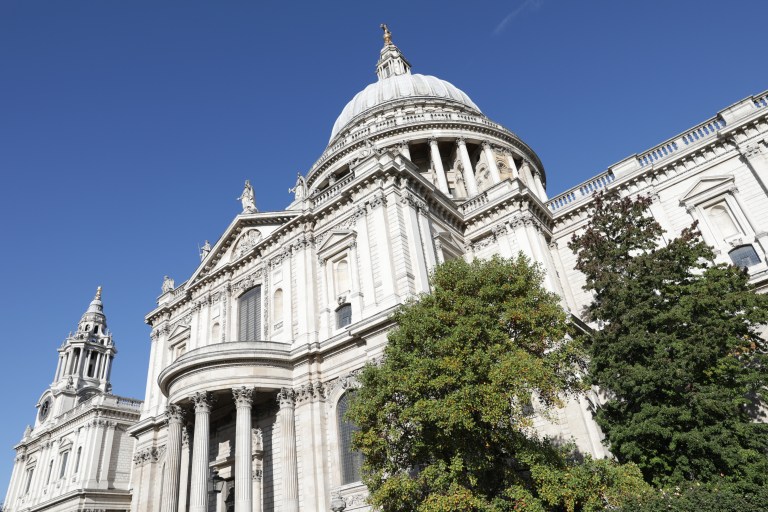
St. Paul's Cathedral
St Paul’s Cathedral, London, is an Anglican cathedral, the seat of the Bishop of London and the mother church of the Diocese of London. It sits on Ludgate Hill at the highest point of the City of London and is a Grade I listed building. Its dedication to Paul the Apostle dates back to the original church on this site, founded in AD 604.
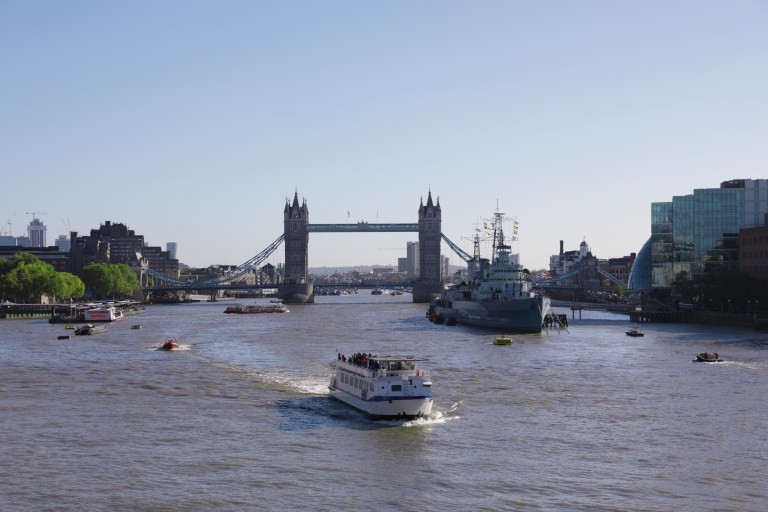
Tower Bridge
Tower Bridge is a combined bascule and suspension bridge in London built between 1886 and 1894. The bridge crosses the River Thames close to the Tower of London and has become an iconic symbol of London.
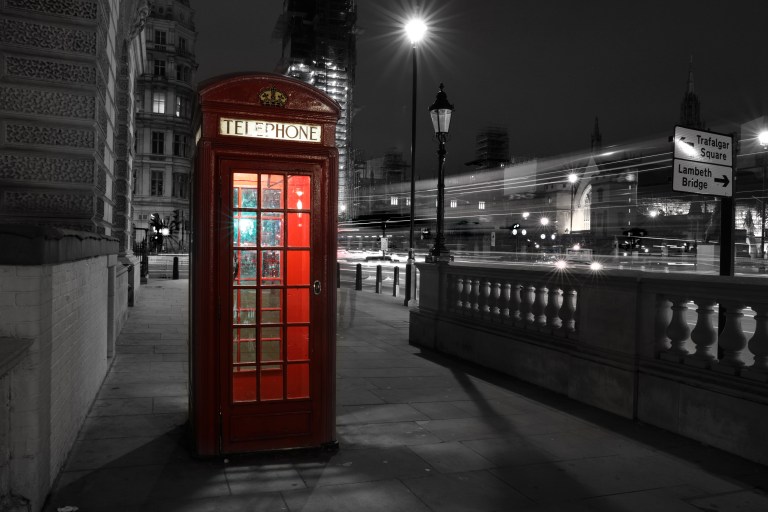
Parliament Square Garden

Coca-Cola London Eye
The London Eye is a giant Ferris wheel on the South Bank of the River Thames in London. It is Europe’s tallest Ferris wheel, is the most popular paid tourist attraction in the United Kingdom with over 3.75 million visitors annually, and has made many appearances in popular culture.

Westminster Abbey
Westminster Abbey, formally titled the Collegiate Church of St Peter at Westminster, is a large, mainly Gothic abbey church in the City of Westminster, London, England, just to the west of the Palace of Westminster. It is one of the United Kingdom’s most notable religious buildings and the traditional place of coronation and burial site for English and, later, British monarchs. The building itself was a Benedictine monastic church until the monastery was dissolved in 1539. Between 1540 and 1556, the abbey had the status of a cathedral. Since 1560, the building is no longer an abbey or a cathedral, having instead the status of a Church of England “Royal Peculiar”—a church responsible directly to the sovereign.

The British Museum
The British Museum, established in 1753, located in the Bloomsbury area of London, in the United Kingdom, is a public institution dedicated to human history, art and culture. Its permanent collection numbers some 8 million works, and is among the largest and most comprehensive in existence having been widely sourced during the era of the British Empire, and documenting the story of human culture from its beginnings to the present. It is the first national public museum in the world.
1 hour at the British Museum:
https://www.britishmuseum.org/visiting/planning_your_visit/object_trails/1_hour.aspx
3 hours at the British Museum:
https://www.britishmuseum.org/visiting/planning_your_visit/object_trails/3_hours.aspx

British Museum - Hoa Hakananai Moai
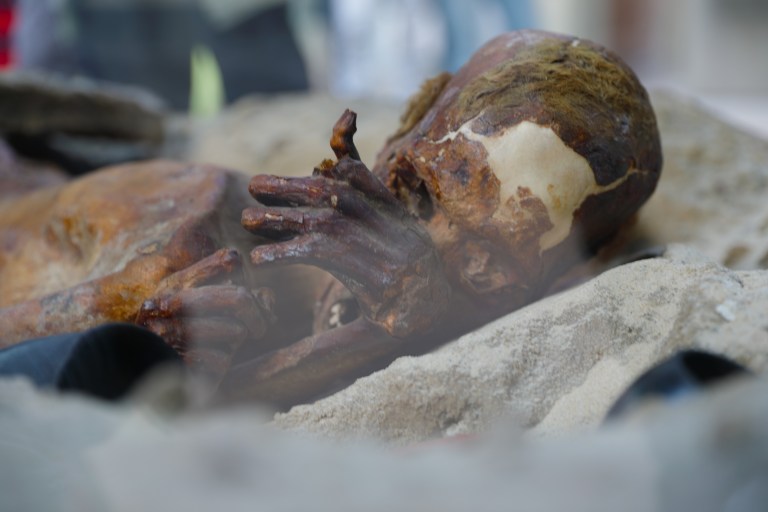
British Museum - Gebelein Man

Lock & Co. Hatters
Lock & Co. Hatters (formally James Lock and Company Limited) is the world’s oldest hat shop, the world’s 34th oldest family-owned business and is a Royal warrant holder. Its shop is located at 6 St James’s Street, London and is a Grade II listed building.
The company was founded in 1676 by Robert Davis. His son Charles continued the business and took James Lock (1731–1806) on as an apprentice in 1747. James later married Charles Davis’s only child, Mary. When Davis died in 1759, James Lock inherited the company from his former master, and the Lock family, James’s descendants, still own and run the company today. The shop has been in its current location since 1765.

Republic of Texas Plaque
Between 1836 and 1845 this place was briefly home to the Embassy of the Republic of Texas. At the time of its founding, Texas was an independent sovereign country with its borders under threat from both the United States and Mexico. Then-President-of-Texas Sam Houston sent Dr. Ashbel Smith, the Secretary of State, to be the Texan diplomatic representative in England in an effort to build international sentiment for their country. A second Embassy was also established in France, located in what is now the Hôtel de Vendôme.
Texas finally joined the Union in 1845, despite the Crown’s support of its independence, and the Embassy in London was closed.
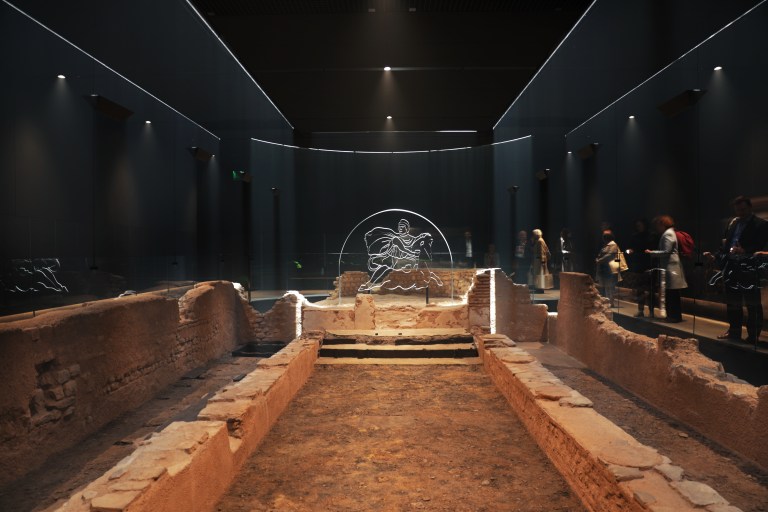
London Mithraeum
The London Mithraeum, also known as the Temple of Mithras, Walbrook, is a Roman mithraeum that was discovered in Walbrook, a street in the City of London, during a building’s construction in 1954. The entire site was relocated to permit continued construction and this temple of the mystery god Mithras became perhaps the most famous 20th-century Roman discovery in London.
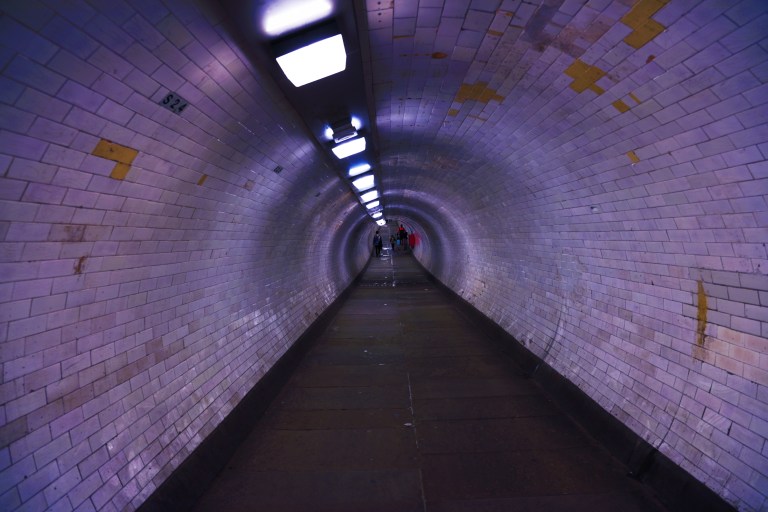
Greenwich Foot Tunnel
The Greenwich Foot Tunnel crosses beneath the River Thames in East London, linking Greenwich (Royal Borough of Greenwich) on the south bank with the Isle of Dogs (London Borough of Tower Hamlets) on the north. The tunnel was designed by civil engineer Sir Alexander Binnie for London County Council and constructed by contractor John Cochrane & Co. The project started in June 1899 and the tunnel opened on 4 August 1902.
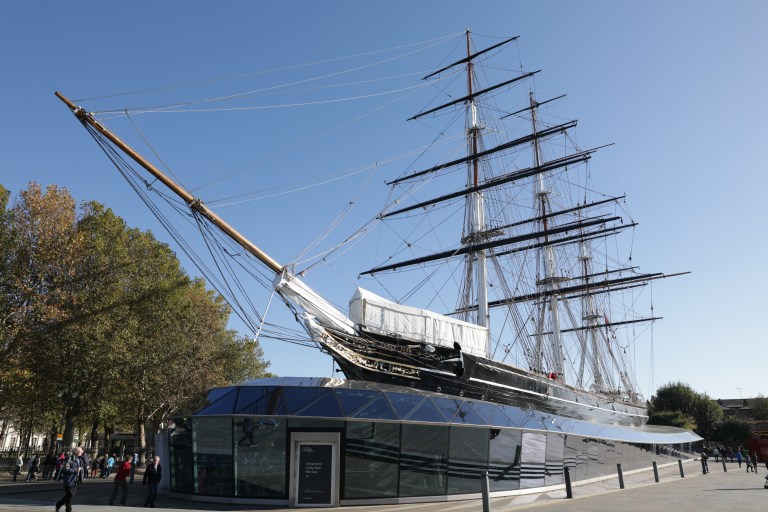
Cutty Sark
Cutty Sark is a British clipper ship. Built on the River Clyde in 1869 for the Jock Willis Shipping Line, she was one of the last tea clippers to be built and one of the fastest, coming at the end of a long period of design development, which halted as sailing ships gave way to steam propulsion. The opening of the Suez Canal (also in 1869) meant that steamships now enjoyed a much shorter route to China, so Cutty Sark spent only a few years on the tea trade before turning to the trade in wool from Australia, where she held the record time to Britain for ten years. Improvements in steam technology meant that gradually steamships also came to dominate the longer sailing route to Australia, and the ship was sold to the Portuguese company Ferreira and Co. in 1895 and renamed Ferreira. She continued as a cargo ship until purchased in 1922 by retired sea captain Wilfred Dowman, who used her as a training ship operating from Falmouth, Cornwall. After his death, Cutty Sark was transferred to the Thames Nautical Training College, Greenhithe in 1938 where she became an auxiliary cadet training ship alongside HMS Worcester. By 1954, she had ceased to be useful as a cadet ship and was transferred to permanent dry dock at Greenwich, London, for public display.
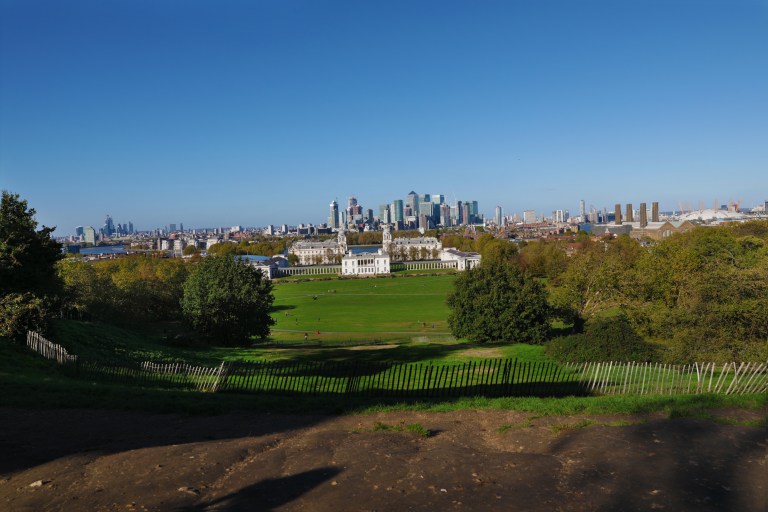
Greenwich Park

Traffic Light Tree
Traffic Light Tree is a public sculpture in Poplar, London, England. The Sculpture imitates the natural landscape of the adjacent London Plane Trees, while the changing pattern of the lights reveals and reflects the never-ending rhythm of the surrounding domestic, financial and commercial activities.
 Huseyin Karadeniz | Travel & Photography Journal